This forum is preserved as a permanent archive. The community continues at eMedia Press.

Announcement

Collapse
No announcement yet.

Muller generator replication by Romerouk

Collapse
X
 
  • Filter
  • Time
  • Show
Clear All
new posts

  • ron48
    replied

    Leave a comment:


  • Dave45
    replied
    A core you guys might be interested in
    Originally posted by the bob View Post
    Quote:
    Originally Posted by vrand
    Hi Zilano,

    Is there any benefits to copper coated welding rods vs non copper coated?

    Cheers Mike

    Hi Mike!

    MAGNET CORE (WELDING ROD)
    Purpose
    To provide a low reluctance path that increases the magnetic flux through the coil.
    Specifications
    Low reluctance, high permeability magnetic material: Welding rod; 0.042" inch diameter copper coated steel

    regards

    zilano zeis zane!

    Hi LTBOLO
    I wasn't talking about his L1 and L2 coils,those coils are ok if tuned right.
    thread 14
    post 409

    He is using copper coated welding rods ( he calls ferrite rod/cu) in his step down to 60 hz transformer. Read above MAGNETIC MATERIAL. His transformer for getting 230 volts 60 hz is magnetic. If you don't believe me, get some copper coated welding rod, make a bundle and put 10 turns of wire on it, put 20 turns beside of the 10 turns. apply 10 volts to the 10 turn coil and you can measure close to 20 volts on the 20 turn coil.
    When he said look at the crystal radio, I knew he was going to modulate the system with 60 hz but didn't know where.
    Tesla coils are turns ratio tuned with caps.
    Zilano even says he uses induction method in his ferrite transformer.
    Maybe MR. LTBOLO you should read my last post again.

    Leave a comment:


  • wattsup
    replied
    Does anyone have an opinion on the following ready made coil?

    Audio Crossover Inductor 6.01mH - 7.00mH SP056 from Falcon Acoustics, The Leading Supplier of DIY Hifi Components.

    wattsup

    Leave a comment:


  • Mark
    replied
    I made some cores a few years ago using iron filings I got from a automotive brake lathe. Any auto repair shop that resurfaces brake rotors will have iron filings.

    Leave a comment:


  • toranarod
    replied
    Originally posted by elias View Post
    Hello

    i think that we are building our coils wrongly. To achive good amount of inductance we do need to shorten our coil length, because the inductance formula for an air core coil is:


    The permeability of the core material gets multiplied by it.
    Romero's coils were pretty short about 15mm in length, and had about 300 turns of wire. The cores were about 6mm in length, which take a pretty short time to traverse by the magnet. According to my calculations, the resistance of his coils must be about 0.7 ohms, pretty low for a coil of 300 turns. So you get a good time lag and phase shift the make it self run. That is why he was able to get the effect in a pretty low RPM.

    Elias

    Edit: you can calculate the inductance for your coil here: Inductance of a solenoid
    This is why it is very interesting Romero used Ferrite cores YES?
    this is the bit I just don't get?
    Maybe he only said Ferrite because this was what was going to stop all replication dead in there tracks? He did say only a few would do it.

    Leave a comment:


  • gyula
    replied
    Originally posted by elias View Post
    ....
    Romero's coils were pretty short about 15mm in length, and had about 300 turns of wire. The cores were about 6mm in length, which take a pretty short time to traverse by the magnet.
    ....
    Hi Elias,

    You may wish to check Romero's cores data, he used an OD=6mm with 15mm length ferrite cores taken from PC power supplies. So his cores length were the same as his coils length.

    Thanks,
    Gyula

    Leave a comment:


  • toranarod
    replied
    Originally posted by meryl.anny View Post
    Hi,

    This is my first message here. I am getting very interested about the Muller motor and its replications. One month ago, I started looking at the Leon Raoul Hatem over-unity motor, and I started building it, but I'd like to look at this Muller motor at the same time. I ordered some parts but I still miss the coils.

    Have any of you tried iron dust/iron powder cores. I think I saw it mentioned it somewhere. (Sorry, I don't have the courage to dig for that in all the pages of this thread)

    Do you have any idea where to find suitable iron dust cores that can be shipped worldwide? And shops selling Litz wire. it seems very specialized products and only manufacturers seem to order them.

    I calculated that if I used the Romero setup, I'd need approximately 230 meters of wire. How much did you need? I think I might try with less coils, getting the full setup seems expansive.

    thanks,

    I'll be back sharing my findings,
    Meryl
    Hello and welcome to the thread.

    I have wound Romero coils and I am sure. you don't need 230 meter.

    He used sewing machine bobbins 300 turns 7 strand

    Do you mean for all the coils? oop's.

    your Wire HERE
    http://wires.co.uk/acatalog/st_wire.html


    Last edited by toranarod; 08-23-2011, 12:42 PM.

    Leave a comment:


  • toranarod
    replied
    great calculator

    Originally posted by elias View Post
    Hello

    i think that we are building our coils wrongly. To achive good amount of inductance we do need to shorten our coil length, because the inductance formula for an air core coil is:


    The permeability of the core material gets multiplied by it.
    Romero's coils were pretty short about 15mm in length, and had about 300 turns of wire. The cores were about 6mm in length, which take a pretty short time to traverse by the magnet. According to my calculations, the resistance of his coils must be about 0.7 ohms, pretty low for a coil of 300 turns. So you get a good time lag and phase shift the make it self run. That is why he was able to get the effect in a pretty low RPM.

    Elias

    Edit: you can calculate the inductance for your coil here: Inductance of a solenoid
    some very good work going on here.

    I was able to get some good results today at 2600 RPM. I lowered the drive voltage to 25 volts. Its time to go for it, as they say put up or shut up
    Started the rewiring for a loop back test. just making new coils. your coil calculator very timely Thank you

    Leave a comment:


  • meryl.anny
    replied
    Hi,

    This is my first message here. I am getting very interested about the Muller motor and its replications. One month ago, I started looking at the Leon Raoul Hatem over-unity motor, and I started building it, but I'd like to look at this Muller motor at the same time. I ordered some parts but I still miss the coils.

    Have any of you tried iron dust/iron powder cores. I think I saw it mentioned it somewhere. (Sorry, I don't have the courage to dig for that in all the pages of this thread)

    Do you have any idea where to find suitable iron dust cores that can be shipped worldwide? And shops selling Litz wire. it seems very specialized products and only manufacturers seem to order them.

    I calculated that if I used the Romero setup, I'd need approximately 230 meters of wire. How much did you need? I think I might try with less coils, getting the full setup seems expansive.

    thanks,

    I'll be back sharing my findings,
    Meryl

    Leave a comment:


  • ren
    replied
    Just incase it hasnt been posted in the thread already, I do remember reading that Mullers cores were mixed and placed into the mould with a strong magnet at each end to align the particles as it dried. I also believe he wound some of his coils while the cores were still wet and the first layer would sink slightly into the core itself.

    Just a heads up for those who may be mixing powders with resins.

    Regards

    Leave a comment:


  • elias
    replied
    Hello

    i think that we are building our coils wrongly. To achive good amount of inductance we do need to shorten our coil length, because the inductance formula for an air core coil is:
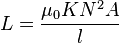

    The permeability of the core material gets multiplied by it.
    Romero's coils were pretty short about 15mm in length, and had about 300 turns of wire. The cores were about 6mm in diameter, which take a pretty short time to traverse by the magnet. According to my calculations, the resistance of his coils must be about 0.7 ohms, pretty low for a coil of 300 turns. So you get a good time lag and phase shift the make it self run. That is why he was able to get the effect in a pretty low RPM.

    Elias

    Edit: you can calculate the inductance for your coil here: Inductance of a solenoid
    Last edited by elias; 08-23-2011, 03:08 PM.

    Leave a comment:


  • kEhYo77
    replied
    Yesterday I finished my new rotor: 6 x N52 Neos NN. Now the tricky part: generator coils. I am going to go with 50/50 magnetite powder/pure iron dust mixed with resin for the cores and see what happens...
    Attached Files

    Leave a comment:


  • Zooty
    replied
    magnetic susceptibility = magnetic permeability

    oops posted too late

    Leave a comment:


  • Matthew Jones
    replied
    Originally posted by Shadesz View Post
    Parameter three, magnetic absorbing potential of the core
    There is probably a better word for this, but it represents how much magnetic field can be absorbed by the core before it gets saturated.

    Parameter four, the size of the magnetic field coming from the rotor magnets.
    Magnetic permeability or Relative permeability of materials
    Free air 1
    Water 0.999991 (Diamagnetic)
    Bismuth 0.99983 (Diamagnetic)
    Mild steel 500 - 8000
    Silicon steel 7000 - 12000
    Magnetic stainless steel 500
    Pure iron 15000
    Hiperco 3500
    Permadur 7000
    Supermalloy 50000
    Mumetal 80000

    Mild Steel is graded on a curve. I cannot find an example.


    And Parameter 4 is the "Flux Density" of a magnet. Thats what you are looking for.

    Matt

    Leave a comment:


  • elias
    replied

    Leave a comment:

Working...
X