
Super glue
Its dielectric constant at 1 MHz is 3.33.
Relative permittivity
Relative permittivity - Wikipedia, the free encyclopedia
Check the chart-list out on the right side
Best of luck to all
-
Duro Super Glue # 01801 by Henkel AdhesivesOriginally posted by plengo View Post
Fausto.
I checked the mag on the cell today with the super glue, it has two areas on the mag that did not get sealed properly with the super glue, these areas show decay, it is a weird decay, these areas are mushrooming up with a crust above the mag, it is now eating under the super glue seal, but these areas are very small 1/8" dia
So if you try this, make sure you have a good seal on the mag, or try super glue first then add grease
I was using the same setup in this video , except I used your sand and carbon, but I added dryout on top of the mix, the dryout has kept this cell amazingly moist for over two weeks (Note: the dryout will not decay mag by it self)
Allwest power cell # 5b - YouTube
my last reading was 1.44 volts and 27Ma
Good luck and let me know how it turns outLast edited by Allwest; 04-26-2012, 12:44 AM.Leave a comment:
-
It is a pleasure to share and try to give a hand when i canOriginally posted by vintasalo View Post

you should also note the use of a wave guide
if you look at the history of earth batteries Earth Battery PatentsOne key element of this radiating structure is its cutoff
waveguide placed underneath the antenna ground plane
many have tubes inserted in the ground ... similar to wave guides .... check out the page .... might inspire you for more experiments
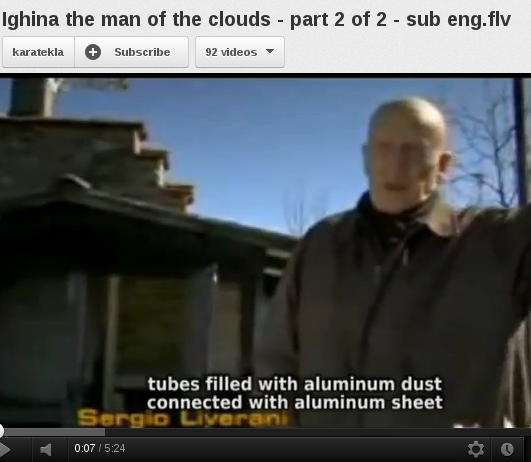
and i think he did the same with aluminium:
 Last edited by MonsieurM; 04-25-2012, 03:56 PM.
Leave a comment:
-
Thanks for the info on the aluminum material in the mix. I've added this to three mixes in three cells, update you soon. About that pyramid, I've seen this before and heard about the perfect degree of like 53 on all four legs. I also saw it keep an apple looking new next to one that was outside the pyramid and the one outside rotted. The one inside dried out from the inside if I remember correctly.Originally posted by MonsieurM View Post
You are right about all these tying together. I watched that video about the aluminum powder and how the sun is + and the earth is - very interestingLeave a comment:
-
BrOn and All:
This is an even more recent update from Magnetman, with some diagrams for the Joule Thief circuits, as well as some further tests and results from the Plengo type of cells.
Battery & Joule Thief Update.MOV - YouTubeLeave a comment:
-
BrOn:
First of all, the circuit that I'm using is not meant to be used with an AA battery, as it will cook the transistor. So, the idea was to use a resistor-less circuit that would work with these cells, and have a very low draw. As most Joule Thief circuits will not work well with these low current cells.
Second thing is the toroid, which looks like it is made of iron powder, which have very low permeability, and in order to get those to work, you have to fill them up with windings, not like you have there. Best thing is to use a toroid with ferrite core instead. The small toroids that come in the CFLs bulbs work fine.
Third thing is the solder looks like "cold solder", so I would re-solder your connections, to be sure, and be sure to use resin core solder wire or acid flux.
Not all transistors work the same, even of the same kind, or even bought from the same source. So, try another one, I use the Kn2222A, and place a 1k resistor on base rail (center pin), to protect the transistor from it overheating, if you are going to use an AA battery. But, no resistor is needed if using these cells, instead of an AA battery.
Other than that I can't see well enough to suggest something else.
In any case you might start with the suggestions above.
Plengo: I don't know if you've seen Magnetmans video, but I though it was very well made, to your specs, and right up your alley. He's got some nice stuff on his channel. You guys might want to take a look there also. He made some of Plengo's type cells that outputs 150 mA and can light a lot of leds.
BTW: I thought that I'd mention that the grease that I'm using is not stopping the oxidation on the aluminum, at all, so I'll look for the dielectric Permatex grease that you are using, that can be found in auto parts store.
Also BTW: Thanks to all for your support. I'm not giving up, not just yet, I'm had too much fun. And I'm already living in the sticks with the Indians.
NickZ
Mangetmans video of Plengos cell replication:
Great little cell.MOV - YouTubeLast edited by NickZ; 04-25-2012, 04:41 AM.Leave a comment:
-
Oscillator Circuit
I'm still stumped on how to do this. Attached is a photo of the circuit I tried to put together based on NickZ's post. I've tried wrapping the toroid with ethernet cable 100 times, magnet wire 10 times, swapping around the wires, tried different transistors - you name it, I've tried it. I can't get anything to magnify the input voltage. I'm getting 1.48 volts from the AA battery that is connected at the transistor connections, so I know current is passing through the wires. Can someone post a video or something to spell it out for me? So frustrated on something that should be so easy.
Thanks in advance.Attached FilesLeave a comment:
-
-
Originally posted by plengo View Post
Fausto,
I know it has taken you a long time to come up with the best formula, before spending the time and money to make 36 cells
I have been using grease for a long time on some of my cells, but it still eats the mag
I have been experimenting with using crazy glue as a sealer for magnesium, and so far it has not decayed at all, but still gives me power, not as much as bare mag at the beginning , but surpasses the uncoated mag in two days @ 25Ma
It may be something to try before making all 36 cells
Best of luck to allLeave a comment:
-
I am sharing with you info pertaining to your experiment .... not trying to give clues .... giving gathered info spent hours searching to save you time ... and present you with an option worth exploring ... do not think my intentions are to torture your mindOriginally posted by vintasalo View Post ....but more to increase your understanding of the ingredient your are using
more bluntly ...try aluminium as one of your ingredient and you'll see
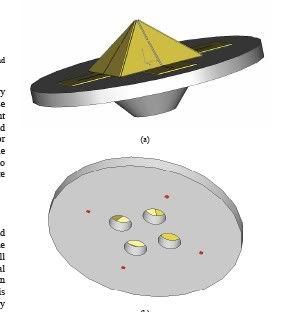
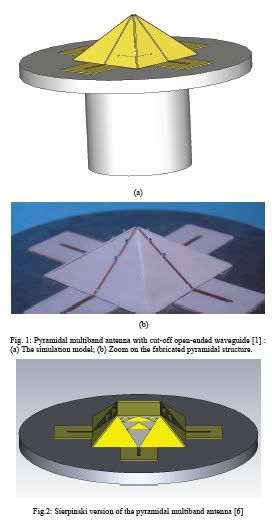
pyramidal shape is a concentrator and also acts as an Antenna ...
here is an example of a pyramid antenna:
Multiband Pyramidal Antenna for Radio Navigation
and Telemetry Systems
Abstract combining
radio navigation and MicroSAT telemetry applications was
recently introduced by the authors. This flexible antenna
provides independent and easily adjustable operating frequency
design. Furthermore, the radiation patterns of this pyramidal
antenna are relatively similar at the different operating
frequencies. One key element of this radiating structure is its cutoff
waveguide placed underneath the antenna ground plane in
order to improve input ports impedance matching while
minimizing the antenna rear radiation level. This paper further
describes the above-mentioned antenna and gives its latest
improvements.
 Last edited by MonsieurM; 04-25-2012, 12:28 AM.
Leave a comment:


Leave a comment: