
The practical application of dry crystal cells
They will last a VERY long time
IBpointless and Bedini have made some and others
Being conservative, lets say we could get 1 volt and 5Ma and they would cost $1.00 for material
for $1,000.00 you could have 1,000 volts and 5 Amps for a VERY long time
is this worth it and what could you do with it?
Keep in mind I have made dry crystal cells with 1.45 volts and 10MA that has lasted this way for months, I am not sure of every ones other cell stats
Could you imagine a garage full of these cells? kinda reminds me of the first computer
We could name it the Allwest Power house Ha!
Thoughts?
-
Question for the board
Using the chili powder cell # 5b Allwest power cell # 5b - YouTube
I added dryout (calcium chloride) to keep it wet and absorb moisture by itself
The overall power went down, but it holds power when under load
Then I tried juicing it up with a 9volt battery and the whole thing started boiling very quickly
(So no more of that) until I find out what kind of gas this could be
Any ideas?Leave a comment:
-
Fun video, severely lacking in leaping sparks and smoke though
I like how the whole thing came out looking like it was from a Blacksmith's forge.
OK, got some cat litter soaking in a cup and i'm intending to wait all day for it to absorb the water. But, that vid has me wondering about speeding up such a process in the microwave. Also, the wife is at work and we only have one microwave at the moment lol
Wonder if other electrolytes - like the chemicals in glow sticks could go with the cat litter ?!Leave a comment:
-
here is a vid that might interest you ... uses clay with microwave
Melting metals in the microwave on Vimeo

ps: zeolite + nano magnetite trapped int the honeycomb structureLast edited by MonsieurM; 04-15-2012, 02:36 PM.Leave a comment:
-
for the firing you could inspire yourself from:
Microwave melting of metals
The microwave work was triggered by a short reference to the refining of rare earth metals, at Illawara Technology Centre, which was mentioned by a visitor to the Central Saint Martins foundry, Dennis Glaser. Since these metals melt at temperatures above 800 degrees Celcius, it seemed possible that the method could be adapted to melt and cast small objects in the workshop or studio. If this could be done a domestic microwave would, effectively, become a cheap and accessible furnace.
Trials were begun which simply aimed to melt metals such as silver and bronze in open crucibles. However, it soon became obvious that casting to shape could also be accomplished by adapting the Reid Technique (RT) - a simplified ceramic-shell procedure for the casting of non-ferrous metals, patented in 1990. RT was first developed to avoid the problem of heat loss, which makes the the pouring of small melts very difficult - these difficulties arise however the metal is heated, and while the microwave technique set out here can be used for heating small amounts of metal in open crucibles, its greatest potential lies in its use as a flameless furnace in processes such as the Reid Technique. The crucial discovery, made during extended tests with various susceptors - materials which heat up when exposed to microwaves - was that two substances, graphite and magnetite, working together were required to achieve the kind of heating we were looking for.Susceptor - Wikipedia, the free encyclopediaSiC (Silicon Carbide) is a good susceptor and it couples at room temperature and is good up to about 1100C. Alternatives are Magnetite, and Zirconium.
A susceptor is a material used for its ability to absorb electromagnetic energy and convert it to heat (which is sometimes designed to be re-emitted as infrared thermal radiation). This energy is typically radiofrequency or microwave radiation used in industrial heating processes, and also occasionally in microwave cooking. The name is derived from susceptance, an electrical property of materials that measures their tendency to convert electromagnetic energy to heat.
just don't use a microwave you heat your food with and always use caution .... respect the experiment
---------------------a bit of info on zeolite:
WORLDS BEST CAT LITTER, ZEOLITE CAT LITTER,AMMONIA FIGHTER,ECO FRIENDLY,HEALTHY KITTY,GET ZEOLITE
Zeolite is a molecular sponge (molecular sieve) with high porosity and absorbs free
ammonia and other cat odours; not just absorbing and masking, but trapping and
holding the cause of pet odor. High liquid and ammonia absorptionLast edited by MonsieurM; 04-15-2012, 02:05 PM.Leave a comment:
-
Yes indeed squire, good to read you too
Hey look, how to actually use cat litter to potentially make cell casings !
DIY Pottery Clay | eHow.com
Not sure of the firing heat or time to do so though.
The Wiki on Bentonite, the main constituent of cat litter clay, mentions "Bentonite is an absorbent aluminium phyllosilicate"
Leave a comment:
-
Originally posted by Slider2732 View Post
good to read you Slider , been a while my friend 
kitty litter has another component that many scientist are exploring .... Zeolite
Peter MAIER-LAXHUBER, et al.: Zeolite/water adsorbtion heating/cooling, yields up to 160% heat/cold; articles & 26 patents
Last edited by MonsieurM; 04-15-2012, 12:53 PM.Leave a comment:
-
@Reddpill
Hmm, clay. Well what I do know, is that 7lbs of it costs just $1 at Dollar Tree here in Oklahoma...as cat litter ! (Ph5 is the brand).
You'll often see '100% clay' on such packaging, so one has to imagine it's whatever purity that clay can be.
Once made a cell with cat litter, in the days of the cement cells and it ran very well as that type...though I can't remember the figures it certainly was no disaster.
Can it be worked, like potters clay, into a battery shaped casing ? I have completely no idea but it might be fun trying
Leave a comment:
-
thank you Reddpill for the info .... in line with your post .... a good friend posted the following a while back in a thread:Originally posted by reddpill View Post
The Effects of Magnetic Water
The Effects of Magnetic Water
By John V. Milewski
What I think is happening is that the magnetite which is a strong magnetic suscepter is concentrating the earth's magnetic fields into it's cylindrical shape and the shape effect, in turn, sets up a magnetic spiral vortex in the core of the cylinder in which the water is stored. This in turn activates the water with the magnetic energy.
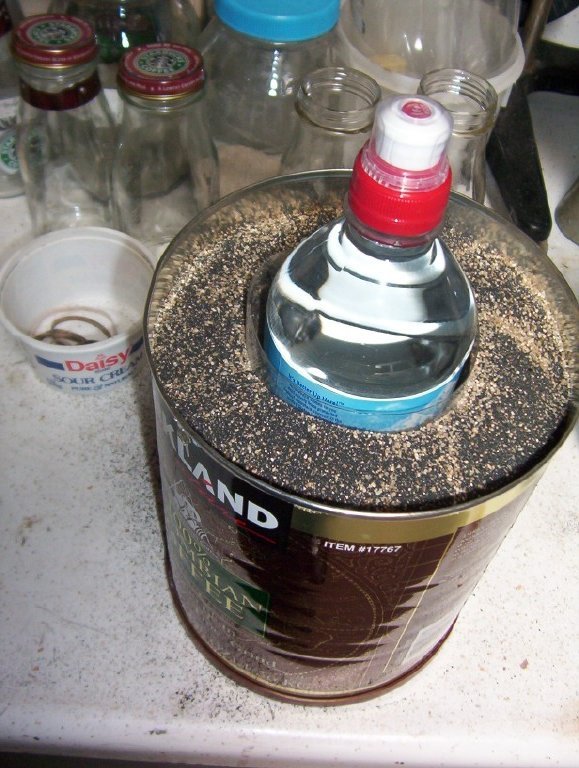
i guess following reddpill's vid ... if it was heated it would align with the earth magnetic fieldThe apparatus for making this water is very simple. It consists of an empty new one gallon, in paint can, in which is placed an empty one liter soda bottle that has the top cut off at the level where it starts to get narrower. In the space between the inner wall of the paint can and the empty one liter container, magnetite is poured. This makes a cylinder of powdered magnetite about one and one half inches thick surrounding the one liter size hole in the center. Into this hole is placed a standard bottle of store bought spring water that is about 710 ml size (that's a 3 cup volume of water). It fits in very nicely.
just in case you don't know who is John V. MILEWSKI :
John V MILEWSKI : ORMUS Gold from Glass
John V. Milewski -- Single Crystal Filament Light -- USP # 4864186, #5404836
Dr. John V. Milewski is an Internationally recognized leader and consultant in his field of Advanced Materials. He is a professional engineer, scientist, inventor, entrepreneur, writer, publisher, editor and lecturer. He is a retired staff member of Los Alamos National Labs and has worked previously as a scientific staff member at Exxon Research Center and at Thiokol Chemical Rocket Engine Div. He recently founded his own research company called Superkinetic, Inc. where he is currently working on a revolutionary new electric light bulb based on using a single crystal fiber as a filament.
He is a graduate of the University of Notre Dame in Chemical Engineering (1951, Stevens Institute of Technology with an MS in Metallurgy (1959), and has his Ph.D. in Ceramic Engineering from Rutgers University (1873). Dr. Milewski holds 30 patents and has over 42 publications and has edited 4 books in his field.
In this write up Dr. Milewski will present information about his crystal growing business and his revolutionary unified field theory on SuperLight energy and he hopes to tie these two together to bring about cheap, clean energy and healing and regeneration.
In March 2000 Dr. John V. Milewski along with his son Dr. Peter D. Milewski were honored to have their crystal filament light bulb invention Patent # 4,864,186 put on permanent exhibit at the Smithsonian American History Museum. This is part of a new exhibit titled "Lighting a Revolution" honoring the six most significant ideas in lighting field from 1950 to 2000.
Last edited by MonsieurM; 04-15-2012, 12:59 PM.Leave a comment:
-
Regarding Magnetite.
I've posted this earlier, but deem it quite important so I'll post t again incase some missed it. Maybe we also need to be experimenting with clay casings as clay naturally has Magnetite within it and when heated re-aligns the magnetic fields of the 'pot/bowl/jar' after cooling to the earths magnetic fields. This will also have an effect on the crystals inside the casing...kinda like a Baghdad battery approach.Originally posted by MonsieurM View Post
Magnetite Properties with Heat - Ancient Secrets Of Clay Amphora Vessels
Also, the experiments so far have had a larger amount of copper involved, where as the magnesium has been smaller in size. Would it be better the other way round as like on Earth where the earth produces 300-400 thousand times 'negative' ions than positive? I could be wrong in thinking that but it was something I thought about.Leave a comment:
-
One more comment I would like to add :
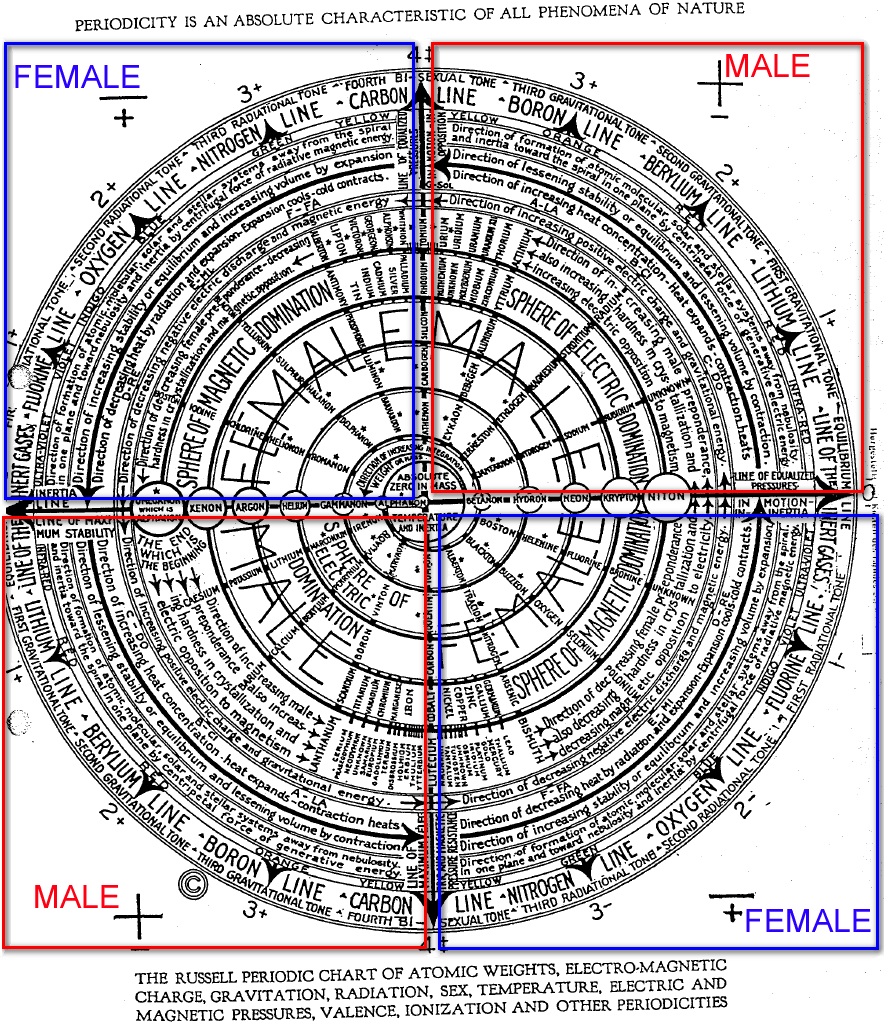
look at the spiral periodic table the upper red square ... find " direction of male preponderance" / "increasing electric opposition to magnetism "
a while back posted some info on Boron from Physorg ... read the 2 posts on boron ... you will see a common pattern
Let's not forget Tourmaline - Wikipedia, the free encyclopedia
Tourmaline is a crystal boron silicate mineral compounded with elements such as aluminium, iron, magnesium, sodium, lithium, or potassium. Tourmaline is classified as a semi-precious stone and the gem comes in a wide variety of colors. The name comes from the Sinhalese word "Thuramali" (තුරමලි) or "Thoramalli" (තෝරමල්ලි), which applied to different gemstones found in Sri Lanka.
Electric Domination
tourmaline
Boron is found on the lower red Square with a value of + 3 and closest to the center on the same level as Lithium which has a value of +1 ; boron has a higher Male PreponderanceTourmaline, "The Electric Stone", is exploited in hundreds of patents. Here are several select patents and articles of especial interest in regard to the production of electricity by tourmaline, and agriculture.
 Last edited by MonsieurM; 04-15-2012, 01:24 AM.
Leave a comment:
-
your logic stands as both elements are as far apart from the Neutral : Silicon in this caseOriginally posted by Allwest View Post .... but remember it is one of the parameter you can play with ...
take the case of magnesium and Fluorine ... they are not on the same Octave ...but if we refer to the Spiral Table :
Fluorine (lower right blue square ) has a value of - 1
Sulfure a value of + 2
Magnesium a value of + 2
also you'd want your mix to be of electric domination
Last edited by MonsieurM; 04-14-2012, 04:21 AM.Leave a comment:
-
MonsieurM
Okay the circle chart
I see (Lithium - Male) and (Fluorine + female)
So if we follow the same for magnesium-male, I would want to use Fluorine+ female or sulphur or Sulfur + female
Yes? No?Leave a comment:
-
MonsieurM
Okay lets take this one step at a time, Friday night fun
I see the lower picture chart
The box that has neon in it
It shows Lithium + and Fluorine-, this follows the chart I have been using
Now you see the box that has Krypton, this shows copper above Zinc
Not per the chart I have been using
Same box-Calcium and potassium is correct to my other chartLeave a comment:
Leave a comment: