
been playing with the circuit simulator at falstad a series lc circuit can get out of hand real quick producing voltage and amperage levels that are unreal.
very interesting, good thing it will be used on the secondary's.
-
Type of core will I think contribute to its success
from less permeability in the primary to high one in the secondary core
resonance for the output can be achievedLeave a comment:
-
Solfeggio frequencies - Wikipedia, the free encyclopedia
If we made a coil resonate at 963 hz could it also be tuned to the lower frequency's of the scale.
I think it could using variable capacitors, this could get very interesting.Leave a comment:
-
Tesla is everywhere
Solfeggio frequencies - Wikipedia, the free encyclopediaThe "Solfeggio frequencies" are cyclic variation of the numbers 369, 147 and 258.Leave a comment:
-
Here's a good site relating to series and parallel lc circuits
Q and bandwidth of a resonant circuit : RESONANCE
Resonance and the geometric construction are key
If you think about it we have a coil osculating at a certain frequency that is isolated by the magnetic shunts and satellite coils that osculate at the same frequency but are not isolated, this should draw energy into the satellite coils they should have an imense electric field orbiting them and no power from the center primary will flow to the outer secondary's, this is not an induction device its a resonating sink.
But what frequency?
soonLeave a comment:
-
Making a Lc circuit resonate at a particular frequency can be accomplished by varying the capacitance but there should be an optimum coil size or the capacitance would be large.
I read somewhere that a person asked an alien how their spacecraft flew and he said they tuned in to the frequency of the universe
There is so much info and misinfo on the web that we have to take everything with a grain of salt, but I thought this was interesting.
There's alot to do, I want to build but I need to study more, I want a clear direction when I start.Leave a comment:
-
While looking at frequencies I ran across this site,Science and the Scriptures
interestingLeave a comment:
-
Hey guys thanks for the links
Iv been thinking about frequency's and building a resonating device, maybe we should think about the effects of certain frequency's and chose a frequency that we want to be in the vicinity of
Coil size is important I would like to use single directional windings so I will be looking into this more, coil size will determine the size of the device.
Something else that has crossed my mind is the relationship of the ring sizes and phi, I would like to give this every opportunity to work so Im trying to look ahead.
daveLeave a comment:
-
I saw the picture , there are two primary windings : which one is the power and which one is sensing coil ? I think the missing point is capacitor, we need it to lower resonant frequency because if it's too high much is radiated into space in form of RF and heat.Originally posted by ekpod View PostLeave a comment:
-
Duncan,
Thank you for sharing your expertise; after viewing the content of 'TV-part 1' I am now going over part 2, but thought you would like to know about the H-Bridge circuit built by Groundloop, Gotoluc and others at the Overunity forum in case you've not already. There is additional video content by Gotoluc showing how acheiving resonation will harness the ZPE.
Dave45,
I would certainly be interested to view the eventual results of your experiment with the Bi-Toroid technology; it appears you are off to a good start.
Perhaps the results I have gained by the use of a self resonant circuit envisioned by Jeanna and Lidmotor will prove to be of some use in these matters. It does not seem to have clear scope results yet, although preliminary meter values indicate an automatic tuning to the load.
Video: Resonance Effects 12 by Gotoluc
Discussion: Resonance Effects, page 3 featuring the H-Bridge circuit
Results & Diagram: Toroidal Resonator, aka Jeanna's Light by LidmotorLeave a comment:
-
I personally think soft iron wire wrapped into cores is the best option,
and the cheapest as well.
daveLeave a comment:
-
Not much time for building these last months, looking after a sick family member and household, but following with great interest when I can.
Just a quick question:
Would the following in theory satisfy core requirements for Thane's BiTT?
Ferrite toroid with tightly fit iron rod across inner diameter for the primary. This would give primary lower mag permeability, and the two opposite toroid halves, wound in cw and ccw fashion, higher permeability.
Will try if able, but time is fleeting (to quote the song right now.
Bob
PS: Dave - thanks for your posts - the visuals help.Leave a comment:
-
for consideration..
TV-part I - YouTubeOriginally posted by ekpod View Post
from this web page
Dan Combine | MERLib.orgLast edited by Duncan; 11-17-2012, 07:30 AM.Leave a comment:
-
We should remember that the actual output powers Thane showed for the BiTT
were quite low from what I have seen. mW power levels, at such low power
levels the chance of measurement error is high.
If someone shows a BiTT outputting even 50 Watts continuously while requiring
less continuous input over a period of say 15 minutes I will be very surprised.
I mean seriously if the system can be scaled up, then maybe people should
think about scaling up so they can at least show 5 or 10 Watts of continuous
average output power.
It is easy to show high efficiency when only part of the system is investigated or
only part of the input is measured. If powering from the grid the input should
be measured directly out of the wall socket and when a battery all the input
power from all batteries needs to be considered while the load is being powered.
..Leave a comment:
 my new toy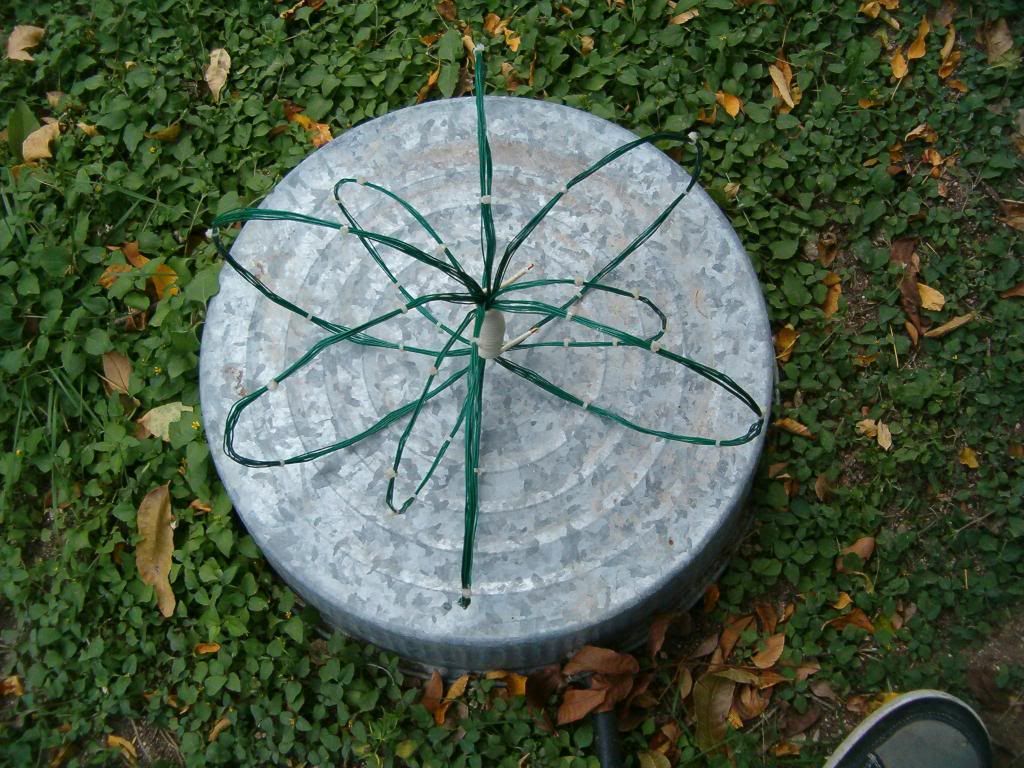

Leave a comment: