Announcement

Collapse
No announcement yet.

Peter Daysh Davey Water Heater Query

Collapse
X
 
  • Filter
  • Time
  • Show
Clear All
new posts

  • MonsieurM
    replied
    Originally posted by MonsieurM View Post
    with you on that, it is a possibility , it is the same principle used to break water into HHO

    Huifang XU, et al -- Zn Oxide photoelectrolysis

    Zn Oxide photoelectrolysis


    if you can break it apart, you can heat it
    from the same article:

    The researchers, led by UW-Madison geologist and crystal specialist Huifang Xu, grew nanocrystals of two common crystals, zinc oxide and barium titanate (quartz is just as good ), and placed them in water. When pulsed with ultrasonic vibrations, the nanofibers flexed and catalyzed a chemical reaction to split the water molecules into hydrogen and oxygen. UW-Madison Mechanical Engineering Professor Xiaochun Li lent theoretical and experimental expertise to the ultrasonic vibrations part of the research.

    bhaas post:


    The answer to the dilemma is ultrasonics. It is an experimental fact ultrasound of
    600,000 cycles f
    ocused on a vial of water can cause it to boil. This means that sound of this frequency
    disintegrates large quantities of soft electrons in the water. The sudden release of hard electrons produces
    tremendous thermal agitation of water molecules. A DC ultrasonic transducer attached to the tube would produce
    sufficient free electrons to be entrained for the unit to have almost unlimited output potential. The tube functions
    like a sounding board.
    ps: the 300hz for the ring maybe pulsed Dc

    Pulsed DC - Wikipedia, the free encyclopedia

    Pulsed DC or PDC is the form of wave produced from a half-wave rectifier or a full-wave rectifier. Full wave rectified ac is more commonly known as Rectified AC. PDC has some characteristics of both alternating current (AC) and direct current (DC) waveforms. The voltage of a DC wave is roughly constant, whereas the voltage of an AC waveform continually varies between positive and negative values. Like an AC wave, the voltage of a PDC wave continually varies, but like a DC wave, the sign of the voltage is constant.
    Last edited by MonsieurM; 09-11-2011, 11:33 PM.

    Leave a comment:


  • bhaas
    replied
    QUOTE=RAMSET

    Have you ever seen or heard of a device specificaly built to resonate at this frequency in water?
    No I haven't.

    Your help in the replication would be appreciated
    obviously you have an opinion !
    That's about all I have regarding this. I have no way of really working on anything at the moment. Lost house and shop in 2006.

    The kind of help we would like is getting this device asap.
    All I can offer right now are ideas.

    Tuning question
    When I tuned for swr on transmiters it was not the volumn but the length that mattered [to an extent]

    Core feels the "Mass" is where the Tune lays?

    I thought to shave the Length?[sand],

    Is it both?

    Isn't there some math somewhere regarding wavelengths and sizes? Tuning forks for instance come to mind now that I think about it. I'd start there. Look for patterns...


    Chet
    Last edited by bhaas; 09-11-2011, 11:11 PM.

    Leave a comment:


  • MonsieurM
    replied
    Resonance Tube: Velocity of Sound

    Resonance Tube: Velocity of Sound

    Object: To observe the resonance phenomenon in an open ended cylindrical tube. To use the resonance to determine the velocity of sound in air at ordinary temperatures.

    Introduction: The velocity with which sound travels in any medium may be determined if the frequency and the wavelength are known
    Tesla Sees Evidence Radio and Light Are Sound

    Tesla Sees Evidence Radio and Light Are Sound -Apr 8, 1934


    Last edited by MonsieurM; 09-11-2011, 10:54 PM.

    Leave a comment:


  • RAMSET
    replied
    Humor us

    bhaas

    Have you ever seen or heard of a device specificaly built to resonate at this frequency in water?
    Your help in the replication would be appreciated
    obviously you have an opinion !

    The kind of help we would like is Vetting this device asap.

    Tuning question
    When I tuned for swr on transmiters it was not the volumn but the length that mattered [to an extent]

    Core feels the "Mass" is where the Tune lays?

    I thought to shave the Length?[sand],

    Is it both?

    Chet

    Leave a comment:


  • Slovenia
    replied
    Tuning Beer Can (Spray Foam)

    Once we figure out the approximate tuned in area for a particular sized can, we can speed up the process of honing cans by spraying them full of foam insulation. When the foam hardens, it will keep the can very rigid until we have honed it to the proper point. When we're done honing, we just put a blow torch to the foam, and it will come right out of the can with no problems at all. Just wanted to share this. Since you won't know where to tune it on the first can, you probably don't want to use this method because it might take several attempts of reloading the can with foam and then taking the foam out to check and see if you got the 60 Hz tuning right.

    Leave a comment:


  • Slovenia
    replied
    Interesting Stuff!!

    Interesting Stuff Bhass!!

    Originally posted by bhaas View Post
    [IMG]http://imageshack.us/photo/my-images/28/josephcatertheultimater.jpg
    [/IMG]

    Many years ago the author designed a greatly improved version of the Hubbard device. A prototype (according to
    information imparted to the author by an individual who knew one of the individuals involved in the experiment)
    produced sensational results. It was supposed to have put out so much current that the output coil disintegrated.
    This particular design will not be given here because the application of a new principle can render all of the above
    mentioned devices obsolete. This particular type of generator was hinted at in Chapter 14.

    The experiments of Schauberger and others have confirmed the enormous and almost unlimited quantities of
    electricity housed in water. The following is an absurdly simple and practical method of extracting this energy. It
    employs the Coanda or cloud-buster effect. A plastic tube about 14" to 16" long and about 2.5" in diameter is
    filled with distilled water. At each end, exposed to the water, are two copper terminals for both the output and input.

    Rechargeable dry cells of suitable voltage are hooked up in series to the input terminals. When the two
    output terminals are shorted or hooked up to a load electricity starts flowing. This is current entrained by the input
    current. When high voltage is applied the output voltage is almost as great as the input voltage. However, the
    amperage is inadequate. The answer to the dilemma is ultrasonics. It is an experimental fact ultrasound of
    600,000 cycles focused on a vial of water can cause it to boil. This means that sound of this frequency
    disintegrates large quantities of soft electrons in the water. The sudden release of hard electrons produces
    tremendous thermal agitation of water molecules. A DC ultrasonic transducer attached to the tube would produce
    sufficient free electrons to be entrained for the unit to have almost unlimited output potential. The tube functions
    like a sounding board. The author has been given powerful evidence that two different individuals who received
    the above information from him, got sensational results with the generator. They had access to such a
    transducer. Unfortunately, the power elite, who have had this writer monitored 24 hours a day, have so far
    managed to prevent him from acquiring one.

    As for the two individuals mentioned above, greed and ego evidently took over. In any event, the vested interests
    moved in and put them out of business. They have remained incommunicado ever since. An associate of the
    author built a siren about the size of a large fist that generated a frequency of 600 000 cycles! When focused on
    a small container of water, the water boiled! Obviously it could be used instead of a DC transducer on the water
    generator. A small DC motor could operate the siren. It would be far more effective than a transducer since the
    sound produced would have a higher intensity. There is also another advantage. With the siren the generator
    could be produced at a lower cost. Transducers are expensive. The diagram in Fig. 31 shows how the described
    generator can be built.

    Leave a comment:


  • bhaas
    replied


    Uploaded with ImageShack.us


    Many years ago the author designed a greatly improved version of the Hubbard device. A prototype (according to
    information imparted to the author by an individual who knew one of the individuals involved in the experiment)
    produced sensational results. It was supposed to have put out so much current that the output coil disintegrated.
    This particular design will not be given here because the application of a new principle can render all of the above
    mentioned devices obsolete. This particular type of generator was hinted at in Chapter 14.

    The experiments of Schauberger and others have confirmed the enormous and almost unlimited quantities of
    electricity housed in water. The following is an absurdly simple and practical method of extracting this energy. It
    employs the Coanda or cloud-buster effect. A plastic tube about 14" to 16" long and about 2.5" in diameter is
    filled with distilled water. At each end, exposed to the water, are two copper terminals for both the output and input.

    Rechargeable dry cells of suitable voltage are hooked up in series to the input terminals. When the two
    output terminals are shorted or hooked up to a load electricity starts flowing. This is current entrained by the input
    current. When high voltage is applied the output voltage is almost as great as the input voltage. However, the
    amperage is inadequate. The answer to the dilemma is ultrasonics. It is an experimental fact ultrasound of
    600,000 cycles focused on a vial of water can cause it to boil. This means that sound of this frequency
    disintegrates large quantities of soft electrons in the water. The sudden release of hard electrons produces
    tremendous thermal agitation of water molecules. A DC ultrasonic transducer attached to the tube would produce
    sufficient free electrons to be entrained for the unit to have almost unlimited output potential. The tube functions
    like a sounding board. The author has been given powerful evidence that two different individuals who received
    the above information from him, got sensational results with the generator. They had access to such a
    transducer. Unfortunately, the power elite, who have had this writer monitored 24 hours a day, have so far
    managed to prevent him from acquiring one.

    As for the two individuals mentioned above, greed and ego evidently took over. In any event, the vested interests
    moved in and put them out of business. They have remained incommunicado ever since. An associate of the
    author built a siren about the size of a large fist that generated a frequency of 600 000 cycles! When focused on
    a small container of water, the water boiled! Obviously it could be used instead of a DC transducer on the water
    generator. A small DC motor could operate the siren. It would be far more effective than a transducer since the
    sound produced would have a higher intensity. There is also another advantage. With the siren the generator
    could be produced at a lower cost. Transducers are expensive. The diagram in Fig. 31 shows how the described
    generator can be built.

    This is quoted from the book: "Joseph Cater - The Ultimate Reality"
    Last edited by bhaas; 09-11-2011, 09:28 PM.

    Leave a comment:


  • bhaas
    replied
    Originally posted by MonsieurM View Post
    with you on that, it is a possibility , it is the same principle used to break water into HHO

    Huifang XU, et al -- Zn Oxide photoelectrolysis

    Zn Oxide photoelectrolysis


    if you can break it apart, you can heat it
    Using those foggers that you can buy anywhere in an HHO chamber changes things dramatically.

    Leave a comment:


  • bhaas
    replied
    Originally posted by eternalightwithin View Post
    I don't believe it will resonate at the same frequency in water as in air
    Thank you. I think there might be some misdirection regarding this. Common sense tells me that if you put 2 exposed electrodes into water, it'll be the current that creates the heat. Not resonance.

    Leave a comment:


  • bhaas
    replied
    Originally posted by Core View Post
    So you are saying that if you are under water with a steel tank that this tank will not make a sound if you hit it with a hammer?

    -Core
    No I'm not. I'm saying that this experiment in its current configuration will never work. If you could make a mechanical vibrator that bangs at 60 Hz you'd have a chance. But the frequency to boil water (According to Joseph Cater in his book "The Ultimate reality" <--- You should download it) is 600Khz not 50 or 60 Hz. If it was that easy, everyone would be doing it.

    But putting a ring around a can then putting it into water is nonsense to me. I could be wrong though.

    Leave a comment:


  • eternalightwithin
    replied
    I don't believe it will resonate at the same frequency in water as in air

    Originally posted by bhaas View Post
    How do you plan on getting it to resonate once you dunk it into the water? Or is it a sealed resonant chamber that you put into the water???

    Leave a comment:


  • Core
    replied
    Originally posted by bhaas View Post
    Put a tuning fork in water then hit it. It won't vibrate. Not to be confused with sonar. The element creating sonar isn't exposed to water. It's sealed and vibrating/emitting waves that travel through the water.

    The way it's pictured in the diagram will never work IMO. All you'd be doing is using the current from the AC to heat the water. In distilled water it might take a really long time to heat using the current due to low resistance.

    The trick is to resonate the water molecules causing them to heat up by friction. That's why, IMO the resonating chamber would need to be sealed.

    Microwaves resonate the water till it boils and you don't dunk the magnetron into the water. Correct???
    So you are saying that if you are under water with a steel tank that this tank will not make a sound if you hit it with a hammer?

    -Core

    Leave a comment:


  • MonsieurM
    replied
    Originally posted by bhaas View Post
    Wouldn't it just be easier to take the aluminum can and put a piezo electrical transducer/vibrator in the can itself, seal it up, put it in a bowl of water and resonate away till you find the sweet spot???

    A 555 timer circuit would work great for this.
    with you on that, it is a possibility , it is the same principle used to break water into HHO

    Huifang XU, et al -- Zn Oxide photoelectrolysis

    Zn Oxide photoelectrolysis

    Abstract: Materials scientists at the University of Wisconsin-Madison have designed a way to harvest small amounts of waste energy and harness them to turn water into usable hydrogen fuel. The process is simple, efficient and recycles otherwise-wasted energy into a usable form.

    "This study provides a simple and cost-effective technology for direct water splitting that may generate hydrogen fuels by scavenging energy wastes such as noise or stray vibrations from the environment," the authors write in a new paper, published March 2 in the Journal of Physical Chemistry Letters. "This new discovery may have potential implications in solving the challenging energy and environmental issues that we are facing today and in the future."
    if you can break it apart, you can heat it
    Last edited by MonsieurM; 09-11-2011, 08:28 PM.

    Leave a comment:


  • bhaas
    replied
    Wouldn't it just be easier to take the aluminum can and put a piezo electrical transducer/vibrator in the can itself, seal it up, put it in a bowl of water and resonate away till you find the sweet spot???

    A 555 timer circuit would work great for this.

    Leave a comment:


  • bhaas
    replied
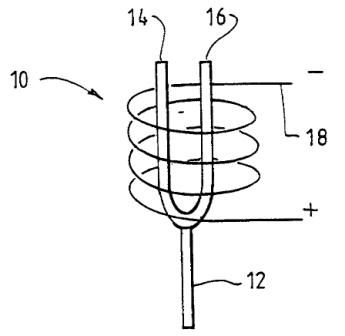
    Put a tuning fork in water then hit it. It won't vibrate. Not to be confused with sonar. The element creating sonar isn't exposed to water. It's sealed and vibrating/emitting waves that travel through the water.

    The way it's pictured in the diagram will never work IMO. All you'd be doing is using the current from the AC to heat the water. In distilled water it might take a really long time to heat using the current due to low resistance.

    The trick is to resonate the water molecules causing them to heat up by friction. That's why, IMO the resonating chamber would need to be sealed.

    Microwaves resonate the water till it boils and you don't dunk the magnetron into the water. Correct???
    Last edited by bhaas; 09-11-2011, 07:46 PM.

    Leave a comment:

Working...
X