This forum is preserved as a permanent archive. The community continues at eMedia Press.

Announcement

Collapse
No announcement yet.

Free Energy At Last Step By Step Must See

Collapse
X
 
  • Filter
  • Time
  • Show
Clear All
new posts

  • **~Imhotep~**
    replied
    thanks for tips. i have been a little over excited, and throwing many combinations a quick as i can, and sometimes not checking thorough data. just trying to do many combinations to get data out as soon as possible. I am starting to slow down a bit, i am actually rediscovering this thing, i think they call it sleep..lol doing many projects simultaneously, and i tend to forget that there is a lot of people trying these fans who don't have much experience in the field and don't know all the precautions. always play safe

    i have had good success with the lithium piles. they are expensive and monitoring extensively. learning more and more about the different builds of batteries. was aware of of NiHM in conventional chargers getting very hot. and so taking extra precautions on those type of batteries, monitoring with infrared temp read out as well as touch. and they seem to charge cold. i actually ran into one i cannot explain (NiHM) it charges up to 1.5 volts, no capacity but charges caps. but will not run any resistive or inductive loads. strange maybe its the first cold energy battery..lol.

    but will be taking many precautions, as i hope others do as well.
    Last edited by **~Imhotep~**; 07-13-2008, 07:04 PM.

    Leave a comment:


  • ren
    replied
    No worries Imhotep, while we are at it then please exersize caution with non lead acid batteries, including but not limited to nicads, Metal Hydrides and Lithium Ions. It pays to search around and learn the basics of how that battery functions and how it is charged conventionally. Nicads for example can be discharged at C1 rates, and in some instances charged at C1 as well. But they are extremely sensitive to over charging. By all means consider the consequences of a small bomb going off inside your lab/house/garage/babys room. Read up on safety precautions and use common sense.

    Leave a comment:


  • Bodkins
    replied
    Yes i have no idea what im doing with caps so thanks for slapping my wrists
    can anyone please push me in the right direction as to how i setup and use a 555 chip i have two 12v 12amp batterys waiting to be used.
    Also im just using the orignal bedini circuit is this corect?
    Hope im not being to much of a pain.
    Last edited by Bodkins; 05-31-2008, 04:33 AM.

    Leave a comment:


  • **~Imhotep~**
    replied
    Originally posted by ren View Post
    The capacitor will most likely break down over time from over charging. If you want a cheap good cap for pulsing pull apart an old disposable camera for the flash capacitor. Thats what I used in the previous video. Its low uF but high voltage and designed with dumping energy in mind. Theres plenty of high voltage caps in old circuit boards, vcr's etc. As always Be careful with your tests and experiments.

    You can experiment by placing a micro switch in the negative leg of the capacitor to charge battery. Monitor your cap voltage and complete the circuit at desired voltage by triggering the switch manually. Then its just a little step away to install the 555 to do it for you
    ty very much i just got a old camera from my father today! and i also owned my own electronics shops and I have BOATLOADS! to put it conservatively of old stock left..lol. im very glad that your are contributing to this thread. I had read in previous post that ppl were dumping it through caps and had used a small one just to see how fast and far the voltage went and became worried that other people would just dumo it through just any cap. ty for straightening everyone out to do it safely.

    you and themart and other seniors please watch over this thread so newbies coming off youtube dont make bad mistakes this is a little fan but it packs a punch when it is wired just the right way. again ty ty ty ty

    Leave a comment:


  • ren
    replied
    The capacitor will most likely break down over time from over charging. If you want a cheap good cap for pulsing pull apart an old disposable camera for the flash capacitor. Thats what I used in the previous video. Its low uF but high voltage and designed with dumping energy in mind. Theres plenty of high voltage caps in old circuit boards, vcr's etc. As always Be careful with your tests and experiments.

    You can experiment by placing a micro switch in the negative leg of the capacitor to charge battery. Monitor your cap voltage and complete the circuit at desired voltage by triggering the switch manually. Then its just a little step away to install the 555 to do it for you

    Leave a comment:


  • **~Imhotep~**
    replied
    Interesting note :

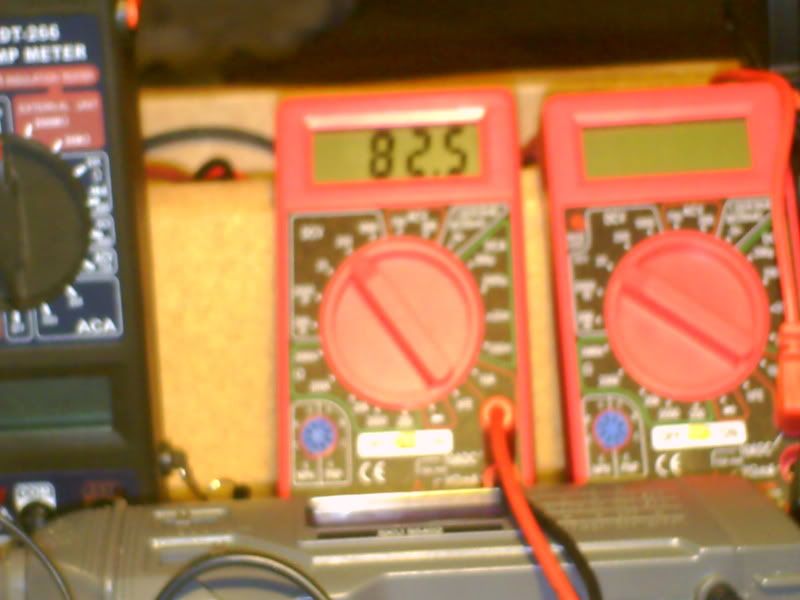
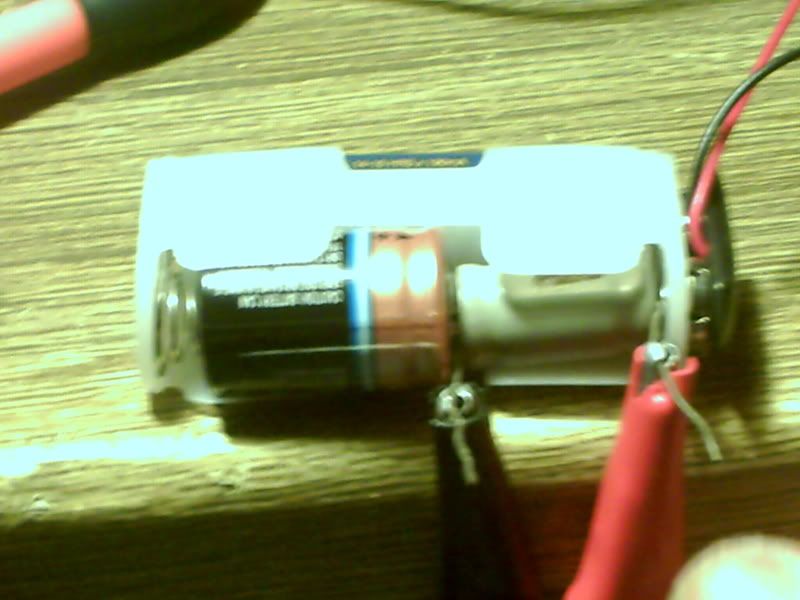
    For those of you, who are pulsing batteries with caps. I/m posting pictures of a setup i have recently done. Would like for someone to comment, at the excessive voltages coming off this cap.

    have u tried this?
    I only tapped the charge clip for one second i haven't left it on any longer than that before i get any confirmation from someone i would not recommend pulsing through a cap. it reaches 80 volts in about a half second and keeps climbing. Ive worked with a lot of caps and i do not think this is a good idea, but i may be wrong, but for those that are experimenting with these fans ,(warning) the cap i am using is a 50 volt 3.3uf bipolar electrolytic in series with a 3 volt lithium pile cr2 and a 2000mah NiHM aa battery.

    Before i get confirmation i would not suggest doing this, pulsing through a cap.
    heres the pics of the setup and the voltage.


    i am monitoring fan output voltage and across the cap please be careful, don't let these caps explode. Mine has not exploded yet i have not left it on long enough. Only about a half second.

    Warning!!!!!
    Last edited by **~Imhotep~**; 07-13-2008, 07:03 PM. Reason: spelling

    Leave a comment:


  • Rayaz
    replied
    I am just wondering if someone can point out how to check the continuity of the coils before I put this fan back together? I am having much trouble soldering it together so I'd like to make sure it is done properly before I actually finish it.

    And also what should the readings be when connected where? Opposite from each post or clockwise? etc. Thanks!

    I did take the advice and get lead free w/ silver solder instead of Rosin Core, it works a bit better, I managed to solder one post!

    I have a Mastercraft digital mutimeter, it has lots of options but none of them change when I put the leads on the coils.. Since resistance is measured with the omega sign (horseshoe) I'd imagine thats what I'm supposed to be using?? Well I have the options of 2000k, 200k, 20k, 2000, 200 but none do anything except show a 1.

    edit: I just got a reading to show up using 2000k mode, it went from 1600 to 400 and then stabilized between 800-1400, this was from 2 opposite posts, and this is all I could get to happen, any advice?

    I also noticed one of the gap between coils has no wire crossing it, is this a problem?
    Last edited by Rayaz; 05-31-2008, 02:53 AM.

    Leave a comment:


  • **~Imhotep~**
    replied
    Please share all results. And other people are having fun seeing what else that can do with it also. Im actually shocked how different aspects of these little fans there is to them. As far the dead batteries, it does take alot of time and patience, i ran mine off power supplys to test the desulfation of the units, 3 in parallel, and on the batteries i have seen the crystals over time and that fascinated me. But then i repeat over time..lol. Will be glad to see any adaptations. yay! Ren had a VERY interesting one a few post back.

    Leave a comment:


  • Bodkins
    replied
    Hello everyone
    Found this sit when looking for stuff to swap batterys I think you may find it useful,You can buy kits for simple switching to overheating circuits which could be used moniter the Transister. Please check it out.

    Electroteach - educational electronic kits for students, teachers and hobbiests

    Really hope this help someone
    Take Care All

    Leave a comment:


  • InTheField
    replied
    On dead batteries...

    I know it's a relatively short amount of time (one week), but I've already come to the conclusion that I'm only going to deal with trying to resurrect a really old and dead battery if I don't have anything else to put on one of the SSGs. I have many other experiments and things that I want to do/try and spending the LONG LONG amount of time needed to coax a dead battery back feels too counterproductive to me. Doing that was my "original" plan. Build the ~Imhotep~ Bedini SSG with a case fan and use it to resurrect the seriously dead battery that I have and didn't feel like spending the money to replace. Instead of being excited about how well it put some charge back into that dead battery in just a week, I'm much more interested and excited to "play" with other aspects of this than use it for the old dead battery! Just my not so humble opinion...

    Leave a comment:


  • InTheField
    replied
    Sorry I haven't posted too much...

    Sometimes "work" and "life" have to be top priority...

    Anyway, I ran the original ~Imhotep~ Bedini case fan setup (80mm fan) for a week and disconnected it today. The source battery went from ~12.88V down to ~11.48V over the course of a week. The charge battery was D-E-A-D at best showing less than 2V, but with any load at all went to 0V, 0A immediately. After a week, it is reading a constant 3.69V and seems to hold that "ok" with a load (after about 15-20 seconds, it ticks down a notch...)

    As mentioned before, I got a bunch of these really nice ball-bearing 120mm case fans that were being tossed. The first one, I basically mangled, but learned how to get them apart from the experience. I did the modifications on one of these and it is now cranking away. It goes much faster and really glows the neon brightly when not connected to a charge battery. I used the pot to get the brightest glow. I've noticed that slows down the fan speed, but that's the point where things start to "hum" sweetly. I've got these two running in parallel off of the same source battery (a fresh 12V 7aH battery that started out reading ~12.68V) and I'm using them both to charge the original source battery (that had dropped to ~11.48, but in the past 30-45 minutes is back up to ~11.75V)... I'm going to let this charge that battery back up at least to ~12.88V again.

    In the meantime, I want to build a battery swapper. I picked up most of the parts (that I didn't already have) and when I get time (hopefully soon), I'll build it. If/When it's working, I'll let everyone know... and share of course.

    Take care,

    ITF

    Leave a comment:


  • ren
    replied
    Originally posted by elcman View Post
    I've found and hooked up a new (old) battery to the charging station. I've popped the fuse on my multimeter. (Due to turning it past Ohms while it was connected to a live battery.)

    From what I can tell, though, the battery is completely dead, which I tested by initially making it the source battery. This thing has been sitting unused in a UPS since 2003. It seems like it might be picking up a charge, though. I still see the neon bulb, but it gets very dim when I connect the battery to the charging end.

    Is this because the battery isn't accepting the full charge or is it because I have a 14.4v battery hooked up to what I believe is a 12v Lead Acid battery? (No markings indicate what it is besides the "Lead" reference.)

    I really can't wait to make a workshop in my garage for stuff like this.

    Hi Elcman,

    What is your multimeter fuse rated at? I have done that before with a 500ma fuse which popped when I increased current draw past that. You need to keep track of amperage on the front end, and dont turn your potentiometer too fast. Also have a small resistor coming off your pot if you dont already, this way if you turn resistance right down it still has some there as a buffer. Very important if you dont want to go blowing pots and transistors.

    I have been conditioning a 20 amp hour battery slowly over the last few weeks. When I first got it I couldnt put it on the larger machine I have. I couldnt even run it on my smallest machine at full amp draw without the neons glowing. In the end I was able to charge it with 25ma input, just enough to keep the wheel turning. After a few cycles it has dramatically improved and it is holding charge more each cycle. Like Mart said, some batteries arent worth it. You could even start off really gently and run a lower voltage on the front, say 9 volts charging the 12 volt damaged battery. Push too much current and the neons will just light up.

    One of the reasons people say "what is charging the battery?" is because conventional meters show such a huge difference in amps in vs amps out. For example I have done a test which shows 1 amp input vs 100ma output, yet the charge battery is charging at the same pace of the run battery depletion. So it cant be all current that is charging the battery can it...

    Leave a comment:


  • **~Imhotep~**
    replied
    8000 rpms wow zoom ,you are absolutely right about batteries losing water ,
    the quick charge video battery had to have distiled water added to it.
    i saw info that said the only reconditioning you can try (i have not tried this my self) for a badly sulfated battery except for my recent bendini experience which has worked for me ,is to empty content of battery carefully (acid water CAuTION!!) and replace with distilled water only. i like bendini way myself.
    thought id share

    Leave a comment:


  • theremart
    replied
    Notes about dead batteries.

    1. Be prepared to wait a LONG LONG Time.
    2. Be praprared to wait months.
    3. ... you get the idea.

    Sometimes dead batteries are not worth the effort. If they have been cooked to death by heat, or they have lost the water inside. ( Maitence free batteries do loose water. Best to add only add distilled water back to them.

    I find it is best to find multiple sources for your batteries and work on the ones that show promise.

    Another safety note. charging batteries with very little water in them is very dangerous. Also before you let your circuit run for hours check all of the parts to make sure nothing is getting hot. Ashes for a home or a garage is a hard thing to live in.

    I also am a computer IT person, I don't have the supply you do but, the one fan i have going is giving me alot of fun.

    Today i put 18V to the fan and it got over 8,000 RPM Zoom +

    Mart

    Leave a comment:


  • elcman
    replied
    I've found and hooked up a new (old) battery to the charging station. I've popped the fuse on my multimeter. (Due to turning it past Ohms while it was connected to a live battery.)

    From what I can tell, though, the battery is completely dead, which I tested by initially making it the source battery. This thing has been sitting unused in a UPS since 2003. It seems like it might be picking up a charge, though. I still see the neon bulb, but it gets very dim when I connect the battery to the charging end.

    Is this because the battery isn't accepting the full charge or is it because I have a 14.4v battery hooked up to what I believe is a 12v Lead Acid battery? (No markings indicate what it is besides the "Lead" reference.)

    I really can't wait to make a workshop in my garage for stuff like this.

    Leave a comment:

Working...
X