This forum is preserved as a permanent archive. The community continues at eMedia Press.

Announcement

Collapse
No announcement yet.

Ionization & Water Fuel

Collapse
X
 
  • Filter
  • Time
  • Show
Clear All
new posts

  • Aaron
    replied
    Meyer also reuses exhaust

    Meyer shows in multiple patents the re-ducting of exhaust or cell output back
    to be mixed with newly formed hho.

    espacenet — Bibliographic data

    Abstract of EP 0111574 (A1)
    System and apparatus for the controlled intermixing of hydrogen volatile gas with non-combustible gasses in a combustion system. The system utilizes a hydrogen generator (10) for developing a controlled output of hydrogen and oxygen gasses and non-volatile gasses such as nitrogen. The hydrogen gas with the attendant gasses and added gasses are fed via a line (5) (9) to an air intake system (20) in a controlled ratio. The combined gasses after intermixing are fed to a combustion chamber (30) wherein the mixture is ignited. The exhaust gasses of the combustion chamber (30) are returned in a closed loop arrangement to the mixing chamber (40) as non-volatile gasses to control the velocity and temperature of the volatile hydrogen gas.


    This link is the pic...
    Last edited by Aaron; 01-29-2010, 06:42 PM.

    Leave a comment:


  • Aaron
    replied
    N(OH)2O = Nitrogen Hydroxide Oxide


    Found this quote online:

    "Nitrogen is completely non-flammable, that does not prevent it from rapidly bonding with Hydrogen when separated from it's O2 Counterpart. Nitrogen Hydroxide, N(OH)2O, is one of the most volatile incendiary gasses and bonds when hydrogen, oxygen, and nitrogen are present as individual molecules."
    Last edited by Aaron; 01-29-2010, 05:54 PM.

    Leave a comment:


  • Aaron
    replied
    N(OH)2O = Nitrogen Hydroxide Oxide

    N(OH)2O = Nitrogen Hydroxide Oxide

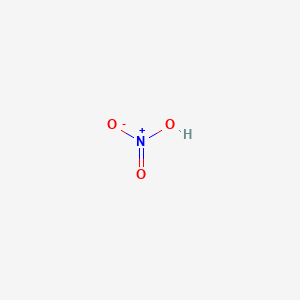
    NHO3 is same thing?

    Is this gas a form of gaseous nitric acid?

    -----------------------------------------------------------

    Nitric Acid - PubChem Public Chemical Database

    Nitric Acid - Compound Summary (CID 944)

    Nitric acid (HNO3). A colorless liquid that is used in the manufacture of inorganic and organic nitrates and nitro compounds for fertilizers, dye intermediates, explosives, and many different organic chemicals. Continued exposure to vapor may cause chronic bronchitis; chemical pneumonitis may occur.

    Explosive Agents - Substances that are energetically unstable and can produce a sudden expansion of the material, called an explosion, which is accompanied by heat, pressure and noise. Other things which have been described as explosive that are not included here are explosive action of laser heating, human performance, sudden epidemiological outbreaks, or fast cell growth.

    -----------------

    I think I posted this before but:
    Wiley InterScience :: Session Cookies

    Experimental Detection of the H2NO3 Radical
    Fulvio Cacace, Prof. Dr. *, Giulia de Petris, Prof. Dr. *email: Fulvio Cacace ([email protected])**It's in the air. The authors detected by neutralization-reionization mass spectrometry the nitrogen hydroxide oxide 3, which is relevant to atmospheric chemistry and a key intermediate in the NO32- reduction, as a gaseous radical species with a lifetime of 1 s. The charged precursor utilized was the high-energy isomer 2 from the protonation of HNO3, whereas the more stable isomer 1 dissociates upon neutralization.Received: 20 May 2003Digital Object Identifier (DOI)
    10.1002/cphc.200300849 About DOI

    Leave a comment:


  • Aaron
    replied
    exhaust purpose?

    Originally posted by tutanka View Post
    true function of exaust gas
    Is exhaust after combustion primarily n2, o2 and h2?

    It is hot exhaust I would imagine. Heat helps to cause ionization by
    "thermionic emission".

    If exhaust is hot and it leaves the engine, it helps cool the engine. lol
    I guess that is obvious but just listing what I can think of off the top
    of my head.

    If that exhaust is reused, we have h2 separated from o already meaning
    that it is easier to combust over and over if it is recycled with less
    energy needed each time?

    I guess as you mentioned that some of the combustion byproduct is
    some nox and moisture comparable to gasoline combustion except none
    of the carbon-based emissions.

    Leave a comment:


  • Murlin
    replied
    Wow, just freaking wow...I am not a chemist or physicist, but I know when I see something of great significance. This thread has got to rank at the top of the list.


    All that was missing was the plasma plug...

    They always said for the thing to work you needed to create a lightning ball inside the combustion chamber and I never knew what they meant by that.

    You know, I am not sure Meyers even knew exactly how his stuff worked. So I am not certain he was trying to mislead anyone. He just did it in a different way. There is always going to be more than one way to get from A to B.
    I watched a video of when he and his partner introduced steam into the engine for the first time and if you listen closely he was excited about the water vapor keeping the engine's temperature under control.

    This stuff burns real hot without it...hotter than the surface of the sun if I remember correctly.


    great work guys,

    Murlin

    Leave a comment:


  • tutanka
    replied
    Originally posted by Aaron View Post
    It is very interesting!

    I think this will stimulate a new trend in the water fuel world.

    There are some "nitrogen hydroxy" websites but none are really
    exploring chemistry beyond the idea of "nitrogen hydroxy".

    Well, I think the answer is here in this thread thanks to your help!

    I can try some experiments in a few months.

    There are many others now with plasma ignition and hho cell experience
    that are in a position to just apply a few more things! Everyone that has
    failed with just HHO I hope will see a different perspective.

    This is powerfully exciting!
    Aaron I agree with you but the very important point is that YOU DON'T NEED TO PRODUCE MORE HYDROGEN FROM WATER .This little thread created in few days contains more true informations, people can work on that and I'm sure reach the success in no more time.. of course .. there are some others points to clarify, for example the true function of exaust gas, but important is to take the right way..
    Last edited by tutanka; 01-29-2010, 04:39 PM.

    Leave a comment:


  • Aaron
    replied
    @Tutanka

    It is very interesting!

    I think this will stimulate a new trend in the water fuel world.

    There are some "nitrogen hydroxy" websites but none are really
    exploring chemistry beyond the idea of "nitrogen hydroxy".

    Well, I think the answer is here in this thread thanks to your help!

    I can try some experiments in a few months.

    There are many others now with plasma ignition and hho cell experience
    that are in a position to just apply a few more things! Everyone that has
    failed with just HHO I hope will see a different perspective.

    This is powerfully exciting!

    Leave a comment:


  • tutanka
    replied
    Originally posted by Aaron View Post
    espacenet — Bibliographic data

    In that patent, he shows ambient air going in mixing with hydrogen.
    It is burned and the "non combustible" which he only shows oxygen
    but of course there is going to be nitrogen, that oxygen/hydrogen
    gets routed back to mix with hydrogen and get moved through again.

    Adjusting oxy/nit volume back to hydrogen can probably increase
    or decrease flame temp. Less oxy/nit, the more "browns gas" type
    flame and with more oxy/nit, the more thermal energy we get out.

    Do you see the same on this patent?

    -------------------------------------------------------

    So if first stage is just the production of the "nitrogen hydroxide."

    It gets compressed/heated and homogenized...heat could
    help do more ionization (thermionic emission) and then
    the piston moves down after TDC creating vacuum pulling
    apart hydrogen from oxygen and nitrogen from hydrogen?

    Then there is plasma, which separates h2 into h1 and nitrogen
    absorbs electrons and so does maybe some of the oxygen
    to prevent h2 from joining oxygen and forming water after
    combusion?
    Plasma is needed because inside mixture that you create you don't have only N(OH)2 but also "conductive" water doplets inside and from combustion you need do not obtain some water vapour from exaust gas but similarry to standard engine, of course without COx products and no more NOx
    Last edited by tutanka; 01-30-2010, 09:47 AM.

    Leave a comment:


  • Aaron
    replied
    Meyer and process

    espacenet — Bibliographic data

    In that patent, he shows ambient air going in mixing with hydrogen.
    It is burned and the "non combustible" which he only shows oxygen
    but of course there is going to be nitrogen, that oxygen/hydrogen
    gets routed back to mix with hydrogen and get moved through again.

    Adjusting oxy/nit volume back to hydrogen can probably increase
    or decrease flame temp. Less oxy/nit, the more "browns gas" type
    flame and with more oxy/nit, the more thermal energy we get out.

    Do you see the same on this patent?

    -------------------------------------------------------

    So if first stage is just the production of the "nitrogen hydroxide."

    It gets compressed/heated and homogenized...heat could
    help do more ionization (thermionic emission) and then
    the piston moves down after TDC creating vacuum pulling
    apart hydrogen from oxygen and nitrogen from hydrogen?

    Then there is plasma, which separates h2 into h1 and nitrogen
    absorbs electrons and so does maybe some of the oxygen
    to prevent h2 from joining oxygen and forming water after
    combusion?

    Leave a comment:


  • tutanka
    replied
    Originally posted by Aaron View Post
    Yes, I see importance of nitrogen now.

    I think Meyers intentionally misled people through all of his documents
    for protection.
    I have every written that .. but only for protect the system.... because in fact when peoples und as work isn't complicated replace that .. but.. in all case N(OH)20 is only first stage..

    Leave a comment:


  • Aaron
    replied
    Meyers and Nitrogen

    Yes, I see importance of nitrogen now.

    I think Meyers intentionally misled people through all of his documents
    for protection.

    Leave a comment:


  • tutanka
    replied
    Originally posted by Aaron View Post
    I think that explains Meyer's results better than big hho production.
    Is that what he did? I can't say for sure.
    Explain in part.. meyer is cryptic no clear and some words are fake creating an protection wall..in all cases meyer system is composed from two parts AND NITROGEN ATOMIC is very important part as you can understand now..
    Last edited by tutanka; 01-29-2010, 08:57 AM.

    Leave a comment:


  • Aaron
    replied
    vs. Meyers

    I think that explains Meyer's results better than big hho production.
    Is that what he did? I can't say for sure.

    Leave a comment:


  • tutanka
    replied
    Originally posted by Aaron View Post
    The post you quoted was simply me showing references to those that
    claim that they have "nitrogen hydroxide" successful experiments are
    doing a few specific things, bubbling air into the hho cell, etc...

    The direction I would go was in the message before that:

    1. hho cell
    2. warmth (by "electrolysis" current anyway) and/or air from pcv or exhaust
    like the geet
    3. vacuum (which should happen through bubbler by venturi effect being
    ducted into intake)
    4. magnetic field
    5. bubbled air (most nitrogen hydroxy pages talk about this a lot)
    6. possibly koh from lye is needed as electrolyte - helps or hurts?
    not sure of chemistry

    -------------------------------------------------------------

    That is just for the HHO cell and does not address the air.

    I would do the above for the HHO cell and I would treat the air
    with the AP you diagrammed, hairdryer type circuit with lights and
    magnetic field.

    I would duct the HHO cell output into the treated air right before the
    intake throttle/butterfly. I would set engine to 2-6 degrees after TDC.
    I would use the plasma ignition system that I know how to make since
    I don't know yours and I would try both polarities positive forward and
    the inverse one. I would use resistorless plug with ground strap cut off.

    That above is subject to change depending on what you say about
    it. lol
    That is nitrogen hydroxide formula N(OH)2O.. My question is .. for you meyer system used also that ... or not?
    Last edited by tutanka; 01-29-2010, 08:48 AM.

    Leave a comment:


  • Aaron
    replied
    plan of action

    The post you quoted was simply me showing references to those that
    claim that they have "nitrogen hydroxide" successful experiments are
    doing a few specific things, bubbling air into the hho cell, etc...

    The direction I would go was in the message before that:

    1. hho cell
    2. warmth (by "electrolysis" current anyway) and/or air from pcv or exhaust
    like the geet
    3. vacuum (which should happen through bubbler by venturi effect being
    ducted into intake)
    4. magnetic field
    5. bubbled air (most nitrogen hydroxy pages talk about this a lot)
    6. possibly koh from lye is needed as electrolyte - helps or hurts?
    not sure of chemistry

    -------------------------------------------------------------

    That is just for the HHO cell and does not address the air.

    I would do the above for the HHO cell and I would treat the air
    with the AP you diagrammed, hairdryer type circuit with lights and
    magnetic field.

    I would duct the HHO cell output into the treated air right before the
    intake throttle/butterfly. I would set engine to 2-6 degrees after TDC.
    I would use the plasma ignition system that I know how to make since
    I don't know yours and I would try both polarities positive forward and
    the inverse one. I would use resistorless plug with ground strap cut off.

    That above is subject to change depending on what you say about
    it. lol

    Leave a comment:

Working...
X