

-
Mr Clean says in the comments to that Youtube video that he got his here for $200 Canadian. Those large C-cores look MASSIVE, far bigger than what's available on their site - maybe it's just an optical illusion, like the moon-size.
-
Hi. Finally I got my handa on a 2 channel scope so my experiments can go forward.
I want to build this BiTT/AuroraTek type of transformer using the core configuration as in the picture.
2 primary coils on those sticking out core legs and secondaries wrapped around those long 3 square parts of the assembly.
This should reduce some flux leakage in comparison to AuroraTek demo xformer.Attached FilesLast edited by kEhYo77; 09-23-2014, 04:25 PM.Leave a comment:
-
-
Core Selections
Here is ONE place to buy C-cores and if anyone can beat these prices please post the website.
Alpha-Core - Standard and Custom Cores from grain oriented silicon steel
Amorphous C-Cores

After finding the size in MM for instance A & B or over all dimentions with both half's together look at this current price list. Use the part number on the far left to identify the part number and price.
http://flyer.thenetteam.net/C-CorePrice.jpgLeave a comment:
-
Mr Clean Bitt
Thanks Mr Clean for all of the fun you offer on YOUTUBE
Bi-Toroid: MetGlass Powerlite Cores, Testing For Input Current Drop, Strong Performance Maintained - YouTube

Leave a comment:
-
Thanks Sprocket
I busted out my acrobat reader 6 and this old book is my kind. I just love the old history of how so much of chemistry got started in the last few centuries.
Great read for freshening up.
Mike
PS here is the Bitt. Notice the large core material is 50 percent larger on the two secondaries and the smaller amount of material one on each side so the primary can feed the secondaries.
 Last edited by BroMikey; 09-22-2014, 02:40 AM.
Leave a comment:
-
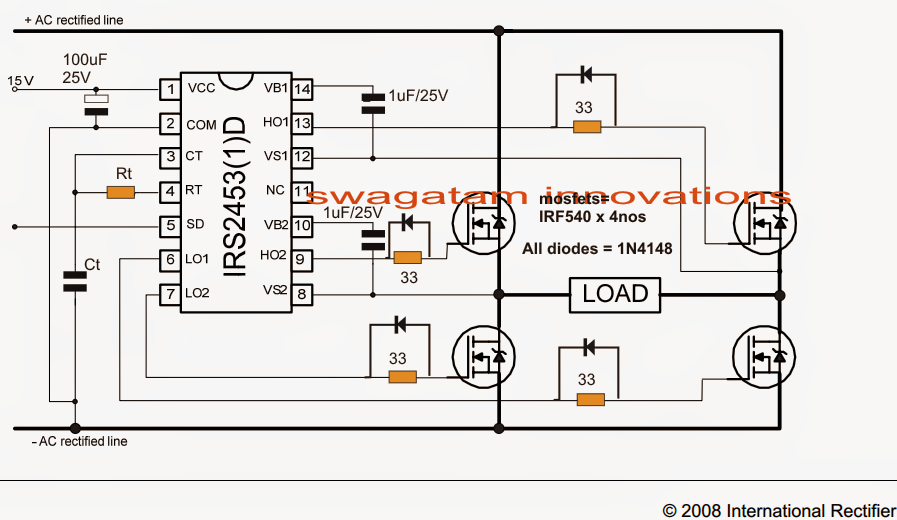
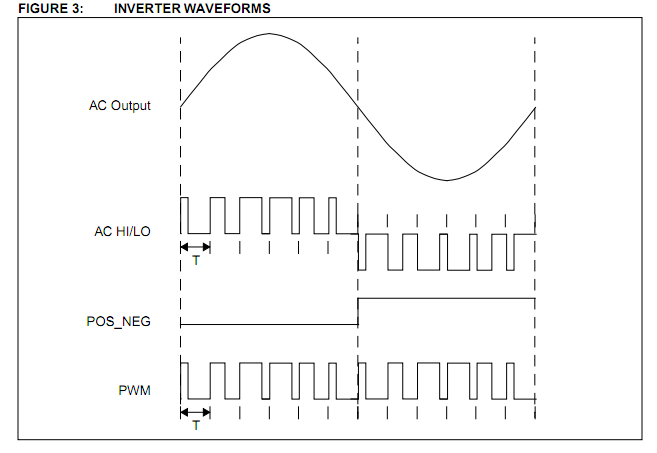
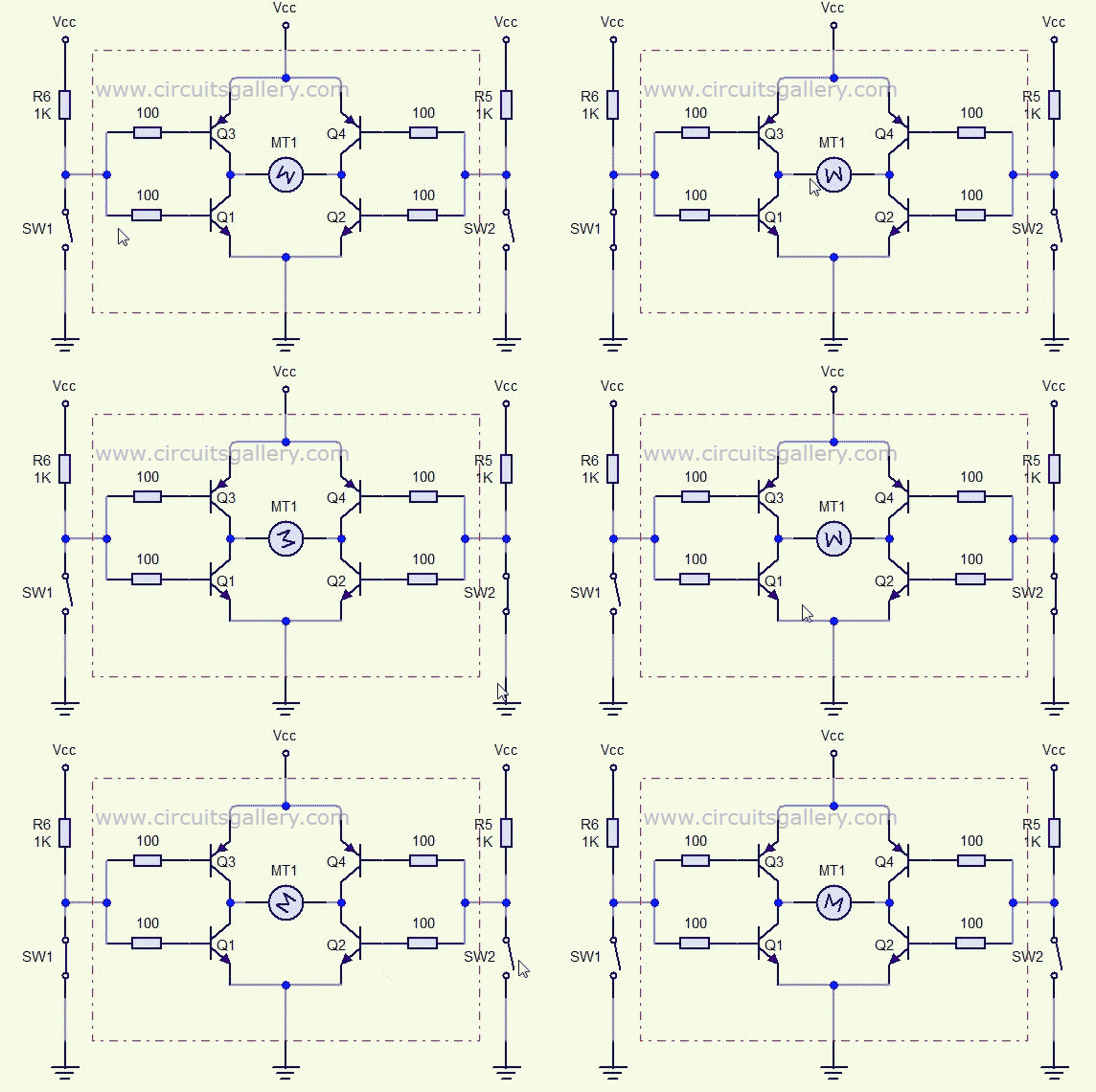
H Bridge to sinewave jenny
Some H bridge circuits

http://www.irf.com/product-info/data...a/irs2453d.pdf
 Last edited by BroMikey; 09-21-2014, 12:22 AM.
Leave a comment:
-
Non DC Pulsing ALTERNATING CURRENT SINE WAVE
Hey Sprocket me tooOriginally posted by sprocket View Post
I have always been into the electrochem stuff since 1968 and on ward.
My chem teacher stopped me from making HHO said it was to dangerous in 8th grade, I flunked him and he gave me a "D"
while giving Kirk Gibson an "A" for skipping over half the classroom work because he was an ICON JOCK.
I loved to do chemistry early on, never gave up even though one of those teachers was always trying to get me over to his house for all the wrong reasons. The gym teach was on my paper route and had 2-3 girls over every other night for extracurricular fun, if you know what I mean. This is Detroit 1970's.
I learned right away that the teachers didn't give a rats rear end about learning. So I had to learn it all on my own. Detroit like any public school is a sewer.
Here is a board ads9850 making lfe easy
http://www.eimodule.com/download/EIM...Module_V01.pdf
I will be giving you all what I can on resin casting and if I get the camera out show you the failed casting as well as the good ones.
Boron microspheres go well with epoxy bound ferrites.
Find me that book sprocket I don't see it. I like Chemistry. I eat a book fast now because I used to live in the library all summer till I reached college and drove to bigger ones.
Mike
Leave a comment:
-
@BroMikey - Speaking of learning, there's a book I read recently called "The Story Of Chemistry" by Bernard Jaffe which I thought was excellent. I'm not really into chemistry, but the author does an excellent job in knitting together the major discoveries made over more than 100+ years. Even more now - the book was written in 1957! So, a book recommendation of sorts!
It's available on-line 'somewhere'...
Leave a comment:
-
@Matthew Jones - I've never had the courage (or the workshop!) to try building transformers. That figure of 30% efficiency you mentioned surprised me though - all that work and only 30% efficient! Are commercially-made transformers really that superior - Google gives figures of 95-98%?
@BroMikey - Haha, you certainly are serious about this! About the H-bridge, yes, when you are talking about 100 of watts to KW's, it is the only way to go if you are looking for a fairly good 'constructed' sine-wave output. But with the situation I had in mind of 5-10W, you could drive a pair of transistors in class-B with your sine-gen and get an almost perfect sine output. The downside is the much lower power capability than is possible with the H-bridge setup - the H-bridge mosfets are either full-on or full-off and therefore don't generate much heat relative to the current they're shunting, whereas a class-B transistors are in a half-on/half-off state during their on-time, so will dissipate much more heat. The up-side is that there is a lot less components involved so is much easier to build.
@kEhYo77 - Would that not mean that AuroraTek has gotten a license from Thane to manufacture? Those metglass cores are petty expensive - wonder what kind of profit per-unit Bill will be making? The charger is priced at $595.Leave a comment:
-
Study Guide of Magnets
Whenever we start a new thought it is best to not take for granted that it is a snap like falling off a log so to speak or like we know everything and can learn nothing.
Embarrassing as it may seem we know very little about magnetism and how it reacts.
Chech out the children's SCIENCE GUY show here
Magnetism How Does It Work? - YouTube
When I first discovered that I knew nothing about the dynamics of operation of the way that natures runs things was when I worked with gases when they are burned and flowing down tube.
I learned to study the simplest ideas ahead of time.
If we are going to mimic the complex process with it's potential variables of magnetic alignments, a crash course for the kiddies is in order.
Starting with me, I must confess I don't think about this everyday so I need some of the iron filings knocked off the rough edges of my understanding.
Some of the most basics are the building blocks to making magnetic flux bars or ferrites of any kind.
Like Iron, nickel and cobalt being the three major metals that are magnetic.
When we explore casting iron filings into a placid medium we must understand a few things about the way castings are best formed first regardless of the casted items.
I have casted many things into a wide range of epoxies and filers. I will share when I get back more.
Here are a few more to stimulate our beginning. This is where we start. Simplicity is the answer.
Weather casting with microsheres, ground glass or the dust of your choosing cast is a science without adding magnetism.
We know very little.
I dug up a dozen Patents that will blow your mind on the process of commonly casted ferrites.
Drr Magneto
ELECTROMAGNETISM (FULL SHOW) - YouTube
Last edited by BroMikey; 09-20-2014, 08:02 PM.Leave a comment:
-
Yes I sound crazy, but!
I've poured some Magnetite cores using candle wax as the binding agent. I poured into paper forms (paper nickel tubes with a nickel plugging the bottom are easy, the kind that are already round in the bag.) When hot the oil base of the wax has little if any surface tension on the fe3o4, meaning if you keep the form hot and don't move it the fe3o4 will settle and compact itself, separating from the excess wax up top and it is a readily visible separation. The paper can be peeled off easily and the wax itself is an insulator also if you want to make them stronger just take a roll of brown paper and some white school glue from the hardware store. Dilute the glue with water and tape the end of the paper to the core. then roll the paper around the core brushing it with the diluted glue burping the air as you roll it up. Use about a foot of paper and let it dry it will shrink to fit the core.Originally posted by Web000x View Post
The end product will be strong paintable, oil resistant and recyclable.
note I've tried using epoxy to mix magnetite, never again.
Leave a comment:
-
Transformer Core
Hello Web000x
I sure will follow Peters instructions.
Here is a fun video for making an average size transformer.
(Transformer 5) - Core construction of power transformers - YouTube
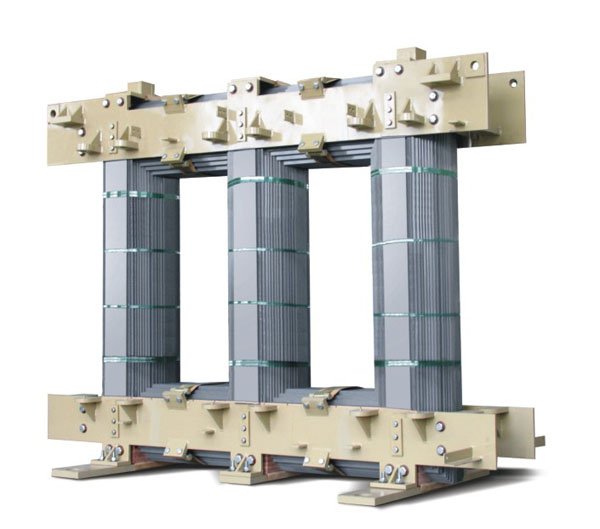
transformer core testing - YouTubeLast edited by BroMikey; 09-19-2014, 11:00 PM.Leave a comment:
-
I tried casting a core with magnetite and epoxy once. It performed horribly. I could get no transformer action out of two separate windings. However, I didn't use big enough neo magnets during the curing process. Make sure you don't skip any of Peter L's advice when making them or you will undoubtedly fail at producing anything useful..Originally posted by BroMikey View Post
DaveLeave a comment:
-
Originally posted by sprocket View Post
Hi Sprocket
Here is what I have well similar to it I got this off of EBAY here is a welder transformer I have winding for a 220vac

I want to input 1000 watts so I can get three.
@Sprocket and @Web000x
Yes to both I have some 8" and 7" toroidals and want to pour some magnetite bars to construct the double square TOROID.
Yes to everything. Yes I will use the simple audio amp with signal genny.
I think I don't really know what I am talking about on windings though. If I use these 220vac winding slipping them off the old core, maybe a random winding would need to be adjusted on the primary?
I really don't know so I figure get my feet wet first!!
Yes the signal generator should be connected to an H-Bridge to get a smoother more pure sine wave. Great document sprocket. That is the best.
Bubba can sure build a circuit dudes.
I have some materials to throw together a test but really I did want to start with anything less than a well considered double square toroid. Carefully selecting core materials that will have flux density pathways that are easiest between the two secondaries and the core on the primary should be many times greater.
Permalloy or ferrite have varying grades of conductivity. Look in the picture you will see bands of parmalloy my question it where can I get some?

I want to try this frame work so maybe a 15" X 10" is a good start.
MikeLeave a comment:
Leave a comment: