Announcement

Collapse
No announcement yet.

Peter Daysh Davey Water Heater Query

Collapse
X
 
  • Filter
  • Time
  • Show
Clear All
new posts

  • MonsieurM
    replied
    Originally posted by provelless View Post
    Gordon I tried the little experiment with the test tube/cup. I'm getting no reaction. Note that i am using a plastic tube and plastic glass. Wiring is one lead going into test tube filled with water, other lead going into cup filled with water, the other two wires are feed with 110 volts each and I'm not using the ground, any suggestions?
    do you happen to have a picture or drawing of it...I am more of a visual person...like you it seems

    Thank you for joining us in refining the boiler and trying to figure out what is going on

    ps: I am on 220V 60 Hz and the cup was made of glass don't know if that could make a difference

    Last edited by MonsieurM; 12-27-2011, 06:13 PM.

    Leave a comment:


  • PhysicsProf
    replied
    Originally posted by provelless View Post
    Hi, another one here that has watched this thread since day one. This one interested me because of the seemily simplicity of it, no solid state devices which I know little about. I'm more of a gearhead, I understand things I can visually see, obviously there's things going on with this boiler that you can't see but once someone gets the fine details worked out it should be a simple build.
    Gordon I tried the little experiment with the test tube/cup. I'm getting no reaction. Note that i am using a plastic tube and plastic glass. Wiring is one lead going into test tube filled with water, other lead going into cup filled with water, the other two wires are feed with 110 volts each and I'm not using the ground, any suggestions?
    Welcome, Provelless! I think there are a number of lurkers reading, and glad you joined the discussion -- and the experimenting!

    "Theory Guides, but Experiment Decides!"

    Leave a comment:


  • evolvingape
    replied
    The Second Heartbeat of Creation

    f = 9 in a base 9 math... the first fundamental frequency of the second beat is 9^2

    Once you have experienced two beats of Creation's heart... ask yourself what 1/4 rotation = 90 degrees means applied to the third beat of Creation's heart...

    I will stop there... don't wanna spoil it for you

    hehe

    Rob

    Leave a comment:


  • provelless
    replied
    Hi, another one here that has watched this thread since day one. This one interested me because of the seemily simplicity of it, no solid state devices which I know little about. I'm more of a gearhead, I understand things I can visually see, obviously there's things going on with this boiler that you can't see but once someone gets the fine details worked out it should be a simple build.
    Gordon I tried the little experiment with the test tube/cup. I'm getting no reaction. Note that i am using a plastic tube and plastic glass. Wiring is one lead going into test tube filled with water, other lead going into cup filled with water, the other two wires are feed with 110 volts each and I'm not using the ground, any suggestions?

    Leave a comment:


  • evolvingape
    replied
    Do you see ?

    Hi everyone,

    Who has derived the last line and found 9^2 on the last beat ?

    How is 9^2 related to 3^4 ?

    Have you calculated the sub octave frequency formula's for term n when f = 1 ?

    What other relationships can you see ?

    hehe

    Rob

    Leave a comment:


  • Slovenia
    replied
    Mr. "C" Reply to Altair

    Mr. "C" Reply to Altair
    (Original Serbian Text Below)

    Odgovor na post Altair,
    1. niste dobro izračunali frekvenciju talasa od 260 mm
    probajte ponovo na ovoj stranici :
    Frequency to Wavelength Calculator - Wavelength to Frequency Calculator

    Leave a comment:


  • evolvingape
    replied
    The Heartbeat of Creation

    Hi Everyone,

    I want to show you something...

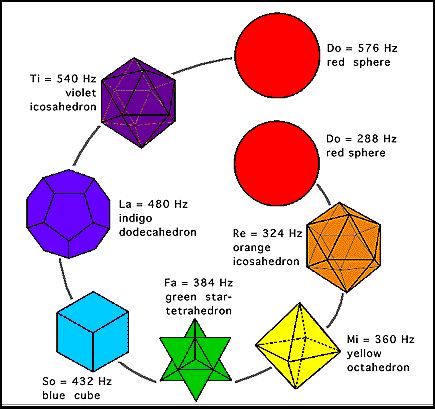
    Geometry-Phi-Harmonic Base 9 Octave Grid

    Rob

    Beautiful... isn't it ?
    Attached Files

    Leave a comment:


  • Slovenia
    replied
    Google Translate

    Google translate is the problem here. I can help. I'll pm you what he is telling you. It's not that hard once you get the hang of it.

    Originally posted by Altair View Post
    Ouch !
    That language barrier is getting taller, or I'm getting shorter
    Anyone who think they might help with that one ?

    Altair

    Leave a comment:


  • RAMSET
    replied
    How big is the space you are heating?

    Mr. DB
    How big a space will you be heating??
    Whats the average outside temp?
    Inside temp?

    -----------------------
    My walls in my Home are 16 inches thick [polyisocyanurate] Roof about the same
    My living Space in the winter is very small 700 sq,Ft
    when the Temp is 30F average it takes about 60kwh/24h [elec heat]
    to maintain 65 -70 F.

    Curious to see what size you are heating and your temps??
    a little House Calorimetry??

    Thanks
    Chet
    Last edited by RAMSET; 12-26-2011, 10:43 PM.

    Leave a comment:


  • Altair
    replied
    Ouch !
    That language barrier is getting taller, or I'm getting shorter
    Anyone who think they might help with that one ?

    Altair
    Last edited by Altair; 12-26-2011, 10:36 PM.

    Leave a comment:


  • daemonbart
    replied
    Steam energy!

    Hi

    I started my use of steam that goes away from my heater "project"

    For start I calculated that converting 30 l of water into steam needs about 19 kWh input of energy into water that allready is boiling.

    From this boiler I use also about 8-10kW heating my radiators. My input from grid is around 40 kWh/24h

    So my total output should be around 260 kWh and input around 40.

    COP = 6,5

    Use of steam will be a good way i think

    I will see how much steam i can get without running heat to radiators

    Kind rgds d

    Leave a comment:


  • PhysicsProf
    replied
    OK, here's the 1995 essay I wrote on sonofusion; not that this is what Prof. Savic or DaemonBart or others are seeing (necessarily):

    Newsgroups: sci.physics.fusion
    Subject: RE: Sonoluminescence and Fusion
    Date: 2 Mar 95 13:32:16 -0700
    Organization: Brigham Young University

    Dear colleagues:

    There have been several postings lately regarding sonoluminescence(SL),
    and a possible connection to fusion. Our work continues on searching for
    neutron emissions associated with bubble cavitation in sound fields,
    using our sensitive neutron detectors, deep underground, in Provo Canyon
    (Utah). I should report that we have not yet detected any neutron emissions
    from SL, in deuterium-filled bubbles in aqueous solutions. We have, however,
    achieved both multi-bubble and single-bubble (clock-like) SL using D2
    bubbles. Terry Bollinger and I suggested a possible connection between SL
    and fusion back in 1992 on this net, and I spoke briefly on the subject at the
    ICCF-3 meeting in Nagoya in October 1992. But nothing has panned out yet. We have not given up still.

    Below I send updated information from a previous post to s.p.f.:

    I would like to call your attention to two interesting articles on
    sonoluminescence (SL). The first was written by Lawrence Crum of
    the Univ. of Washington, one of the true gentlemen of modern
    science. His article appears in this month's issue of Physics
    Today (Sept. 1994). Appended to this post find an earlier
    commentary on Prof. Crum's colloquium at BYU in January 1994 and
    related ideas. Note that in that post the notion of fusion during
    bubble cavitation in SL is advanced -- indeed, this idea was
    discussed here on s.p.f. as early as 1992 (Jones, Bollinger, etc.).
    Well, Prof. Crum is bold enough to advance the idea in his Phys.
    Today article:

    "The strong probability that SBSL results from an imploding shock
    wave has now made this curious phenomenon one of considerable
    interest. ...This spherically symmetric implosion has the
    potential for creating some exotic physics... Calculations suggest
    that temperatures as high as 10^8 K are to be expected. This
    result has in turn prompted calculations of the possibilities of
    inertial confinement fusion with a deuterium-tritium gas mixture,
    which yield a qualified estimate of 40 neutrons per second under
    ideal conditions [ref. 9]."

    Whoa -- we can easily see 40 neutrons per *day* in our detector in
    the Provo Canyon tunnel laboratory.

    So we look at ref 9, which is a paper in Phys. Rev. Lett. 72 (1994)
    1380-1383 by Bradley Barber et al. from UCLA. (The second must-
    read paper.) The calculation there is based on a shock-wave model
    by Wu and Roberts which I have discussed previously here, found in
    PRLett. 70 (1993) 3424. The idea, in brief, is that the spherical
    sound wave in the water impinges on a bubble (here D2+T2) in the
    center of a spherical flask. As the bubble collapses, a shock wave
    forms which rapidly heats the gas near the origin. After
    reflection, the outgoing shock wave further heats the gas just
    heated by the incoming shock -- and the result 0.1 ps after
    focussing is a remarkable 3 X 10^8 K (!).

    Bradley et al. then use standard formulas for d-t fusion, based on
    sigma-v for d-t at 10 keV (10^8 K) to estimate a fusion yield of
    40 n/s.

    I have extended this calculation to hoped-for conditions of our
    experiments using sigma-v values for d-d fusion (collapsing bubble
    of deuterium simply), to get:

    Temp. in shock-heated D2 fusion neutron yield
    ------------------------ ---------------------
    10 keV 1400 n/hour
    5 keV 10 n/hour
    2 keV 0.2 n/hour

    Since our detector has an efficiency of 15% for 2.45 MeV neutrons
    (from d-d fusion) with a background rate of 0.65 counts/hour, the
    5 keV number (fusion yield of 10 n/h) would have to be achieved in
    order for us to detect a signal.
    Of course, if we could use D2+
    tritium in the bubble, D2+T2, then a much lower temperature would
    allow us to see the (14.1 MeV) neutrons from d-t fusion. Indeed,
    a temperature of 1 keV (11,600 K) would give a yield of about 10
    neutrons/h for d-t fusion -- again easy to see in our detector in
    Provo Canyon. But I think we'd better stick with D2 for the
    present. Stay tuned.

    I am intrigued also by Prof. Crum's comment that there is evidence
    for occasional "super shocks" in which "internal shock waves would
    occur that would be similar to those postulated for SBSL [see
    below] but driven at much higher initial velocities. Because of
    the transient nature of the phenomenon it would be very difficult
    to determine if and when these "super shocks" occurred." [Phys.
    Today, p. 28]

    I suggest that neutrons from fusion may provide a probe for such
    unusual events. [snip]

    My January 1994 post below is reposted to provide background for
    those who missed it:

    Prof. Lawrence Crum of the University of Washington provided a
    colloquium on the subject of "Synchronous Picosecond
    Sonoluminescence" (SP-SL) at BYU on January 21, 1994. Here is his
    abstract for his talk:

    When an acoustic wave of moderate pressure amplitude is propagated
    through an aqueous liquid, light emissions can be observed. This
    conversion of mechanical energy into electromagnetic energy
    represents and energy amplification per molecule of over eleven
    orders of magnitude! Recently, we made the discovery that a
    single, stable gas bubble, acoustically levitated in a liquid, can
    emit optical emissions each cycle for an unlimited period of time.

    Presumably, the oscillations of the bubble cause the gas in the
    interior to be heated to incandescent temperatures during the
    compression portion of the cycle. We have no current explanation
    for how this mechanical system sustains itself. Furthermore, some
    recent evidence from Putterman and colleagues at UCLA indicates
    that the lifetime of the optical pulse is less than 50 picoseconds,
    and that the temperatures elevated in the interior of the bubble
    for times on the order of tens of nanoseconds, it is likely that
    some rather unusual physics is occurring. The best guess is that
    a shock wave is created in the gas which is then elevated to high
    temperatures by inertial confinement. If shock waves are the
    mechanism for SL emission, then optimization of the process could
    lead to extraordinary physics. A general review of this intriguing
    phenomenon will be presented as well as the latest explanations for
    the anomalous behavior.


    Here I provide notes based on his talk and our discussions
    together, along with other literature.

    First, it is important to distinguish stable, SB-SL from the
    previously known *transient* sonoluminescence (T-SL). These appear
    to be quite different phenomena, as a table will demonstrate:

    Transient (garden-variety)SL Stable single-bubble SL [SB-SL]
    ----------------------------- --------------------------------

    Multiple cavitation sites One cavitation site (or few)
    with random spatial and with same bubble(s) repeatedly
    temporal distribution collapsing

    (To simplify discussion, I will consider the SB-SL case of a single
    bubble at the center of a spherical flask full of H2O or D2O.)

    Can be produced by traveling Requires standing sound waves (SW)
    or standing waves of sound

    Easily obtained, with much Very difficult to realize; requires
    gas dissolved in liquid <5% dissolved gasses. Bubble must
    be *injected* into liquid.

    Discovered 1933 by N.Marinesco Discovered 1988 by D. Gaitan, L.
    & J. Trillat. Crum and C. Church.

    Emitted light spectrum shows Emitted light shows no distinct
    distinct lines, e.g., N+N --> lines; rather, spectrum fits black
    N2; so chemiluminescence curve quite well.
    postulated.

    Bubles tend to collapse asym- Bubbles tend to collapse symmetric
    metrically, thus introducing "developing an imploding shock wave
    liquid into bubble, which is within the gas." [L.A. Crum, J.
    heated by adiabatic compression. Acoust. Soc. Am. 94(1993) 1 ]

    From above, Temp ~ 5000 K From above, Temp up to 100,000 K
    deduced, during cavitation. deduced during cavitation.

    Normal physics, no shock "Extraordinary physics"; shock waves
    waves needed. implied.

    Time between pulses quite Time between pulses clock-like;
    random; pulse-length typically pulse-length < 50 *pico*seconds
    several nanoseconds.

    (Sychronous picosecond SL:

    !__________!__________!__________!__________!_____ _____!____
    Time between light-flashes ! = 50 microsec +- 50 Picosec
    for 20 kHz driving field; sound source good to 1 part in
    10^4, light source stable to 1 part in 10^6. )


    No fusion possible. Fusion during cavitation possible?
    like inertial-confinement approach
    with holraum-like target. Allows
    compression with less heating than
    ablation approaches IMHO. No
    experimental tests yet. I suggest
    comparing p-d,d-d and d-t targets
    (gases in cavitating bubble).


    Additional notes from Barber and Putterman, Nature 352 (1991) 318:

    1. "SL is a non-equilibrium phenomenon in which the energy in a
    sound wave becomes highly concentrated so as to generate flashes
    of light in a liquid. We show here that these flashes, which
    comprise over 10^5 photons, are too fast to be resolved by the
    fastest photomultiplier tubes available. Furthermore, when SL is
    driven by a resonant sound field, the bursts can occur in a
    continuously repeating, regular fashion."

    2. "These bursts represent an amplification of energy by eleven
    orders of magnitude."

    3. "The flash widths that we find are so short that one wonders
    whether some phenomenon stimultes the atoms to fire in usison.
    Known cooperative phenomena include laser action, super-radiance
    and super-fluorescence. Any cooperative phenomenon underlying our
    observations must be of a spherical nature, however, because a
    randomly oriented dipose emission would lead to a broad spread in
    the distribution of pulse heights....no such broadening is seen.
    Nevertheless, it is reasonable to expect that some type of
    correlation characterizes the outgoing photons, because the spacing
    between light-emitting sources is much less than the wavelength of
    the emitted light."

    4. "The huge, spontaneous (non-equilibrium) amplification factors
    discussed above are noteworthy in that they are controllable and
    reproducible. In this respect, stable synchronous SL differs from
    other phenomena (such as dust explosions, ball lightning and highly
    speculative conditions for nuclear fusion) that also require large
    spontaneous energy concentrations. [Note evident reference to cold
    fusion.] If we could understand the mechanism behind synchronous
    SL, we might see a way to achieve large but controllable energy
    concentrations more generally."

    With colleagues, we are now preparing experiments to study stable,
    single-bubble SL as a possible means of achieving nuclear fusion
    reactions. Our neutron detectors are capable of unambiguously
    identifying neutron emissions at a rate of a few neutrons per hour.
    A previous posting describes our redundant detectors, employing
    fast waveform digitizers, in a deep tunnel in the Wasatch mountains
    near the campus of Brigham Young University.

    --Steven Jones (1995)

    Leave a comment:


  • PhysicsProf
    replied
    Thanks for the links, Monsieur M. Ah, sonofusion -- the good old days -- but nostalgia just isn't what it used to be!

    Now this comment I found googling,

    The earliest reference to the term "sonofusion" seems to be by Steven E. Jones, a professor at Brigham Young University. A graduate student of his at BYU, Jeannette Lawler, was involved in a search for "sonofusion" in D2O as early as December 10, 1992. A theoretical discussion was given in 1992 by Terry Bollinger. Jones provided another overview in 1995. [see next post]

    In 1992, Seth Putterman of UCLA indicated that his group had reached 100,000 C in sonoluminescence experiments, and thought 1 million C was possible. Roger Stringham claimed to have produced confined nuclear fusion via ultrasound in 1993. Also in 1993 Fukushima and Yamamoto wrote an article entitled "Sonofusion: Maximum Temperature Hot Spots".
    And the brief article of mine referenced and linked in the above; but I'll have to use a separate post as its just too long to post here.

    Leave a comment:


  • MonsieurM
    replied
    one more detail about the two overlaid tables using Rodin Math.... you can assign a color to each number as the following example:


    the pattern will surely appear to you

    Last edited by MonsieurM; 12-26-2011, 05:26 PM.

    Leave a comment:


  • MonsieurM
    replied
    Originally posted by PhysicsProf View Post
    Years ago, I worked with a small crystal sphere (approximately 7 cm diameter) that had a small-neck opening to admit water. On the side of the sphere, I had attached a piezo-electric transducer that allowed me to transmit ultra-sonic vibrations into the sphere.

    I had a lot of fun, learning with this device. By tuning the frequency from a signal generator, I was able to generate cavitations in the water in various patterns in the sphere. Beautiful sight -- to see the bubbles forming and collapsing inside the water. That was at least a dozen years ago, and was before I retired. I don't even know where that sphere is now... I am now an Emeritus Professor, with access to the lab equipment -- if I could find that sphere! I could make another one I suppose.

    The goal was to see whether cavitations in heavy water D2O would result in deuteron-deuteron fusion events, which would produce neutrons. However, with my device at the time, I did not see any neutron production from cavitations. I tested for neutrons using a sophisticated helium-3 filled detector, which is still available to me!

    Professor you have reproduced Fuller's Experiment with the sphere :


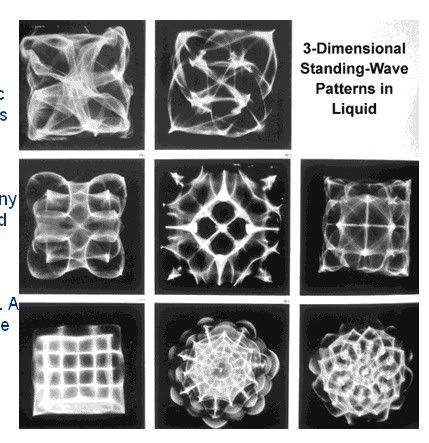
    also a thread on sonofusion


    in the water in various patterns in the sphere
    see also: http://www.energeticforum.com/renewa...phenomena.html
    Last edited by MonsieurM; 12-26-2011, 05:14 PM.

    Leave a comment:

Working...
X