
OK Chet you sound determined to re-visit this little project and as far as I'm concerned the more (and the quicker they arrive) the merrier. what I've seen needs duplicating we've rubbed shoulders for a long time and I would hate to see you (or anyone else for that matter hurt with this thing) so please be careful with what I have suggested.
water and electric along with a few loonies make bad bed fellows. Still here's a few tips and observations which might help but If you recall Lewis Carroll and the concept of an un-birthday . I'm forced to do something of the same with current electrical theory - aye stuff I've even taught just as it was in turn taught to me. I'm not relying on the theory here rather punching holes in it in a very un-electric way.
Remember the clip we probably all saw first ? This one
https://www.youtube.com/watch?v=LTV85J2QHj0
Beverly Lockhart tells us as soon as it comes in contact with water -- It boils, why didn't anybody apart from me listen to her?
Prof Peter Williamson tells us - Its the conductivity of the water - He has to, standard physics has no other answer to offer.(normally neither would I - this thing isn't normal)
So just FYI and to help you engineer I'll guide you through my own simplified thought process regarding this thing and starting with the way Prof Williamson has been trained to think. (me too)
this is standard physics, the dogma of 120 years . electrical energy = power x time (hence Kw/hrs)
In AC circuits the current is shown to lead or lag the voltage depending on if the circuit is capacitive or inductive. however the only useful and usable power is taught to be that which is 'in phase' as far as any student is concerned that means 'resistance' (or its inverse if you like as the good Prof tells us 'the conductance of the water').

Its not surprising we are all trained that the only 'real' energy is a result of I^2R and there ends electrical physics. If you should have the temerity to ask why this 'out of phase' should be corrected the answer that comes back is 'it wastes energy' . oh and how pray ? as heat ! as heat is the very epitome of energy. It makes something of the square peg that won't fit the round hole. uses energy in unexpected places might be a better answer - But thats a horse of a very different colour! It wasn't answered to my satisfaction years ago and nothings changed.
Before I go very much further I would like you to dwell for a moment on the short badly filmed clip I showed you this one -
http://www.energeticforum.com/redire...?v=teAksvLyaJ0
Do you see at the end of the clip the water is boiling furiously whilst the current draw falls away to almost nothing? since I am connected to the grid that current fall is pretty much proportional to power .
In short you have a quantity of water boiling furiously using very little energy.
any Plumbers here heard of an indirect heating coil ? - go heat a radiator or two !
In homes by far the biggest energy consumption is heating water.
This then has massive implications ! However for the moment lets stick with this cunning refinement of Pilot Officer Davey. As Chet says a frustrating itch that won't go away. It won't go away Chet because your spidery senses are telling you - Its all true
https://www.youtube.com/watch?v=pkHyRTlXwkY
Peter was well aware of patent protocol this was far from his first patent here's the artwork from one of his patents issued in 1950 for instance. (New Zealand 92428)
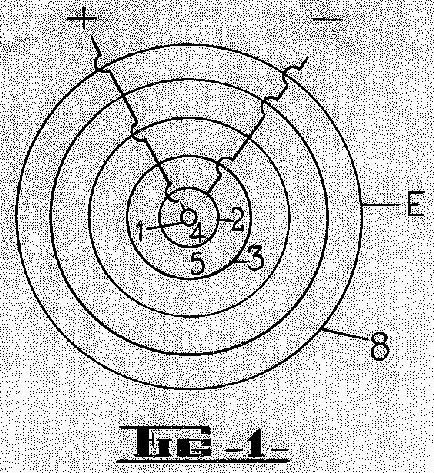
To present this new incarnation on national TV was an act of total desperation and he'd be well aware of that! Most of us know I'm sure what the patent system does with things that dare to fly the over unity flag ! over 50,000 are held in arrest in the USA alone as I write. We know that simply because we have stumbled into the Internet age and know to avoid patents like the plague,unless its a golf ball cleaner or some other worthless widget.
There is nothing to patent or patentable here I'm delighted to say although Peter would have been unaware of the connection I see. In a round about way which I go into elsewhere its the inverse of a truly ancient free energy machine called a Trompe.
Lets follow a little way into what Peter has done here accepting that classical theory is going to get fudged and obscured along the way. - through the mirror then-
I listened to Prof Williamson , I might have uttered the same words. for we have both been trained from the same books. The conductivity of the water ? lets have a look at that, all the safety books tell you electric and water is a bad mix -- you die quick . A good conductor then ? lets have a look

so pure(ish) water is actually a phenomenally good insulator . If that weren't so the tap water I used in the UK with a couple of spoons or Peter Davey's contraption would simply explode when plugged in. Peter's son (also a Peter) tried to reheat coffie with the 'contraption' well I think you can guess what happened .
you will have read that ion's in the water has much to do with conductivity, use ditch water , surface water anything ionized its pretty clear the thing will 'go bang' If your tap waters full of heavy metal and iron -- 'Bang'
Like wise using materials that will quickly ionize the water between the plates will give you unwanted pops and bangs .
Stainless steel I have tried and having found it works I stuck with it even though it isn't very nice to work with. copper ? I don't know haven't tried it, Peter did it seems.
I first tested Prof Williamson's theory by changing my towns tap water for deionized battery water - The water still boiled .
I distilled the deionized water and tried again
The water still boiled .
I have to say It didn't boil as fast so I was forced to accept there was at least some I^2R heating in the original work. This time however when boiling the current draw was in the order of milli amps.
So lets move the electrical theory along the runway until we run out of tarmac.
Assuming the water to be pretty pure what you actually have is a capacitor and if pure water is such a very good insulator (Di-electric) then you have a very good capacitor.
what then if you put a very good capacitor across the grid ? A circuit that consists of basically a capacitor with a tiny resistance. here's where the electrical theory I was taught parrot fashion and have quoted a thousand times starts to let me down. I've always suspected its flawed even when it was taught still the devils in the detail I guess. Its this -

a capacitor (or an inductor for that matter) causes a 90 deg phase shift . Now I could spout exactly what those guys are - I've been trained to, but there's gaps in in, and I'm just going to keep this very simple but theres one here.
Power in an AC circuit = VI cos θ or I^2R Watts . As you have just read a capacitor (like our very good water capacitor) causes a 90 Deg phase shift . power = VI cos θ and the cos of 90 deg ?? for those dredging that back from the old school bench = zero ,nothing,zilch . No power times as much time as you want still equals - no energy .
The next question how to make our water capacitor bigger and better ? here's the basic formula
Capacitance = Eo x Er x A x (N-1) /D
for those not very happy with basic capacitor theory might I respectfully suggest a quick revision here especially as we have to twist it a bit.

The bigger the area of the plates , The more plates there are ,The closer they are together , and the higher the DI-electric permittivity well folks the bigger the capacitor is. Its as simple as !
Er is the relative permittivity and what have we between our plates ?
Its easy enough to say water isn't it ? but thats not true when the waters boiling is it ? I don't know I see bubbles, whats inside the bubbles ? is that a vacuum in there ? here I'm sure we cross over to this little gem as well
https://www.youtube.com/watch?v=7pSJ1GcXCK8
bubble ,water hammer ,vacuum a rose by any other name ?
whatever it is it seems to have a very high Er value because current draw drops right off. And thats what makes Peters contraption tick from an electricians stand point . a chemist might have a different slant and an atomic physics guru yet another. Make it do its thing and ask the question of other trades I guess.

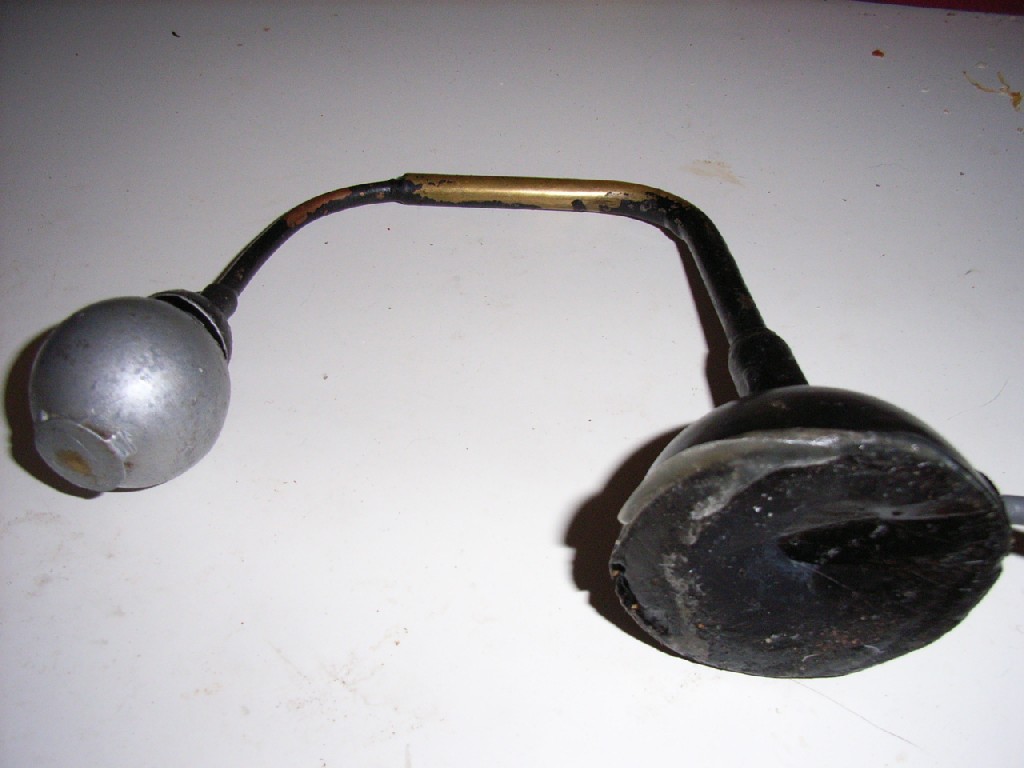
As a point of interest in days of yore little variable capacitors were called trimmers and one breed of them were called bee hive trimmers they looked like this

small but perfectly formed don't you think ? - the top part screwed into the bottom part and resulted in more capacitance
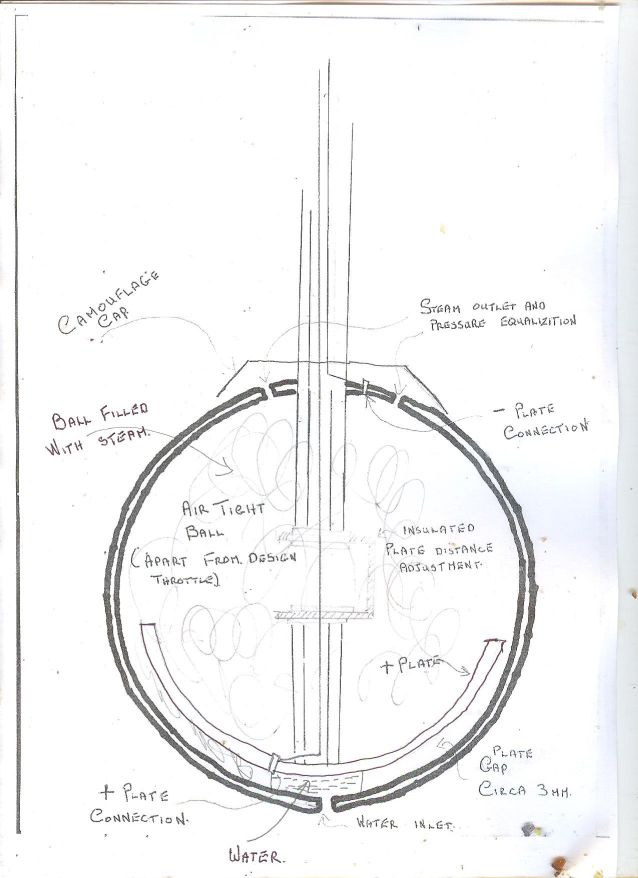
does it remind you of anything ?
This perhaps ?

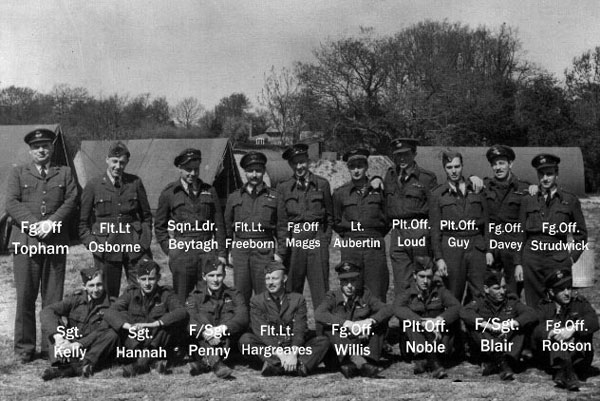
Peter Davey's 602 spitfire fighter squadron on the SE coast 1943
tally-ho free energy at 12 O'clock high ? - kind regards Duncan


Leave a comment: