
James Y Johnson -- Dipolar resonance -- Anomalous dispersion bands
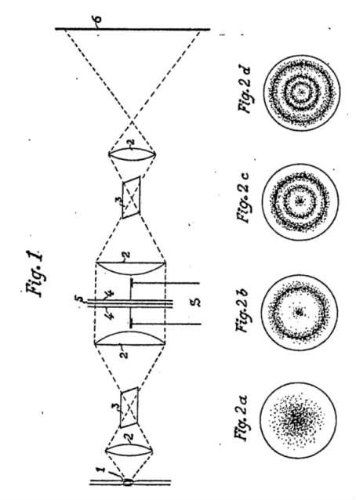
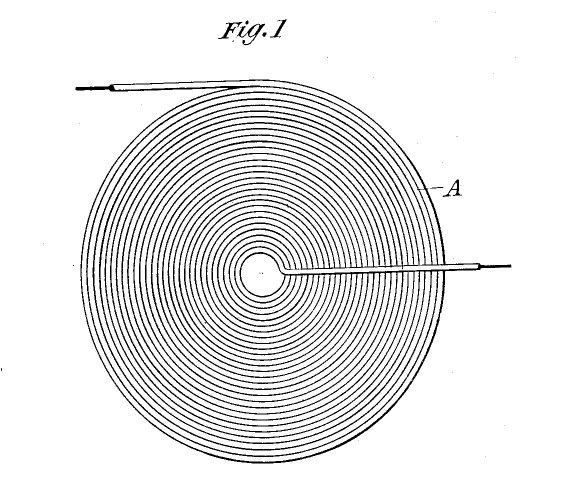
Improvements in devices for generating electromagnetic fields oscillating with quasi-optical frequencies
1934-09-29
Inventor(s): James Y. Johnson
Applicant(s): TERNION AG
Classification: - international: H03L7/26; H03L7/26 - European: H03L7/26
Abstract -- Electromagnetic fields of quasi-optical frequencies are generated in the space between two oppositely-placed electrodes which are excited at one or more of their natural frequencies by an external high-frequency source.
1934-09-29
Inventor(s): James Y. Johnson
Applicant(s): TERNION AG
Classification: - international: H03L7/26; H03L7/26 - European: H03L7/26
Abstract -- Electromagnetic fields of quasi-optical frequencies are generated in the space between two oppositely-placed electrodes which are excited at one or more of their natural frequencies by an external high-frequency source.

+
fUSION Anomaly. Ernst Chladni

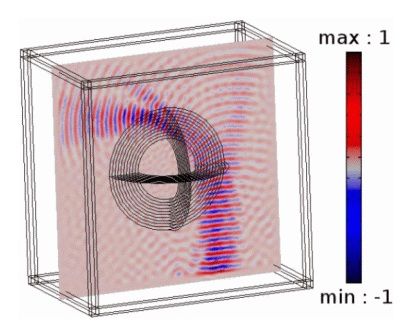
While investigating the various tones of music, Ernst Chladni (1756-1827) made a classic experiment to show the effects of harmonic vibrations. He spread fine sand over a glass or metal plate and set it into vibration with the bow of a violin by scraping the bow along one edge of the plate. The bow would alternately stick and slip in rapid succession on the edge of the plate to create waves of sand (also sound waves). He would hold the plate between his fore finger and thumb; the point where the plate is held is, of course, a node where there can be no movement. The bow sets up waves that move across the plate and then are reflected from the edges. The reflected waves become superimposed on the new waves coming from the bow edge. This results in symmetrical patterns of nodal lines where the plate is not moving. Figure 1 shows square and circular plates that are being held in the center. The type of pattern created depends generally on









 .....
..... 









 ..... and thank you again for the link






Leave a comment: