This forum is preserved as a permanent archive. The community continues at eMedia Press.

Announcement

Collapse
No announcement yet.

Stingo Solid State Battery Charger

Collapse
X
 
  • Filter
  • Time
  • Show
Clear All
new posts

  • sucahyo
    replied
    Originally posted by Guruji View Post
    Stingo I found that is better than JT and Bedini solid state cause batteries are holding voltage it seems. Still testing. The thing is that from a 12v battery with 7v charge on it still works.
    I think it happen because you charge with single diode. I think JT or Bedini solid state will also retain battery charge if you use cap isolated FWBR.

    Mine had around 7V charge too. When I open the cell, I see only 3 cell are good, the other one shorted because of heavy corrotion...


    Originally posted by Guruji View Post
    Sucahyo do you know of a good and simple battery swapper?
    Did you manage to charge dead batteries to each other with stingo?
    I try once with old version of stingo and produce result of declining battery.
    YouTube - Swap Charging front and back battery

    I use relay with 4 contact point, FRM3-4B5. I use toggle switch but should be easy to add 555 control, just being lazy .

    If I try it again, I would use latest circuit and add ungounded water connect to load positive.

    Leave a comment:


  • Guruji
    replied
    Stingo

    Stingo I found that is better than JT and Bedini solid state cause batteries are holding voltage it seems. Still testing. The thing is that from a 12v battery with 7v charge on it still works.
    Sucahyo do you know of a good and simple battery swapper?
    Did you manage to charge dead batteries to each other with stingo?
    Thanks

    Leave a comment:


  • sucahyo
    replied
    Originally posted by cikljamas View Post
    I think it is (on the picture) bright as it normally do (220 mAmps),maybe i am wrong, but if it is not highest brightness than it is at least 80 %...
    What are your results, i mean how much mAmps you need to make stingo to give such level of brightness ?
    Worse, my record is full brightness at 240mA but never been able to reach it again. Mostly 500mA now.


    Originally posted by cikljamas View Post
    I tried, but it doesnt work and i think that bingo can not be use for that purpose at all, that is one of the stingos advantages, but my measurements insure me till now that bingo has much higher efficiency charging big batteries(especially with negative to negative THANKS FOR THAT CLUE), and slightly higher efficiency charging nimh batteries, at least using 12V battery as the source. Using nimh batteries as the source it seems better efficiency is on the stingo side, i did not make that kind of measurements, but i do not have any reason not to believe you.
    But if you have just one ampmeter it must be very difficult to make these
    measurements, am i right ?
    It is weird that bingo can not be used....
    Check my video on bingo thread on how I do it .

    Originally posted by cikljamas View Post
    I tried stingo with negative to negative, but something is wrong when i try to do that, and something is wrong this way also with bingo when i try to charge nimh batteries using 12 V as the source, too !
    Yes, when the circuit do not oscilate, the load still being charged, without the radiant. At least that is my reason not to use negative to negative.

    Originally posted by cikljamas View Post
    Sucahyo, i forgot to ask you about captret implementation with stingo.
    Did you tried that ?...And if you did how you did it ?
    I never try it.

    Capacitor is the worst load for stingo, draw current most then other load. see if bingo better.

    Leave a comment:


  • cikljamas
    replied
    captret

    Sucahyo, i forgot to ask you about captret implementation with stingo.
    Did you tried that ?...And if you did how you did it ?

    Leave a comment:


  • cikljamas
    replied
    Originally posted by sucahyo View Post

    Congratulation . How much current needed to be as bright as it normally do?
    I think it is (on the picture) bright as it normally do (220 mAmps),maybe
    i am wrong, but if it is not highest brightness than it is at least 80 %...
    What are your results, i mean how much mAmps you need to make stingo
    to give such level of brightness ?

    Originally posted by sucahyo View Post
    Try it with bingo too .
    I tried, but it doesnt work and i think that bingo can not be use for that purpose at all, that is one of the stingos advantages, but my measurements
    insure me till now that bingo has much higher efficiency charging big batteries(especially with negative to negative THANKS FOR THAT CLUE),
    and slightly higher efficiency charging nimh batteries, at least using 12V
    battery as the source. Using nimh batteries as the source it seems better
    efficiency is on the stingo side, i did not make that kind of measurements,
    but i do not have any reason not to believe you.
    But if you have just one ampmeter it must be very difficult to make these
    measurements, am i right ?

    I tried stingo with negative to negative, but something is wrong when i
    try to do that, and something is wrong this way also with bingo when
    i try to charge nimh batteries using 12 V as the source, too !

    Cheers !

    Leave a comment:


  • sucahyo
    replied
    Originally posted by Guruji View Post
    Hi Cikljamas I tried that circuit to capture electricity from air but it did not work for me neither. So as you was saying Sucahyo this stingo circuit emits certain orgone energy too when in operation?. I think I saw this info somewhere not sure if I'm mixing threads now .
    I think any electrical polarity produce orgone, but higher with coil swiching technique. But that do not means we can convert the produced orgone polarity to electricity. That may need something else to add.


    Originally posted by cikljamas View Post
    Hi guys! I just lighted my first stingo-cfl(9W) using 12/220 transformer, and it lits bright (see picture) drawing 220 mAmps from 12 V battery...
    Congratulation . How much current needed to be as bright as it normally do?

    Try it with bingo too .

    Leave a comment:


  • cikljamas
    replied
    stingo cfl

    Hi guys! I just lighted my first stingo-cfl(9W) using 12/220 transformer,
    and it lits bright (see picture) drawing 220 mAmps from 12 V battery...
    Last edited by cikljamas; 01-15-2011, 02:33 AM.

    Leave a comment:


  • Guruji
    replied
    Circuit

    Hi Cikljamas I tried that circuit to capture electricity from air but it did not work for me neither. So as you was saying Sucahyo this stingo circuit emits certain orgone energy too when in operation?. I think I saw this info somewhere not sure if I'm mixing threads now .

    Leave a comment:


  • sucahyo
    replied
    Originally posted by Godfrey View Post
    Typical production of colloidal gold, an oral supplement which is a suspension of gold nano-particles in water, involves high voltage arcing under water.
    Great .

    But, do I heard you correctly about spark under water with stingo? It would be great if you can provide side view video.


    Originally posted by Godfrey View Post
    What is not visible, but which I could clearly see during the procedure, are very small, inky dark clouds produced in the water during arcing. They dissipate so quickly, however, that I can’t tell what color they are.
    Can't you use laser?

    Originally posted by Godfrey View Post
    Even though this approach did not produce enough nano-particle gold to tint the water a particular color, I’m pretty sure that I got as concentrated a solution as I have purchased from commercial manufacturers, because of the common metallic aftertaste.
    That remind me when I submerge my head on positive radiant water...


    Originally posted by Godfrey View Post
    I used the unrectified AC output. I will try further tests with output after the recovery diode.
    You intend to compare car coil HV output with toroid output?

    Originally posted by Godfrey View Post
    I got a headache from working with and near the car coil. For arcing, however, I haven’t encountered any other coil that can do it. Consuming the freshly produced colloidal gold water also gave me a headache. This effect went away after letting the product sit for 24 hours. It brings up the fact that a Stingo can also be used to positively energize water, but a toroid coil is better suited for such a purpose.
    Try to use radiant sleeping aid functionality to the water too in that case.

    Originally posted by Guruji View Post
    Hi Sucahyo thanks for help another thing regarding resistors both 2watts?
    Today I managed to try it and heard the coil singing too
    Ok I will do more tests on this circuit.
    , only 100 ohm need to be 2 watt.

    Originally posted by Godfrey View Post
    When I'm satisfied with my battery charger setup, I'm going to try and capture output with a capacitor, using it like a measuring cup to volumize total power. If the cap fills up fast, then I'll oscillate it and measure the frequency of it filling and dumping. That should help get an accurate measurement of input power vs. electrically exploitable output power. Then and only then will I potentially be able to jump up and down and holler eureka, OU!
    Great idea . Do that method rely on the capacitance value printed in the cap? Because I read that the tolerance value of capacitor is rather high. 200uF is not really 200uF.

    Also there is possibility that we can only observe OU with lead acid only.

    Originally posted by 7imix View Post
    Consider the singing coil phenomenon observed when using stingo at certain frequencies. As the energy expands into a magnetic field around the primary and collapses into the capacitance of the secondary, sound waves are sent out spherically in all directions.
    As interesting phenomena, when I use stingo as zapper (before diode) when the coil was singing, then the skin in contact with the electrode (or was it the electrode?) will also sing.

    Sometimes when charging a battery, I locate the singing not coming from the coil but from the battery instead.


    Originally posted by cikljamas View Post
    What do you think about this "free energy device" ?
    I never heard promising result. Some close one are by sparking to charge a battery, other by using caduceus coil. Look for Samuel Faile.

    Leave a comment:


  • cikljamas
    replied
    Hi Godfrey, thanks for such comprehensive answer !
    And thanks that you note my hard work too !

    Originally posted by Godfrey View Post

    Regarding 'radiant spikes', I have been tuning my Stingos with the use not only of things like neons cfls, and meters but also while looking at a scope, like 7imix demos in his videos.
    REgarding cfls, could you say how you wind stingo toroid for that purpose ?


    Originally posted by Godfrey View Post
    And do watts, a measurement of heat, truly represent the power being generated?
    Interesting question !


    Originally posted by Godfrey View Post

    As for my use of the word 'radiant', that is a bit subjective. It is my personal opinion, based on my experience, that something other than increased voltage is being generated.
    Maybe orgon, whatever it is ?

    Originally posted by Godfrey View Post

    At least in the case of the scope, one sees that there isn't steady current being generated and that the static meter measurements are at best some kind of average, and at worst being expressed by meters that don't have adequate sampling rates...

    ...Stingo output generates high voltage pulses with short duty cycles. If you graph the actual area of total voltage over time, I think the true calculations of current, and total power being generated, would be very different.
    In what way different IYHO ?

    Originally posted by Godfrey View Post

    We further have the issue of the asymmetrical nature of the power being generated...and the pattern changes with the tuning. It's not really DC, even when rectified...

    We have issues with how the medium of the batteries react to these pulses.
    This DC & AC stuff is also interesting, but i do not understand much about
    it too in context of radiant energy...
    And batteries reactions are also under question, but as far as i am concern
    it seems to a certain extent that we can measure these input / output energies and that OU achievement is so close but also so far, so far !
    What i am trying to say is, i am concern with achieving OU, and i do not care too much how it really works in theoretical physics level, cause i know how
    physicists knows how little they know about electrons and their behavior for instance, but we still use these electrons every day, dont we ?

    Originally posted by Godfrey View Post
    m of the batteries react to these pulses.

    When I'm satisfied with my battery charger setup, I'm going to try and capture output with a capacitor, using it like a measuring cup to volumize total power. If the cap fills up fast, then I'll oscillate it and measure the frequency of it filling and dumping. That should help get an accurate measurement of input power vs. electrically exploitable output power. Then and only then will I potentially be able to jump up and down and holler eureka, OU!
    I would like to know how exactly perform these capacitors measurements !

    ...................


    Originally posted by 7imix View Post
    As Tesla was transmitting electricity wirelessly, he used two separate plates, one at an area of high potential, and another at an area of low potential. A wire connected between these two plates could drive a load.

    It may also be possible to tap the energy without figuring out the wireless receiver. I

    What do you think about this "free energy device" ?
    cap 1, and cap 2 are 0,2 microF.
    cap 3, and cap 4 are 100 microF.
    diodes are 1n34 (germanium)
    antena is thin wire...

    I tried to replicate this yesterday using germanium diodes AA 133,
    but it doesnt work at all...Are these guys that put this diagram pathetic
    or i failed somehow with my replication (which i doubt very much) ???
    But it is interesting concept however !!!
    Here is that diagram :
    Last edited by cikljamas; 01-15-2011, 02:33 AM.

    Leave a comment:


  • 7imix
    replied
    Consider the singing coil phenomenon observed when using stingo at certain frequencies. As the energy expands into a magnetic field around the primary and collapses into the capacitance of the secondary, sound waves are sent out spherically in all directions.

    These are the longitudinal waves that are being generated by the coil. As the frequency rises above the audible range, the waves are still being generated, but they are too high for us to hear. These are the radiant sound waves that we are trying to capture. As Tesla was transmitting electricity wirelessly, he used two separate plates, one at an area of high potential, and another at an area of low potential. A wire connected between these two plates could drive a load.

    It may also be possible to tap the energy without figuring out the wireless receiver. If the stingo drove another coil at it's quarter wave resonant frequency, the stationary wave would be set up in the coil instead of in the medium. We could then use high-voltage diodes at the place of highest potential in the coil and lowest potential in the coil to charge a cap and drive a load.

    However, it will be difficult to get the stingo to oscillate at the resonant frequency of another coil. The coil will either have to have miles of wire, or the stingo will need to oscillate in the megahertz range.

    Leave a comment:


  • Jbignes5
    replied
    Eventually...

    You might want to put a Peltier system to extract voltage from the heat.

    I am watching with interest on this one.

    Leave a comment:


  • Godfrey
    replied
    'Radiant Spikes'

    Originally posted by cikljamas View Post
    Could you explain this a little bit more ?
    Cikljamas, my hard working friend, wanted to catch up with you on this question of yours at my first opportunity.

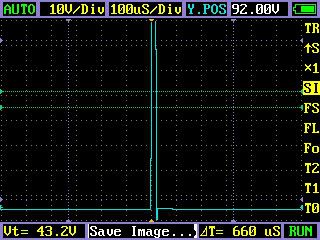
    Regarding 'radiant spikes', I have been tuning my Stingos with the use not only of things like neons cfls, and meters but also while looking at a scope, like 7imix demos in his videos.

    With 3V setups, like the sleeper, the output pulses can be viewed on my scope, like this previously posted the wave form:

    Last edited by Godfrey; 12-07-2010, 07:03 AM.

    Leave a comment:


  • Guruji
    replied
    Stingo

    Hi Sucahyo thanks for help another thing regarding resistors both 2watts?
    Today I managed to try it and heard the coil singing too
    Ok I will do more tests on this circuit.

    Leave a comment:


  • Godfrey
    replied
    Monatomic Gold (white powder of gold)

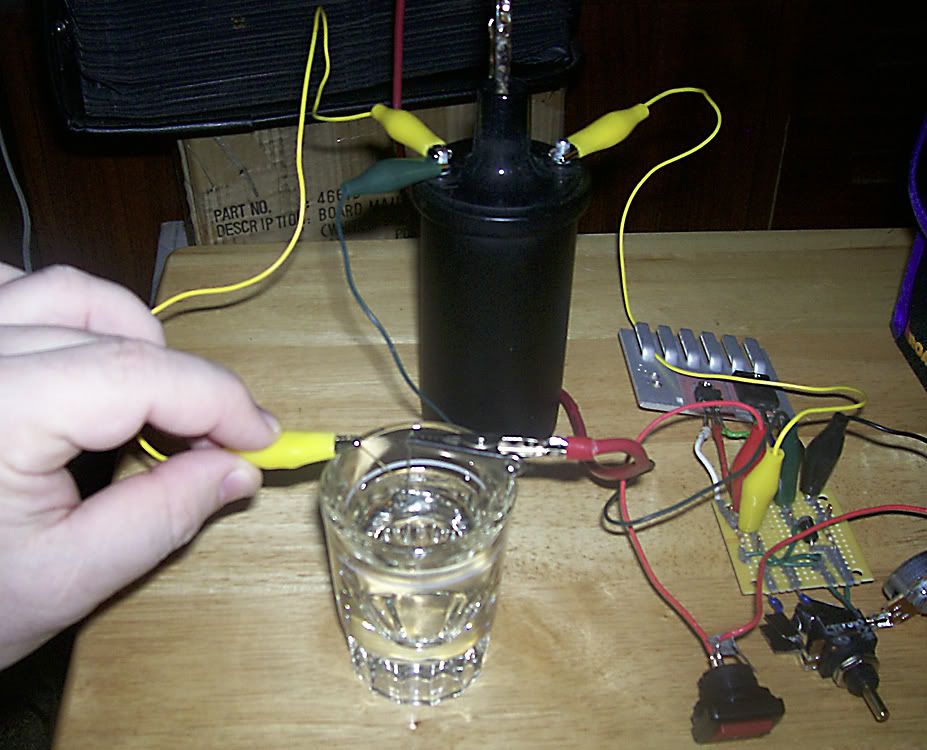
    Typical production of colloidal gold, an oral supplement which is a suspension of gold nano-particles in water, involves high voltage arcing under water.

    In these YouTube posts, for instance, RadeshNarine uses the high voltage output from running mains AC through a MOT to create an arc between two gold electrodes underwater:

    Colloidal Gold Generator Part1

    Colloidal Gold Generator Part2Stingo Colloidal Gold Electrolyzer 1

    Stingo Colloidal Gold Electrolyzer 2
    Last edited by Godfrey; 12-06-2010, 09:56 AM.

    Leave a comment:

Working...
X