
2.1 centimeter diameter beer can, perhaps?
or he could be referring to the ring being 2.1mm from the beer can.
-
European Can Size (Thanks)
Yes, my contact said the diameter of their cans were 2.1mm and that the ring should be slightly larger than that. 2.1mm seems way to small for the diameter of a beer can though. He did state this 2.1mm diameter about three times though, so maybe it is significant.
Thanks for sharing!!
Originally posted by eternalightwithin View PostLeave a comment:
-
I feel the 400Hz on the iron ring is for over there. ie 50Hz.
If you were to translate it to 60Hz I think it would be 8*60= 480Hz on the ring
Also keep in mind that beer cans are probably different.
We Americans like things fatter
Europeans have a slimmer/taller can. 355mL (US) vs 330mL (EU)
Beverage can - Wikipedia, the free encyclopedia
If beat freq applies, then the equations
Freq_beat= Freq2 - Freq1 applies.
with v = velocity of sound in water ... which is 1497 m/s

P.S. I don't think Helmholtz applies here. If it does, I have no idea how to calculate that.Last edited by eternalightwithin; 09-09-2011, 03:16 AM.Leave a comment:
-
Charge
Hi Chet,
He doesn't have any for sale, but he does operate one in his house and it's set up for Europe. He's got all those figures worked out already and I could probably get them with not problem.
P.S.: He misspelled (and) when he said (ana). 80 is eight times when well done I don't understand that.
Best Regards,
Slovenia
Originally posted by RAMSET View PostLeave a comment:
-

Tuning fork type piezoelectric resonator
[IMG]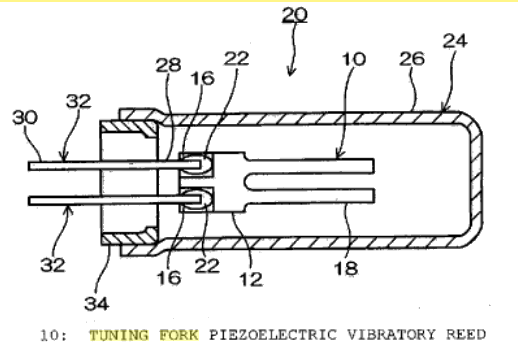 [/IMG]
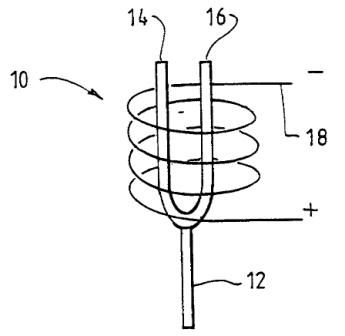
Electrically operated tuning fork - Google Patents
 Last edited by MonsieurM; 09-09-2011, 12:39 AM.
Leave a comment:
-
He wants to Charge??
Slovenia
I don't understand the "ana 80 is eight times when well done"
He already gave a cop 12.46?
Whats this part ana 80.............?
Since he asked for money ask him if he has one for sale that is setup for europe ?
Thanks
ChetLeave a comment:
-
check this post out : http://www.energeticforum.com/155891-post495.html
and read this the formulas are there, just have to adapt it
Helmholtz resonance - Wikipedia, the free encyclopedia
Leave a comment:
-
Quick Overview of What We Know
I asked some specific questions today.
Our contact is an intellectual and wants us to think a little for ourselves.
Anyway, he did say that my enhanced diagram of his diagram was correct.
So, we know the following:
1) Ring electrode is negative and must resonate at 400 Hz to effectively work properly.
2) Beer can electrode is positive and must resonate at 60 Hz to work effectively.
3) We need to have our electrodes housed in a water tank with an inlet for water and an outlet for water.
4) This device is a steam making machine.
5) The water outlet pipe has the ground wire fixed just inside the water outlet tube. (This is important but I don't know why yet.)
6) The most important thing for us is to get the spacing right between the beer can electrode and the steel ring electrode. This is a bit complicated and time consuming if you are just doing trial by error. For efficiency, you should do the math to determine the proper gap and I don't know how to do that yet. My contact says he will figure the gap for us if we pay him. That may be necessary if we are going to get a working boiler. Anyway, the diameter of the beer can is fixed, so we can't change that. We have to change the inside diameter of the steel ring. Anyway, my contact has given us information on the gap be we need to decipher it. It is this:
Contact's Hint:
The voltage of 110 volts COP 12.460 times at 100 degrees Celsius
and 80 is eight times when well done. The distance between the
electrodes should be to calculate because it is not the same as here in
Europe. This is the hardest part to find the frequency of standing
wave current of 60 Hertz.
What We Don't Know:
1) The required gap between the anode electrode and cathode electrode.
(This is a very important aspect we still need to discover.)Leave a comment:
-
New Message from Contact
My Message to Contact Sept. 8, 2011:
Sept. 8, 2011
Things become much clearer to me now. I have a few questions to ask.
1). How do we get the iron band resonance at 400 Hz?
In your chart display 110-volt connection with a beer can on the left side of the diagram.
2). Beer can is a positive connection to 110 volts right?
3). Steel band connection is negative at 110 volts right?
4). Also, are there measures to protect the operator from electrical shock hazard?
5). Is your water tank is made of conductive material does not?
Response from Contact:
Sept. 8, 2011
Excellent picture and you understand the draw.
Grounding is the entrance to the exit of water and boiler water from a plastic tube separated from the plastic that goes into the radiator. The voltage of 110 volts COP 12.460 times at 100 degrees Celsius ana 80 is eight times when well done. The distance between the electrodes should be to calculate because it is not the same as here in Europe. This is the hardest part to find the frequency of standing wave current of 60 Hertz. I can calculate that if you pay me.Leave a comment:
-
you should be able to avoid electrocution if you isolate the metal ring; and this is doable with Mica sheets....
ps:Thank you Slovenia for the Power1 posts you gathered on scribd
see this post on mica sheets : http://www.energeticforum.com/154923-post405.html
Leave a comment:
-
400 Hz?
I've contacted my contact to see if he'll share what we need to do to get 400 Hz at the cathode ring.Leave a comment:
-
Description of Diagram (Russian Contact)
Description of Diagram:
You've got an enclosed reservoir for your water with a water inlet and outlet. You have two electrodes inside the tank/reservoir. One is the cup you see in the picture and that is an open ended beer can. One end is closed and the other is open. The closed end is anchored to the side of the tank. At the open side of the beer can is a metal ring/strap, that fits around the top outside of the beer can without touching it. The strap/metal ring comes close to the beer can but does not touch it. The metal ring/strap is anchored to the side of the tank/reservoir. The beer can is tuned to 60 Hz and is the anode. The ring/metal strap is the cathode electrode.
Dimensions of the ring/strap:
Ring 5mm wide and .2mm thickness. It needs to be just long enough to fit around the beer can and still have a space between it and the beer can.
Questions:
I need to ask my contact about the 400 Hz scenario with the cathode.

Leave a comment:
-
Peter Davey Patent
No, that is the only one there is. He tried for over 60 years to get the NZ gov to allow him to build his heaters. He didn't have any luck with that patent, so I don't think he wanted to waste time and money with another one.
Originally posted by boguslaw View PostLeave a comment:
Leave a comment: