This forum is preserved as a permanent archive. The community continues at eMedia Press.

Announcement

Collapse
No announcement yet.

Harvesting Energy From the Sun Using Crystals

Collapse
X
 
  • Filter
  • Time
  • Show
Clear All
new posts

  • MonsieurM
    replied
    Originally posted by Dave45 View Post
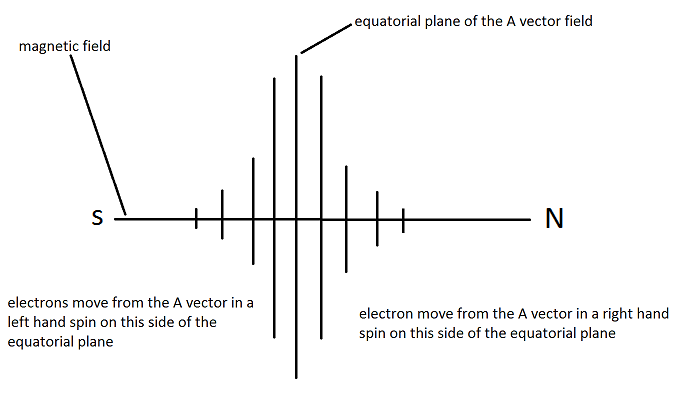
    The A vector field and how it couples to the magnetic field
    The magnetic field is a neutral field until its coupled by the A vector field which gives it a spin direction
    This is a model of a galaxy if we are on the left side of the equatorial plane you can see what will happen as our solar system crosses over the equatorial plane, the gravitational forces and spin direction will be flipped.
    Dave[/QUOTE]

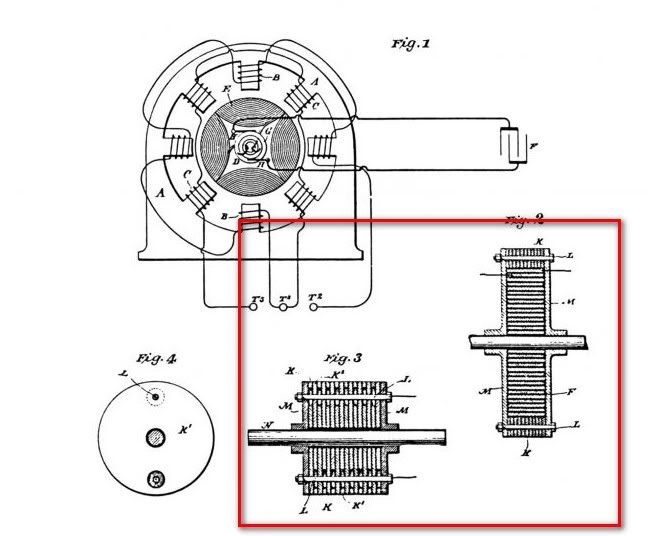
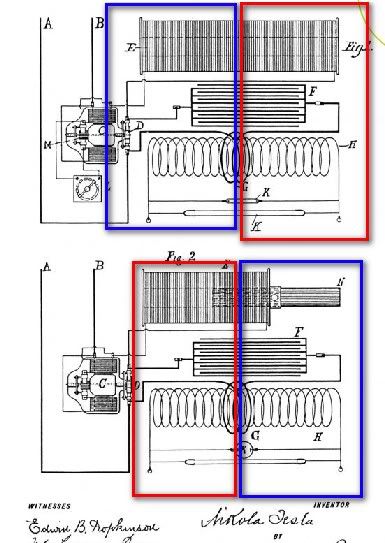
    found this while browsing Tesla's patent


    Last edited by MonsieurM; 09-29-2011, 08:29 PM.

    Leave a comment:


  • petar113507
    replied
    Wait. Disregard that.

    This is huge.

    Leave a comment:


  • petar113507
    replied
    Yes at first I thought it was a discharge so I tried to catch the discharge with a copper screen and copper wire but the vector field avoided both, thats when I realized the field was moving into the coil and not out.
    There is a lot more experimentation that needs to be done here
    Dave
    Can you elaborate a little bit more on this? Into which coil? How could you tell it avoided the

    I've had a few fracks go towards copper coils when I had the wires holding up a pizeo (so the crack went towards the opposite polarity)
    Also -- you mentioned yourself -- gold in quartz:


    And I currently have one smith coil freezing into an aluminum screen ground. Maybe polarizing the ground to look like a better "funnell" (stronger polarity opposite).

    Do you think the charge in the middle is positive? I think it might be, because it seeks to discharge into its opposite polarity -- the lesser electric pressure (or lesser charge density) being "outside" the ice. Working with the "core sample" tube is very interesting, because the dielectric seems to halt the "breaking" of the ice, so the insulating ice around the "core sample" doesn't break....

    I'm just thinking out loud here -- this is a result of my observations...
    Dave, this theory is mostly put out there for you -- because I think you would understand how it practically applies the most (youv'e done experimenting too )

    What if the ice were transfering the charge from the battery/smith -- through the dielectric by coupling the charge to the magnetic feild, and by cancelling the magnetic field releases the charge (A-vector) in the middle of the ice, creating the higher electric pressure? The high electric pressure makes the ice crystalize differently in the middle of the tube, making it freeze slower. When too high a pressure develops in the ice as it is freezing -- it mechanically forces the ice upwards through the center tube, equalizing the water pressure on the inside of the the tube. This repeats for a lower electric pressure -- until the water freezes too rapidly, when towards the dead center of the tube the same pressures are developed, except instead of the mechanical forcing it "cracks" the ice in a discharge. The cracks appear in similar numbers to the top ice layers.

    I've taken the ice out of the freezer as it is freezing -- those clear tubes definitely help to observe how it freezes in LAYERS -- the bubble layers -- the dissolved gasses don't "like" to freeze -- if you were to freeze the water more slowly (at a lower temperature) you get more really clear "insulating" ice.
    The bubbles are evidence of a hasty crystalization, forced by a higher (pressure) level. When that pressure equalizes itself, it freezes clear, in layers.

    Maybe those layers are just the magnetic field preventing it from freezing.

    You have created a funnel like for water :
    This is exactly what I was hoping to do to the Field -- ground it out to "show it an easier path" to drain into. If I could make the cracks drain into a different coil then I would have a good way to tap the voltage spikes. So far -- too much voltage just makes the ice crack -- we definitely need a way to direct the flow.

    So "preferential conductors".....


    :Thinking:

    ==Romo

    Leave a comment:


  • Dave45
    replied
    Originally posted by MonsieurM View Post
    You have created a funnel like for water :


    Constructal theory - Wikipedia, the free encyclopedia


    Also the magnetic field structures the water molecules like in the column, but electricity will not flow through ice and as the test cell melted you will notice the vector field causes cracks in the ice, that told me the vector field was electrical in nature.
    Its the electrical field of a magnet

    Job 38:22
    Hast thou entered into the treasures of the snow? or hast thou seen the treasures of the hail,

    Leave a comment:


  • MonsieurM
    replied
    Originally posted by Dave45 View Post
    Yes at first I thought it was a discharge so I tried to catch the discharge with a copper screen and copper wire but the vector field avoided both, thats when I realized the field was moving into the coil and not out.
    There is a lot more experimentation that needs to be done here
    Dave
    You have created a funnel like for water :

    the constructal law says

    The constructal law puts forth the idea that the generation of design (configuration, pattern, geometry) in nature is a physics phenomenon that unites all animate and inanimate systems, and that this phenomenon is covered by the Constructal Law stated by Adrian Bejan in 1996: "For a finite-size (flow) system to persist in time (to live), its configuration must evolve such that it provides easier access to the imposed currents that flow through it."
    Constructal theory - Wikipedia, the free encyclopedia


    Leave a comment:


  • Dave45
    replied
    Dave, did you notice the circular cracks from the a-vector were perhaps evidence of discharges of too-high potential? This might be similar to how sparks were evidence of discharge in some of tesla's transformers -- that the cracks may need to be eliminated for the best working conditions....
    Yes at first I thought it was a discharge so I tried to catch the discharge with a copper screen and copper wire but the vector field avoided both, thats when I realized the field was moving into the coil and not out.
    There is a lot more experimentation that needs to be done here
    Dave

    Leave a comment:


  • petar113507
    replied
    What kind of scope can I see the Milli Second duration of the spark from a lord kelvin water drop generator?

    I'm looking for something to measure the abruptness of the discharge of the capicitor from the generator VS. the discharge directly from the generator. Not sure if I mentioned this before -- I'm thinking about putting a coil underneath the spark gap, to help "snuff" the spark to make the discharge more abrupt. I think tesla did something similar. I will post relevant info about "quenching" the gap in the books I recently checked about superconductivity.

    Also, found out that straight (twice) boiled water, will still produce the A-field "cracks", but with significantly lesser sized structured pillar in the center. Will do more freezing tonight before I post pictures.

    Dave, did you notice the circular cracks from the a-vector were perhaps evidence of discharges of too-high potential? This might be similar to how sparks were evidence of discharge in some of tesla's transformers -- that the cracks may need to be eliminated for the best working conditions....

    I also agree with you on the blotch wall, and the perspective of leedskalin It is not the cause of the flipped polarity -- I was referring to it as the region. I should have been clearer about using the term.

    ==Romo

    Leave a comment:


  • MonsieurM
    replied
    Originally posted by Dave45 View Post
    There is no bloch wall its the vector field their seeing, and trying to explain.
    This is disinformation or they are just misunderstanding what is happening Im not sure which.
    Dave

    All i could add is that :

    Large units also allegedly demonstrated "anti-gravitational" effects, and ultraviolet light became visible in the diagonals between the electrodes.
    this is one of the element often found in the "A vector field" , or source field as David Wilcock calls it...

    Leave a comment:


  • Dave45
    replied
    When a coil is first fired up I mean in the first millisecond the magnetic field is neutral this draws electrons from the aether they surround the coil to form the vector field, they are drawn to the neutral field, but when they couple to the magnetic field the magnetic field is neutral no more but this field is still surrounding the coil, any electrons that are stripped from the magnetic field are instantly replaced by this vector field.
    Ok when the coil is shut off or pulsed the vector field instantly collapses into the coil windings that is back emf.


    oh by the way good work with the ice cores hope you find more than I did
    I didnt figure out anything God told me I told you
    To Him be Glory for ever and ever
    Dave

    Leave a comment:


  • MonsieurM
    replied
    for the enhydro quartz , you need to cleanse it and use it in your meditation

    or to structure your water before you freeze it (ancient water within quartz )

    Leave a comment:


  • Dave45
    replied
    Originally posted by petar113507 View Post
    I'm not trying to dis-inform anyone. I'm also looking to understand. With that in mind, could you perhaps help to clairify exactly what is going on with the A-vector feild, and what distinction that has from the blotch wall? I will share how I see it, and then perhaps we may see the difference between our views.


    'Cuz I might have been using the two terms semi interchange-ably, but I could be wrong in their usage. I understand their distinction -- I don't mean to confuse people. From what I understand, I see that the A-vector or Phi is referring to the "charge" itself, whereas the Blotch wall is the zone where the charge couples to its opposite [field] in the neutral zone.

    From: Leon Sprink - Antigravity - patents


    In that last post, I meant to say that I saw the weak magnetic field of the planet coupling with the electrostatic felid that was artifically created which accelerated the chemical reactions. (the "activation zone" )
    That is why I used the term "Blotch wall" instead of "A vector". If it were just the charge, and not charge coupling, why would the orientation relative to the earth's magnetic field matter?
    Like I said, I do not mean to confuse people.
    If I am wrong, I would like to know your opinion as to why.
    I have done my best to lay out my thought process.


    Also -- if you can share a bit of comprehension, which feild produces the spirals, and which one produces the cracks?
    Is it the canceling of the magnetic fields in the coils which liberates the charge "a-vector"?

    I do not mean to confuse, I am trying to translate what I see, through the viewpoints of other people so that we might all realize we are seeing the same thing.

    ==Romo
    I never meant you were disinforming, quite the contrary I enjoy your posts.
    But there is a theory that states the magnetic field switches polarity half way through a magnet and they think the bloch wall causes this.

    Leedskalnin stated it best there is a field that leaves the north pole and enters the south pole and there is a field that leaves the south pole and enters the north pole, each moving in opposite directions.

    As the field leaves the magnet it is coupled by the vector field on both sides of the magnet. the vector field couples the north field as it leaves the magnet in a clockwise vortex and it also couples the south field as it leaves the magnet in a counterclockwise vortex.
    Please do not think I was criticizing you or anyone just the bloch wall theory.
    Dave

    Leave a comment:


  • MonsieurM
    replied
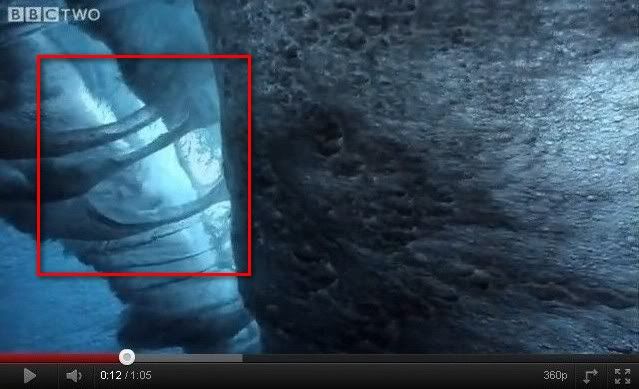
    Awesome pics petar113507, love the comparison with quartz and water...now add to it the vid i send you

    HD: Super Slo-mo Surfer! - South Pacific - BBC Two - YouTube

    here is the image of interest:


    and compare:


    Last edited by MonsieurM; 09-27-2011, 06:49 PM.

    Leave a comment:


  • petar113507
    replied
    Also, I apologize for those huge pictures. If I need to downsize for anyone, please say so. I don't want to mess up anyone's load time of this thread, or their abillity to see all of what I posted.

    If anyone's trying to build the Lord Kelvin generator -- I got my first two tries on constructing to be "buggy", and it didnt work out as well as I wanted. Came across this video, and it might save some first time builders some mistakes.

    Learn from others mistakes, so you don't have to make them yourself.

    Lord Kelvin's thunderstorm troubleshooting:
    Lord Kelvin Electric Spark Generator - YouTube

    I hope this information is reaching some good ears.
    ==Romo

    Leave a comment:


  • petar113507
    replied
    Okay -- so back to PRESSURE. When I melt the core samples -- I get some hissing sometimes if I'm lucky. Sometimes, when I barely touch the vortex bubbles to "bleed out" the pressure in them, I get bubbles on the water surface. Think of putting a bike tire full of air with a very small hole in it, under water to see the "bleed out" bubbles. When you take the bike tire above water again, the bubbles that form on the surface of the tire -- are the same bubbles I saw on the surface of the ice.

    What I mean to show through this example is evidence that the AIR bubbles -- much like the quartz crystals frozen in the ice -- are put under an immense PRESSURE inside their structured cavity.

    Here is me cutting away at the core sample:


    Here are also some interesting things I noticed when I was cutting away at the core....
    Look at the layers -- I found six or seven layers.


    I have another picture where the layering is more obvious (this one does not reflect the number of layering which was thought provoking):


    The layering of the "A vector" numbers also reflect the number of layers I found on the top (not the bubble bottom, the solid "foggy" ice layer on top). I counted six or seven distinct layers.
    Here are the direct links for you to compare for yourself:


    Lastly, the "white pillar", while it APPEARS to look as though it has an amorphous structure -- the dissolved gasses actually have a definite "Path". Dave, I'm sure this is not news to you, but to anyone who is just catching up -- or might want to try some of this themselves; this might be useful to know beforehand.

    So -- Connecting the electrostatic COOLING effect, to the formation of ice and these bubbles -- you are altering the water's ELECTRIC POTENTIAL. Because water always carries a charge in it (Think -- Lord kelvin's thunderstorm -- through the induced voltage difference the water atomizes into smaller particles). Through the altered POTENTIAL it crystallizes.

    This quote was from John bedini at some point in time.
    Its exact source I cannot say -- I scrapped it off a blog.
    Thank you Bedini for SHARING your observations.

    The energy always enters through this wall at right angles, the energy then couples in the windings of that coil. Producing what everybody terms as Back EMF, how wrong as Back EMF is never more then the source voltage under any condition. However the energy that does couple is at the exact level of potential of the electrical gas that surrounds you. Change the impedance of the coil you change the coupling effect. Now you have my answers, this is as far as I will go. Go sit and ponder it, you won't find it in a textbook. The next step would be to take a quantum mechanics class.

    I had to make this machine simple so anybody could build it. As I said you already have a free energy machine in front of you, that little magnet, once charged it's forever unless you kill it cause a variance in the blotch wall and you have all the energy you want without movement. But you want to continue to move magnets across coils the hard way to get energy, be my guest. *John B A collection of posts by John Bedini to the public forum 1)The best way to do this is to have a magneto run itself, pick off the spikes that are longitudinal , This is the same as a Tesla coil system, but low voltage so you can use it.

    If you think it can not be powerful increase the potential on the input to 36 volts, God help you if their is no load to the charging side, your devices will just fry, they are not built to handle reactive radiant power pulses.
    The Idea is to not use very much current in the primary system, pick off and supply the longitudinal wave, Radiant spike to the secondary battery forcing it to recharge itself. Chemical reactions take time in nature.
    While bedini was talking about his SSG circuit -- I think we can apply it here, to the crystalization of the WATER into ICE.

    he energy always enters through this wall at right angles, the energy then couples in the windings of that coil.
    "The energy" = the charge (Phi, or A-vector)

    how wrong as Back EMF is never more then the source voltage under any condition. However the energy that does couple is at the exact level of potential of the electrical gas that surrounds you.

    In cancelling the polarized magnetic fields (that have opposite spin direction + charge), I think we are liberating that charge through cancelling. That charge looks to couple with something else.

    If Ice can crystallize by a huge KV difference (via Electrostatic cooling) -- that should show, that there is at least a slight electric potential difference present when the water crystalizes from the thermal difference (in the freezer).

    If we are liberating the charge -- and giving it a different potential (Read: Electric pressure) -- it couples differently.

    If you think it can not be powerful increase the potential on the input to 36 volts, God help you if their is no load to the charging side, your devices will just fry,
    When semiconductor devices "fry" (Read: semiconductor = crystals) -- is that the same "Crack" we are seeing in the ice?

    I don't know -- but this is just what I see.
    I'm Just laying out my thought process -- you all can tear it apart, or agree with me -- Each to their own.
    I hope through this articulation, we might collectively learn something.

    Off to History class....

    ==Romo

    Leave a comment:


  • petar113507
    replied
    I ask for clarification, because I was at a mineral/gem shop a few days ago. I'm a little bummed that it took me this long to post these pictures -- as this could be very useful to understand the distinction between the forming of the bubbles, and the air bubbles in a structured line.

    So, the quartz crystals I looked at were ALL enhydro quartz. (so the quartz formed with more water around it than usual) The Shop had a pretty selection of about twenty or so, all with about 4-8MM enhydro bubble cavities. Most of the cavities were abnormally shaped -- but I found the nearby cracks, and structured "flaws" in the crystal to be very insightful.
    Quartz and ice aren't that different when they form, I think.

    Let me show you what I mean:


    Look at where I drew the arrow in this seperate picture -- it shows the lines pointing towards the apex of the crystal.


    This is the enhydro crystal I bought. I haven't figured out what to do with it yet. I don't want it to break -- but I'm thinking freezing it, even if it breaks would be insightful.
    Breaking stuff, to figure out more about what I'm exactly playing with...
    Sounds like exploring.


    Anyways. Why these lines in the quartz are interesting:


    Closer up:


    These spiral bubbles are not in the center structured cavity of ice -- but they look like they're getting sucked into the center "white pillar".

    Here is another, smaller smith coil which does not exhibit as many spiral bubbles. You can see a few near the bottom base. The coil is at the top of the ice, right above the "egg" in the center. The cracks on this one are very good. They do not even extend all the way up the ice -- they taper off right around the bottom of the smith coil.


    Something else to mention -- is that the ice which freezes under the coils has an oddly longer freeze time. I know something was mentioned about magnetic feilds agitating water, so that it would not freeze even at subzero temperatures -- but its exact relation -- I don't quite understand.
    I keep getting the crystal quote from Russell popping into my head -- "Crystals are the record in form of the potential which produced them". Also, Russell thought that water, held its appearance of liquid, because of the the electric conditions which were surrounding this.
    I'm thinking -- What electric conditions shift in the water when it crystalizes? Can't you freeze water using that electrostatic cooling effect? It has to do with physical pressure, and electric pressure. I will explain why in a moment.

    First -- another core sample:


    Different angle:


    With the markup on that last, "different angle".


    I've seen this form before in various places. When I spin the wine bottles to dissolve more oxygen in the water, is one good place...

    Here's another:


    (Continued....)

    Leave a comment:

Working...
X