This forum is preserved as a permanent archive. The community continues at eMedia Press.

Announcement

Collapse
No announcement yet.

Don Smith A review...

Collapse
X
 
  • Filter
  • Time
  • Show
Clear All
new posts

  • med.3012
    replied
    Originally posted by AetherScientist View Post
    I have just tried to replicate the effect that happened the other day and I am not able to replicate it even if I use exactly the same components and values.

    I mean the other day I was able to get sparks, but if I try to light a bulb with that energy stored in the cap I only get sparks in the wires of the cable. When I add the third wire (from positive or negative from L1 of the ignition coil to the capacitor) I can get sparks and useful energy.

    But I have jus tried to replicate the effect and I don't know why, sometimes I get strong sparks and sometimes very soft sparks. And I am using the same circuit with the same components all the time.

    yesterday i burn 6 diode when testing something in my system, i testes them, some go to short-circuit others conduct in the blocking direction ( still bad ) and finally i found some diode with bad resistance value below 400 ( in diode testing mode ), the diodes play a critical role! they have to be the same resistance, this mean new diode is the best choice.

    Leave a comment:


  • AetherScientist
    replied


    Leave a comment:


  • AetherScientist
    replied

    Leave a comment:


  • AetherScientist
    replied
    Some time ago while researching on energy systems, I had a non sense idea but I haven't tried it.

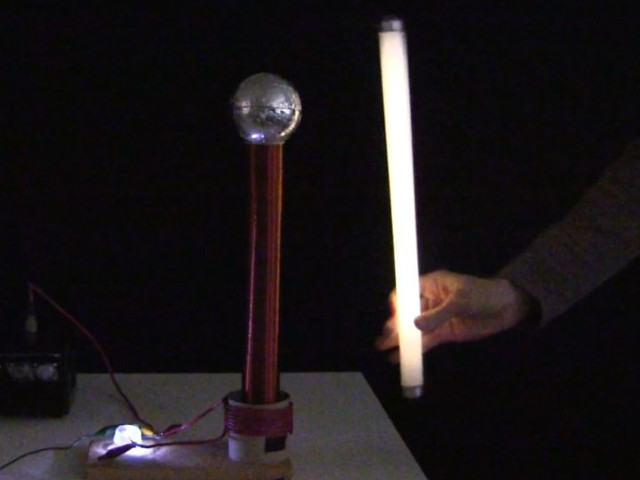
    As you knwo when you have a fluorescent near a high voltage, the gas inside the tube gets ionized and it produces light. This is very known in Tesla's coil.


    What about if you replicate this effect again and again and use dozens of small solar panels to absorb that light and transform it into DC?

    Leave a comment:


  • AetherScientist
    replied

    Leave a comment:


  • AetherScientist
    replied
    med.3012
    I have found more than 10 different devices that use the CCW and CW coils to produce energy. It seems this technique is very known. I was aware of the existence of bucking coils, but I didn't understood the reason why they are used. Now I understand why they are used.

    Leave a comment:


  • AetherScientist
    replied
    Originally posted by med.3012 View Post
    you mean you get spark without useful power ?
    I have just tried to replicate the effect that happened the other day and I am not able to replicate it even if I use exactly the same components and values.

    I mean the other day I was able to get sparks, but if I try to light a bulb with that energy stored in the cap I only get sparks in the wires of the cable. When I add the third wire (from positive or negative from L1 of the ignition coil to the capacitor) I can get sparks and useful energy.

    But I have jus tried to replicate the effect and I don't know why, sometimes I get strong sparks and sometimes very soft sparks. And I am using the same circuit with the same components all the time.

    Leave a comment:


  • med.3012
    replied
    Originally posted by AetherScientist View Post
    it seems that you cannot get useful work from the cap, but you can get energy.
    you mean you get spark without useful power ?

    Leave a comment:


  • AetherScientist
    replied
    Originally posted by med.3012 View Post
    Code:
    [B][I]one of the main bad understood things is the capacitor charging. I think classic theory is not enough to understand how capacitors works.[/I][/B]
    this is the point ! i agree
    You know that I observed a phenomena when charging a capacitor with AV plug. Using 2 wires it was possible to get sparks but not useful energy. Adding a third wire it was possible to get sparks and or useful energy. Why a third wire transforms that energy from not useful to useful energy? I think you need to unbalance the magnetic field of the capacitor.

    Well, the capacitor seems to need an electric field and UNBALANCED magnetic field if you want to perform work with the capacitor. This is not sure, but it seems that we need an umbalanced magnetic field inside the cap.

    If you have a balanced magnetic field, it seems that you cannot get useful work from the cap, but you can get energy.

    Leave a comment:


  • med.3012
    replied
    Code:
    [B][I]one of the main bad understood things is the capacitor charging. I think classic theory is not enough to understand how capacitors works.[/I][/B]
    this is the point ! i agree

    Leave a comment:


  • AetherScientist
    replied
    Originally posted by Bob Smith View Post
    There is some very useful information about CCW and CW rotations and how they work together, including research on the VTA and TPU, at this link (highly recommended):

    Bob
    Thank you very much for the link. I was aware of the existence of that document and the excellent work of Chris. But I haven't read the whole document. So I am going to.

    I have observed some interesting characteristics in some circuits that I am trying to model them. Of course, one of the main bad understood things is the capacitor charging. I think classic theory is not enough to understand how capacitors works.

    Also I have better understood what Smith says and I have modeled some explanations.

    Leave a comment:


  • Bob Smith
    replied
    Originally posted by AetherScientist View Post
    I am reading some information at the moment about the device. It seems simple to build, but it involves the use of some chemicals.

    The most important thing I have seen is that Keshe also explains about the CCW and CW rotations as Smith.

    After understanding a little bit more, a lot of experiments have to be done.

    It seems that the TPU and the VTA have a lot in common with this.
    There is some very useful information about CCW and CW rotations and how they work together, including research on the VTA and TPU, at this link (highly recommended):

    Bob

    Leave a comment:


  • med.3012
    replied
    Originally posted by AetherScientist View Post
    I am reading some information at the moment about the device. It seems simple to build, but it involves the use of some chemicals.

    The most important thing I have seen is that Keshe also explains about the CCW and CW rotations as Smith.

    After understanding a little bit more, a lot of experiments have to be done.

    It seems that the TPU and the VTA have a lot in common with this.
    i agree most over energy device work on the same principle while they appear to have some special characteristics .

    Leave a comment:


  • AetherScientist
    replied
    Originally posted by med.3012 View Post
    i don't know a lots about his device, even the principle seem to be chemical ( just a thought ), there's a special process have to be done to make the device effective, how ? i don't know why people are interested in this device because it's seem the only available solution at this moment and they are right ..!
    I am reading some information at the moment about the device. It seems simple to build, but it involves the use of some chemicals.

    The most important thing I have seen is that Keshe also explains about the CCW and CW rotations as Smith.

    After understanding a little bit more, a lot of experiments have to be done.

    It seems that the TPU and the VTA have a lot in common with this.

    Leave a comment:


  • med.3012
    replied
    Originally posted by AetherScientist View Post
    Do you know the magnification rate? I mean, energy input : energy output ratio.

    What kind of adaptation does it need? This adaptation is once or do you need to perform the adaptation constantly?


    i don't know a lots about his device, even the principle seem to be chemical ( just a thought ), there's a special process have to be done to make the device effective, how ? i don't know why people are interested in this device because it's seem the only available solution at this moment and they are right ..!

    Leave a comment:

Working...
X