
 Tweet
Tweet
Good job Sam!
Good job Sam!
When you powered both brush sets...you meant like parallel connect?...or with a rear jumper and top feed?
That's a lot of amps drop off
One question...are this two motors (Quad and G-10) same spec's as rotor wise?...If so, could you run the G-10 Rotor inside the Quad Stators/Brushes housing?
Mechanical drag, due to misalignment or rubbing parts is a killer for performance my friend...
That housing (on video) looks much better than the smaller magnets circumference/semi-rectangular type...you must realize that even powering just one brush set within four magnets you will get assisting on the reversing coils right after collapse...you do not have that option on the latest one.
The second draw back on this type (rectangular housing) is that you could not adjust brush timing...and all this motors need a "final tuning" after first run...I do it while running...and meters on...to check best point at RPM's and Output.
Regards
Ufopolitics
Edit 1: Sam, after reading your mail...I realized something...on the Group Windings...we are spreading the magnetic fields...not as compact as in Pairs all north...therefore, we need to either add same wire than pairs, per coil...or use heavier gauge to make fields stronger (per coil) at Group Winding.
Originally posted by sampojo
View Post
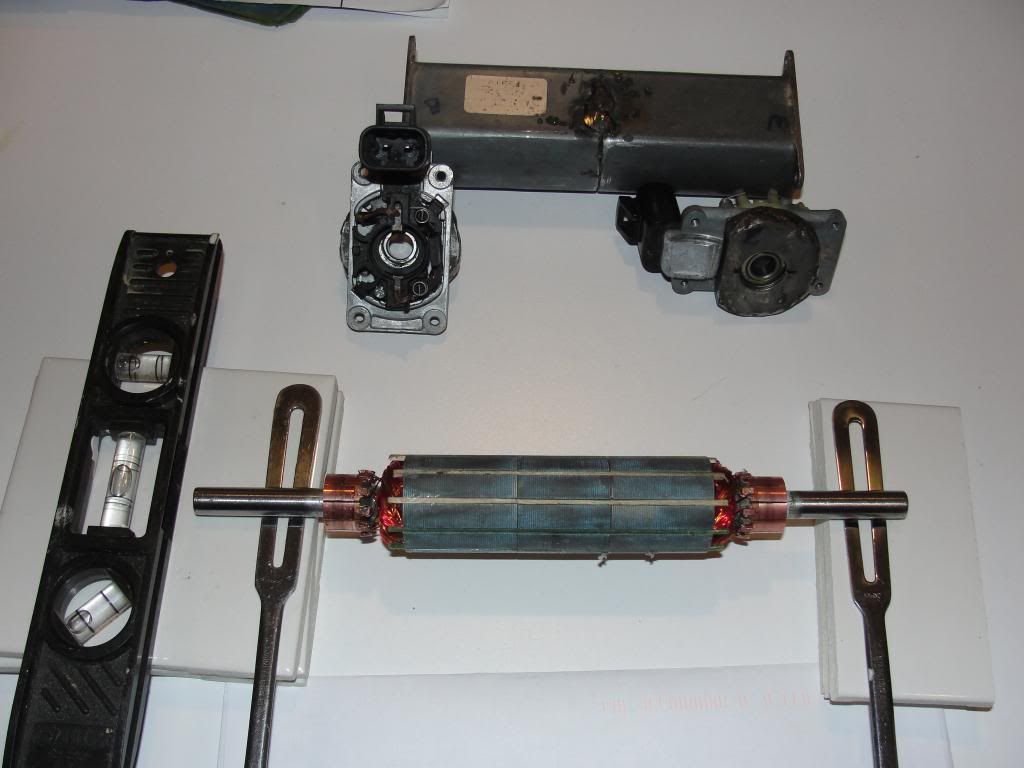
Powered both brush sets the same battery: 3900 rpm, amps on the firsts coil dropped to .7A.
That's a lot of amps drop off
Couldn't get a reading on the amps on the other coil for some reason. (Multimeter issues?, tried 2 or 3), but even so looks like rpm went up and amps stayed the same if you figure both coils were taking the same amperage. I could stop the motor with my fingers on one coil, probably not on 2. Pretty interesting how much the amps dropped on the one pair. Try to get some video soon
My Quad stator pentagon winding motor did 7500 rpm on one brush set if I remember right, drew 2.5A, 8600 with 2 brushes. I think I had .7 ohms per brush set though, got up to 130 dF the day I blew a brush set, used solder. so it needs reworked.
My Quad stator pentagon winding motor did 7500 rpm on one brush set if I remember right, drew 2.5A, 8600 with 2 brushes. I think I had .7 ohms per brush set though, got up to 130 dF the day I blew a brush set, used solder. so it needs reworked.
This motor is too stiff to turn yet, no where as loose as my QP10. Gotta look at brush tension again, pretty sure it isn't binding. If the brushes are sharing the amperage equally then I got more rpm for the same load when running both sets in parallel. The commutators are looking kinda dirty too.
You can see my QP10 run on UFO's site where I earned honors for that job!
So working toward some better results...
So working toward some better results...
The second draw back on this type (rectangular housing) is that you could not adjust brush timing...and all this motors need a "final tuning" after first run...I do it while running...and meters on...to check best point at RPM's and Output.
Regards
Ufopolitics
Edit 1: Sam, after reading your mail...I realized something...on the Group Windings...we are spreading the magnetic fields...not as compact as in Pairs all north...therefore, we need to either add same wire than pairs, per coil...or use heavier gauge to make fields stronger (per coil) at Group Winding.
 Bad for doing real work as I have some plans on seeing how much energy it can make. But I am happy with the ohms per group and heating seems very under control and will look at 24v. I think I used 26ga on the quad and it had .6-.7ohms per coil, and the brush assemblies are just not heat tolerant, failed a brush set fast (haven't disassembled yet to find out exactly). Pretty sure its best to pursue your unipolar windings though instead. I would rather rewind it that way, before I do anything serious with it. I might try to repair it just to get good comparisons to the unipolar. I would almost say that I should go up a gauge to 27ga on it also, since it ran so hot. But maybe need to get the pulsers working to see how they help.
 ...yes, that is correct, and that is why I keep saying it varies...depending on many factors...basically room temperature...operating temperature...our meters processor "interpretation"...copper alloy, etc,etc...but, the way to go is by 8 turns, 26 awg, or 16 total at each Pair.
 ...sometimes it takes a while...and some times it just don't do it...so it is not simple to capture on video like I did...I had run SEVERAL TAKES...that were non successful guys...and finally, I am very happy I did it, capturing to be able to share it with you all...This means...this is something we need to work on...and develop it MUCH further...trying more number of turns...or lesser...and checking results...that's what "development" is all about Guys...many testing...failed and good tests...are both needed to come up with excellent results, excellent and final conclusions.

Comment