Announcement

Collapse
No announcement yet.

The electric field of a magnet

Collapse
X
 
  • Filter
  • Time
  • Show
Clear All
new posts

  • Dave45
    replied
    Originally posted by myenergetic View Post
    @ Dave45

    If you read the second research, paper in my post #418 PPMT test apparatus by Joseph Flynn it clearly demonstrates the gain in total force on the armature pull-off test.

    http://www.energeticforum.com/attach...d=13261538
    Thanks for the heads up, Im going to start building soon there are alot of test that need to be done, some have stated its too complicated but I feel it will be no more complicated than building a pulse motor.
    I was thinking about Hubbards coil he had two end caps if the end caps are a ferrous material then this would be a transformer of sorts, closing the magnetic field but allowing it to draw energy into the system.
    I dont think it will be that complicated

    Leave a comment:


  • myenergetic
    replied
    Hubbard Coil and barbat Patent

    @ Dave45

    If you read the second research, paper in my post #418 PPMT test apparatus by Joseph Flynn it clearly demonstrates the gain in total force on the armature pull-off test.

    http://www.energeticforum.com/attach...d=13261538

    Leave a comment:


  • Dave45
    replied
    JJ do you think we can build the coils with just one winding but say 15 inches in length, by one winding I mean one for the shorted coil, one for the primary, and one for the secondary.
    your thoughts would be greatly appreciated
    dave

    Leave a comment:


  • Dave45
    replied
    Iv been thinking of the magnetic model and the electric field that accompanies it
    heliospheric current sheet 2001 till 2009 - YouTube
    Fibonacci's Fractals - YouTube
    We are not the only ones waking up

    Leave a comment:


  • Dave45
    replied
    Hubbard Coil

    Let me rephrase that if we used say 12 ga. to 16 ga. in the first coil - step up
    then used 16 ga. to 12 ga.- step down and alternated this same guage through out the system would we get a resonant reaction between all the coils.
    Last edited by Dave45; 01-11-2012, 02:35 AM.

    Leave a comment:


  • Dave45
    replied
    Hubbard Coil

    I think we can use a 1:1 wiring ratio, it just needs to be large enough to handle the amps at the end, and if you really think about it all we need is 12 volts at about 60 amps continuous, at least for a start.
    I think by using a 1:1 ratio resonance should be a given, spacing the coils and diameter to length I think it would be wise to look at the golden ratio.
    I read somewhere Hubbard said he used to different sized wires in his device, he may have stepped up the voltage some and we could step it up easy enough but we really need amps.
    I wonder if we step up then step down the next coil but used the same size wire in both coils would we get a resonant reaction between them or between all six or eight something to think about
    Last edited by Dave45; 01-11-2012, 02:35 AM.

    Leave a comment:


  • Dave45
    replied
    Hubbard Coil


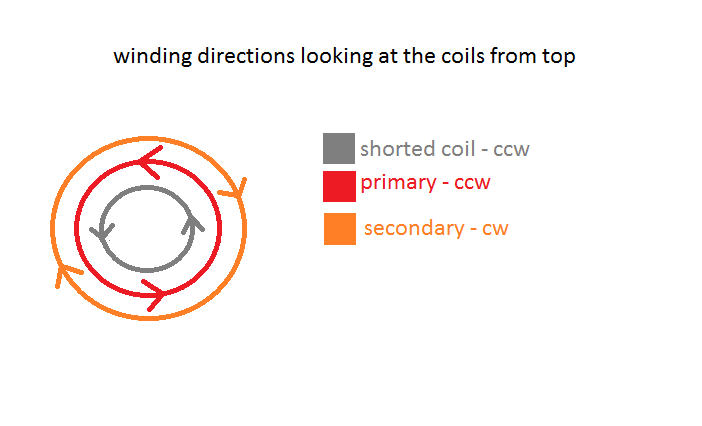
    I had the winding direction of the shorted coil wrong, if we are to collect the field from the shorted coil it must be wound the same as the primary.
    I went an picked up the transformer today this thing is huge, cant wait to get into it.
    Last edited by Dave45; 01-11-2012, 02:40 AM.

    Leave a comment:


  • MonsieurM
    replied
    The Caduceus viewed under different light or perspective

    Leave a comment:


  • MonsieurM
    replied
    Originally posted by Dave45
    Here's a link to Patrick Kelly's work,http://www.free-energy-info.co.uk/ btw thank you Patrick its people like you that will change this world for the better.
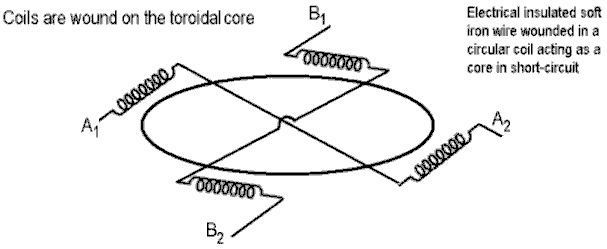
    In chapter five there's info on the tpu and this wiring diagram

    looks like a design made to rotate to me
    Hook this to the flip flop circuit
    resembles this


    Leave a comment:


  • MonsieurM
    replied
    Originally posted by Dave45
    I believe it takes rotation in one form or another either mechanical or induced, even in the Hubbard coil there is rotation the coils firing in succession in a circular pattern.
    If we take water in a bowl just sitting there its static but if we rotate the bowl we add kinetic energy to the water.
    We really dont need torque all we have to do is spin the coil the easiest way possible, high voltage will do it and we can also induce rotation by design.
    It kind of makes sense, trying to recreate a sinkhole

    Leave a comment:


  • nueview
    replied
    it is now time to build a heavy duty high power static machine.
    i know what we are missing the part is defined by tesla and keely as rally.
    in short it is the rotational torque.
    Martin

    Leave a comment:


  • myenergetic
    replied
    Hubbard Coil and barbat Patent

    @Dave45

    Your post # 342 to # 371 I have not given up on the Alfred M. HUBBARD Coil Generator assembly. Here is the setup patented by William BARBAT US Patent Application # 2007/0007844. The link is

    William Barbat: Self-Sustaining Electrical Generator; United States Patent Application # 0070007844 Self-Sustaining Electrical Generator

    On your Post #416 Ignition Coil oscillator driver circuit, please find attached a draft circuit proposal


    I hope it helps

    Regards

    JJ
    Attached Files

    Leave a comment:


  • MonsieurM
    replied
    Awesome vis Dave...amazing workmanship...reproducing all those invention

    Thank you...quite inspiring

    side note

    the last one, I was wondering if we replaced the wooden cubes in the end with magnets ...It would not add more force ..you know adding the pull and push to gravity

    Leave a comment:


  • nueview
    replied


    all this should go here as to why it fails.
    Martin

    Leave a comment:


  • Dave45
    replied

    Leave a comment:

Working...
X