
Tritone - Wikipedia, the free encyclopedia
In classical music from Western culture, the tritone"three" and tone) is traditionally defined as a musical interval composed of three whole tones. In a chromatic scale, each whole tone can be further divided into two semitones. In this context, a tritone may also be defined as any interval spanning six semitones.
The name diabolus in musica ("the Devil in music") has been applied to the interval from at least the early 18th century. Johann Joseph Fux cites the phrase in his seminal 1725 work Gradus ad Parnassum, Georg Philipp Telemann in 1733 notes, "mi against fa", which the ancients called "Satan in music", and Johann Mattheson in 1739 writes that the "older singers with solmization called this pleasant interval 'mi contra fa' or 'the devil in music'".[15] Although the latter two of these authors cite the association with the devil as from the past, there are no known citations of this term from the Middle Ages, as is commonly asserted.[16] However Denis Arnold, in the The New Oxford Companion to Music, suggests that the nickname was already applied early in the medieval music itself:
It seems first to have been designated as a "dangerous" interval when Guido of Arezzo developed his system of hexachords and with the introduction of B flat as a diatonic note, at much the same time acquiring its nickname of "Diabolus in Musica" ("the devil in music").
It seems first to have been designated as a "dangerous" interval when Guido of Arezzo developed his system of hexachords and with the introduction of B flat as a diatonic note, at much the same time acquiring its nickname of "Diabolus in Musica" ("the devil in music").
from: http://www.energeticforum.com/renewa...netism-58.html
B Flat and Black Holes
This one's a bit of a stretch, but here's what happened.
In September 2003, astronomers at NASA's Chandra X-Ray Observatory found what can be described as sound waves emanating from a supermassive black hole. The black hole can be seen in the Perseus cluster of galaxies located 250 million light years from Earth.
Andrew Fabian of the Institute of Astronomy in Cambridge, England, analyzed the waves and announced, "We have detected their sound...." The sound he found (which is really the waves passing through gas near the black hole) translate to the note B flat.
But this is not a B flat you or I can hear. It is 57 octaves below middle C. A piano, by comparison, contains only seven octaves. So if a black hole hums, it hums at a frequency a million billion times lower than you can hear.
This one's a bit of a stretch, but here's what happened.
In September 2003, astronomers at NASA's Chandra X-Ray Observatory found what can be described as sound waves emanating from a supermassive black hole. The black hole can be seen in the Perseus cluster of galaxies located 250 million light years from Earth.
Andrew Fabian of the Institute of Astronomy in Cambridge, England, analyzed the waves and announced, "We have detected their sound...." The sound he found (which is really the waves passing through gas near the black hole) translate to the note B flat.
But this is not a B flat you or I can hear. It is 57 octaves below middle C. A piano, by comparison, contains only seven octaves. So if a black hole hums, it hums at a frequency a million billion times lower than you can hear.


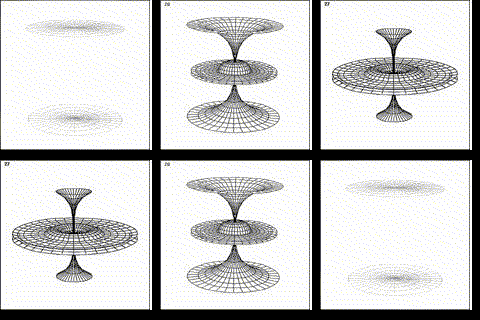





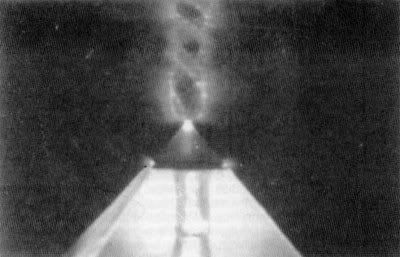
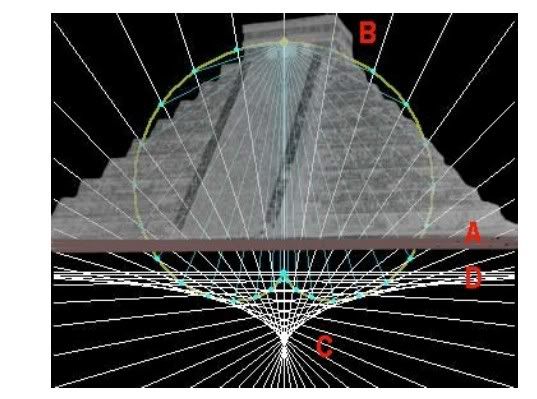
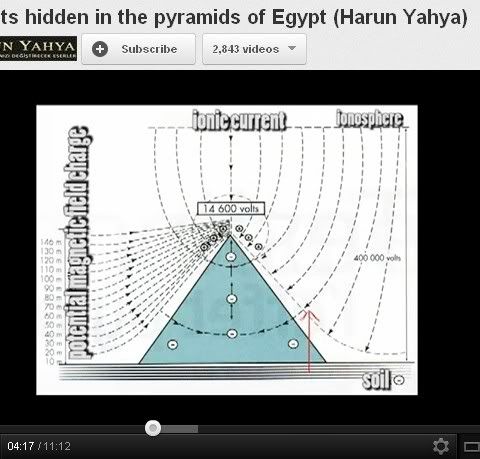
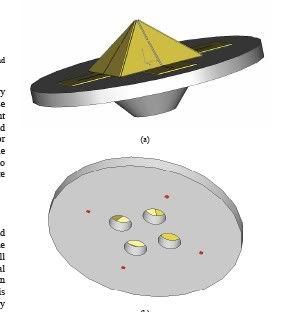
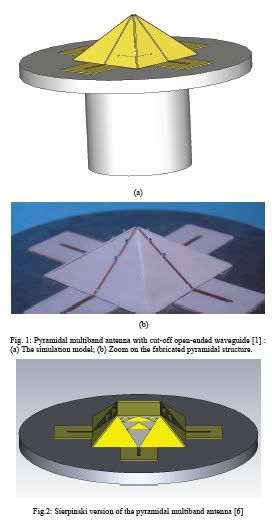
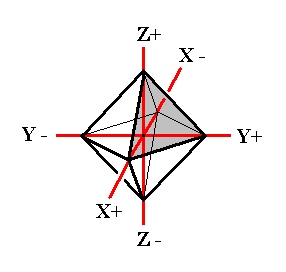
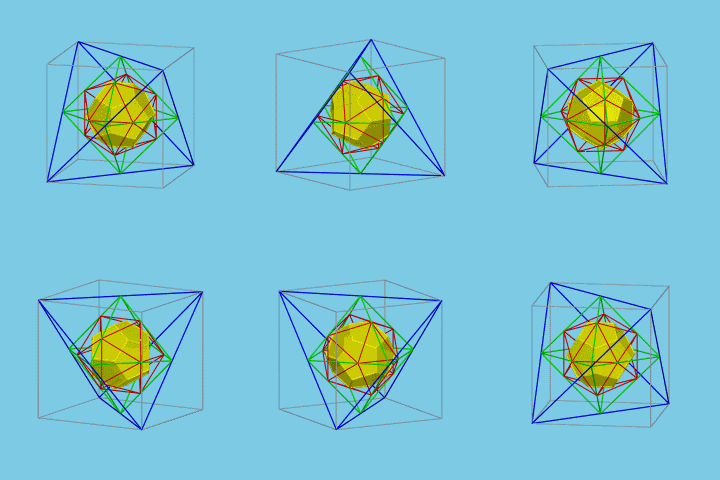
 ...here are a few posts to add to the properties of pyramid and help you see clearer
  :
:




Leave a comment: