
 ): two towns to remember
Aoudaghost - Wikipedia, the free encyclopedia
Arabic sources
The earliest mention of Aoudaghost is by al-Yaqubi in his Kitab al-Buldan completed in 889-890 in which he described the town as being controlled by a tribe of the Sanhaja and situated 50 stages south of Sijilmasa across the Sahara desert.[1] "It is the residence of their king who has no religion or law. He raids the land of the Sudan who have many kingdoms."[2] From Ibn Hawqal writing in around 977 we learn that the distance from Aoudaghost to Ghana (presumably the capital of the Empire) was 10 days' journey for a lightly loaded caravan.[3] Ibn Hawqal wrote that the "king of Awdaghurst maintains relations with the ruler of Ghana" which suggests that at that time Aoudaghost was not part of the Ghana Empire.[4] He also mentions the trade in gold and writes that the king of Ghana is very rich because of his stocks of gold but that the kings of Ghana and Kugha "stand in pressing need of [the goodwill of] the king of Awdaghust because of the salt which comes to them from the lands of Islam."[4]
The only detailed description that we have for the town is given by al-Bakri in his Book of Routes and Realms which was completed in 1068. Al-Bakri made use of earlier sources and it is likely that his description of Aoudaghost comes from the writings of Muhammad b. Yusuf al-Warraq (904-973) whose own account has not survived
The earliest mention of Aoudaghost is by al-Yaqubi in his Kitab al-Buldan completed in 889-890 in which he described the town as being controlled by a tribe of the Sanhaja and situated 50 stages south of Sijilmasa across the Sahara desert.[1] "It is the residence of their king who has no religion or law. He raids the land of the Sudan who have many kingdoms."[2] From Ibn Hawqal writing in around 977 we learn that the distance from Aoudaghost to Ghana (presumably the capital of the Empire) was 10 days' journey for a lightly loaded caravan.[3] Ibn Hawqal wrote that the "king of Awdaghurst maintains relations with the ruler of Ghana" which suggests that at that time Aoudaghost was not part of the Ghana Empire.[4] He also mentions the trade in gold and writes that the king of Ghana is very rich because of his stocks of gold but that the kings of Ghana and Kugha "stand in pressing need of [the goodwill of] the king of Awdaghust because of the salt which comes to them from the lands of Islam."[4]
The only detailed description that we have for the town is given by al-Bakri in his Book of Routes and Realms which was completed in 1068. Al-Bakri made use of earlier sources and it is likely that his description of Aoudaghost comes from the writings of Muhammad b. Yusuf al-Warraq (904-973) whose own account has not survived
Then to Awdaghust which is a large town, populous and built on sandy ground, overlooked by a big mountain, completely barren and devoid of vegetation. ... there is one cathedral mosque and many smaller ones...Around the town are gardens with date palms. Wheat is grown there by digging with hoes, and it is watered with buckets...Excellent cucumbers grow there, and there are a few small fig trees and some vines, as well as plantations of henna which produce a large crop... [there are] wells with sweet water. Cattle and sheep are so numerous... Honey ... is abundant, brought from the land of the Sudan. The people of Awdaghust enjoy extensive benefits and huge wealth. The market there is at all times full of people... Their transactions are in gold, and they have no silver. Most of the inhabitants ... are natives of Ifriqiya [Tunisia]... but there are also a few people from other countries... [They own] slaves so numerous that one person from among them might possess a thousand servants or more

and the mine of Taghaza - Wikipedia, the free encyclopedia
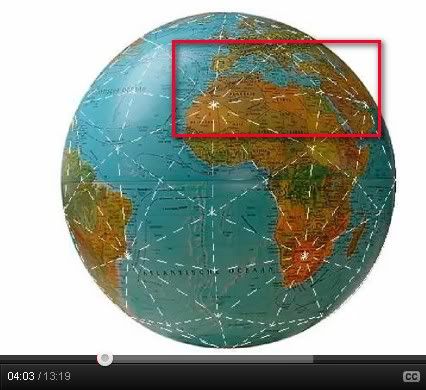
Taghaza (also Teghaza) is an abandoned salt-mining centre located in a salt pan in the desert region of northern Mali. It was an important source of rock salt for West Africa up to the end of the 17th century when it was abandoned and replaced by Taoudenni. Salt from the mines formed an important part of the long distance trans-Saharan trade. Taghaza is located 857 km (533 mi) south of Sijilmasa (in Morocco), 787 km (489 mi) north-northwest of Timbuktu (in Mali) and 731 km (454 mi) north-northeast of Oualata (in Mauritania).



salt from an ancient ocean....full of ORMUS

How to make Ormus - YouTube
from: Leo Africanus - Wikipedia, the free encyclopedia
At the time he visited the city of Timbuktu, it was a thriving Islamic city famous for its learning. Timbuktu was to become a byword in Europe as the most inaccessible of cities, but at the time Leo visited, it was the center of a busy trade carried on by traders in African products, gold, printed cottons and slaves, and in Islamic books. Nothing is known of Leo's later life.
Leo is credited with proposing that the origin of the word "Africa" comes from Greek meaning "without cold or fear."
Leo is credited with proposing that the origin of the word "Africa" comes from Greek meaning "without cold or fear."
In around 1510 Leo Africanus spent 3 days in Taghaza

Ruins
At Taghaza there are ruins of two different settlements, one on either side of the ancient salt lake (or sabkha). They are separated by a distance of 3 km.[18] The larger more westerly settlement covered an area of approximately 400 m by 200 m.[19] All the houses, except the mosque, were aligned in a northwest to southeast direction, perpendicular to the prevailing wind. The houses in the more easterly settlement were aligned in the same manner and occupied an area of 200 m by 180 m. The reason for the dual settlements is not known but could be connected with the fact that Taghaza served both as a salt mine and as a stopping point on an important trans-Saharan trade route
At Taghaza there are ruins of two different settlements, one on either side of the ancient salt lake (or sabkha). They are separated by a distance of 3 km.[18] The larger more westerly settlement covered an area of approximately 400 m by 200 m.[19] All the houses, except the mosque, were aligned in a northwest to southeast direction, perpendicular to the prevailing wind. The houses in the more easterly settlement were aligned in the same manner and occupied an area of 200 m by 180 m. The reason for the dual settlements is not known but could be connected with the fact that Taghaza served both as a salt mine and as a stopping point on an important trans-Saharan trade route
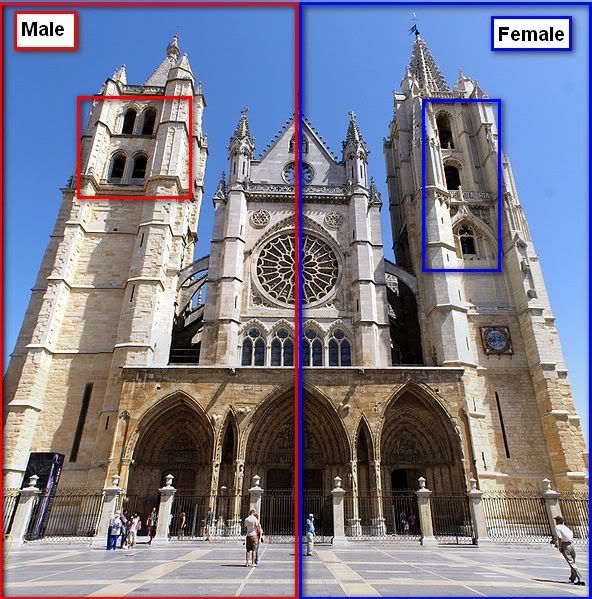
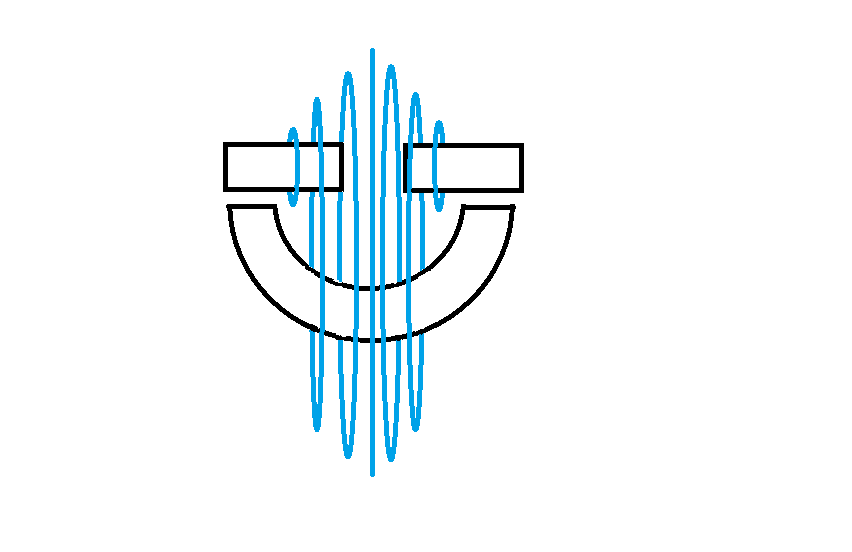
Principle of Polarity
The Principle of Polarity.
"Everything is Dual; everything has poles; everything has its pair of opposites; like and unlike are the same; opposites are identical in nature, but different in degree; extremes meet; all truths are but half-truths; all paradoxes may be reconciled." - The Kybalion
"Everything is Dual; everything has poles; everything has its pair of opposites; like and unlike are the same; opposites are identical in nature, but different in degree; extremes meet; all truths are but half-truths; all paradoxes may be reconciled." - The Kybalion








 he's done humanity a great favor....Thank you if you ever read this ...





Leave a comment: