This forum is preserved as a permanent archive. The community continues at eMedia Press.

Announcement

Collapse
No announcement yet.

Don Smith A review...

Collapse
X
 
  • Filter
  • Time
  • Show
Clear All
new posts

  • Bob Smith
    replied
    Originally posted by med.3012 View Post


    ... the problem with ordinary parallel L/C is still the produced reactive power, this problem is solved in the E-TBC when we close the junction CD and achieve the resonance in this condition .
    Would a spark gap be one way of closing this junction?
    Bob

    Leave a comment:


  • med.3012
    replied
    Originally posted by AetherScientist View Post

    The idea is how to use resonance to absorb energy from the ambient. There would be one device to disturb ambient electrons and different devices to collect than energy.
    the resonance can't produce the power but it replicate the power with radio frequency speed, this mean if you start with 10W you could replicate this as 1000 for example or more ...

    the following drawing explain this device named the E-TBC :


    this device form a parallel L/C but as you know any parallel L/C will produce reactive electric power which can't do real work.., for this device to produce real active power we must close the connection CD ( green section ) so both voltage and amperage will meet each other.

    upon oscillation the induced rotating electric field will just charge the capacitor once again, so you give the power to this special capacitor coil and after that it replicate that power according the resonance frequency, the problem with ordinary parallel L/C is still the produced reactive power, this problem is solved in the E-TBC when we close the junction CD and achieve the resonance in this condition .
    Attached Files

    Leave a comment:


  • med.3012
    replied
    Originally posted by AetherScientist View Post
    Bob Smith,

    You have also this video that shows a capacitor and how it can light a bulb for a second or less using a Kacher coil:
    [VIDEO]https://www.youtube.com/watch?v=F9kHPVIIjZM[/VIDEO]

    nice video, i had the same problem with my E-TBC when i was able to charge a capacitors bank to a high level but when connecting a light bulb i only see a spark in the connection of the bulb ! when short circuit the capacitor with a thin copper wire, the wire burn immediately... my explanation is : i only get voltage without real current.

    Ok i just want to add something important about superconductivity, it's better to quote a small text focus about the discussed idea .. electrons attraction.


    the full pdf is here :

    Attached Files

    Leave a comment:


  • AetherScientist
    replied
    Bob Smith,

    You have also this video that shows a capacitor and how it can light a bulb for a second or less using a Kacher coil:
    [VIDEO]https://www.youtube.com/watch?v=F9kHPVIIjZM[/VIDEO]

    Leave a comment:


  • AetherScientist
    replied
    Originally posted by Bob Smith View Post
    Thank you AetherSci
    I am also able to get the sparks off my setup. My next step now is to try to get useable power from the capacitor. The power is there in great quantities when we begin to tap the dielectric/aether. For me, it is a question of making it available in an accessible form.
    Thanks again for the quick reply.
    Bob
    I understood that you was not able to get the sparks from the capacitors.
    I was recording some videos for you, but I don't upload them because they will teach you nothing new.

    So we are at the same point: to get usable power from those capacitors.
    I am also able to get sparks when I short the caps, but I cannot run any device on that energy. I am asking in other forums to light a bulb from those capacitors, but Nelson has shown a possible way to light a bulb for a small period of time(1 second or less). So the next step is to use the same light bulb and cap as he is using and expect to get the same results.

    So we have some homework to do.

    Leave a comment:


  • Bob Smith
    replied
    Originally posted by AetherScientist View Post
    Hello Bob Smith,
    I am using a car's ignition coil to obtain the single wire HV HF line. I feed the ignition coil using a PWM circuit that I bought in eBay.

    It would be ok to try the cap and the bulb that Nelson is using. I have used a 1 KiloVolt 22uF cap to try to light a 25 Watt 250 Volts incandescent light bulb, but I only get sparks in the connections and no light.

    If you want pictures I can make some, but the schematic I use is very simple.
    A AC to DC transformer: output 12 VDC 1.25 Amps.
    PWM circuit to feed the input of the car's ignition coil
    A car's ignition coil
    2 plates of the same characteristics (material and shape)
    An AV plug,

    I get big sparks from the capacitor.

    I can try Nelson's configuration to use a light bulb. But I have to change the capacitor and the light bulb with the same that Nelson is using.
    Thank you AetherSci
    I am also able to get the sparks off my setup. My next step now is to try to get useable power from the capacitor. The power is there in great quantities when we begin to tap the dielectric/aether. For me, it is a question of making it available in an accessible form.
    Thanks again for the quick reply.
    Bob

    Leave a comment:


  • AetherScientist
    replied
    Originally posted by Bob Smith View Post
    AetherScientist
    I have had some success with this configuration using a different resonant circuit. My problem is getting the charge out of the capacitor to do useful work.

    In a slightly different example, YT user Nelson Rocha puts a gas discharge tube across his cap, and is able to withdraw charge from it to make an incandescent bulb glow. I am assuming this might also be possible by using a zener diode in the same way


    Any suggestions on how to get past this point - to draw useful charge out of the cap to do work?
    Bob
    Hello Bob Smith,
    I am using a car's ignition coil to obtain the single wire HV HF line. I feed the ignition coil using a PWM circuit that I bought in eBay.

    It would be ok to try the cap and the bulb that Nelson is using. I have used a 1 KiloVolt 22uF cap to try to light a 25 Watt 250 Volts incandescent light bulb, but I only get sparks in the connections and no light.

    If you want pictures I can make some, but the schematic I use is very simple.
    A AC to DC transformer: output 12 VDC 1.25 Amps.
    PWM circuit to feed the input of the car's ignition coil
    A car's ignition coil
    2 plates of the same characteristics (material and shape)
    An AV plug,

    I get big sparks from the capacitor.

    I can try Nelson's configuration to use a light bulb. But I have to change the capacitor and the light bulb with the same that Nelson is using.

    Leave a comment:


  • AetherScientist
    replied
    There are multiple combination of different factor to experiment with.
    Tesla,for example, used single line transmission line to run devices


    There are even more different combination to experiment and observe with.

    The idea is how to use resonance to absorb energy from the ambient. There would be one device to disturb ambient electrons and different devices to collec than energy.

    Leave a comment:


  • Bob Smith
    replied
    Originally posted by AetherScientist View Post
    A representation about the circuit I made some days ago
    AetherScientist
    I have had some success with this configuration using a different resonant circuit. My problem is getting the charge out of the capacitor to do useful work.

    In a slightly different example, YT user Nelson Rocha puts a gas discharge tube across his cap, and is able to withdraw charge from it to make an incandescent bulb glow. I am assuming this might also be possible by using a zener diode in the same way


    Any suggestions on how to get past this point - to draw useful charge out of the cap to do work?
    Bob

    Leave a comment:


  • AetherScientist
    replied
    see you the next time. good night.

    Leave a comment:


  • med.3012
    replied
    Originally posted by AetherScientist View Post
    You know that a step down/up inductive transformer can be done using more or less turns of wire.


    But... what about capacitive step down/up transformer?

    I mean using plates... how can I increase electrostatic energy?

    Ok just a quick reply as it's late here.., you are invited to take a look at this doc here :

    www.free-energy-info.com/Mohamed.pdf it's a few page PDF but very compressed in information

    if you like you can take a look at my thread :


    for your time i could reply your questions the best i can do, the idea in a few words is to combine both electricity side together and let them oscillate.., as Don stated you need to forget about the electricity we had learn at school.. this is new knowledge, we have to eliminate the displacement current inside our capacitor and use them as coil ... it's very simple any bifilar coil has a built in capacitor.. the extension is needed to make it oscillate lenz's law have to be avoided, so you have the key to unlimited power ... GOOD NIGHT

    Leave a comment:


  • AetherScientist
    replied
    You know that a step down/up inductive transformer can be done using more or less turns of wire.


    But... what about capacitive step down/up transformer?

    I mean using plates... how can I increase electrostatic energy?

    Leave a comment:


  • AetherScientist
    replied
    Originally posted by med.3012 View Post
    Don Smith used a signs.. he never used a direct words that can be explained directly, he never allowed to do this ... ( for contract obligation ), you know ..

    in your drawing you are replicating the source power, if you use 10W as initial power you will have 10W in the receiving plate, this mean electrostatic induction have to be used..., if you add to this a resonating device combine the capacitor and the coil the two as the same device, keep in mind there's a feedback inside this device what you achieve finally is something amazing, you are able to replicate this source power 10 W for example with radio frequency speed say 1000 time more power !
    I know...

    Well, I am replicating a Smith's circuit that he shown several times in his videos. I use a car ignition coil and I pulse the input with a PWM circuit DC. Then the single wire comes from the ignition coil's HV HF output.

    In my configuration it is like a 1:1 transformer. The question now is...
    How can I achieve, for example, 1:2 transformer using the same technique?

    Leave a comment:


  • AetherScientist
    replied
    Originally posted by med.3012 View Post
    Yes they use empty rods in high voltage power station to force the electrons to flow in the surface, if it's filled inside they will meet significant losses, even in high voltage power transmission they use twisted cable for the same purpose


    thanks for the explanation

    Leave a comment:


  • med.3012
    replied
    Originally posted by AetherScientist View Post
    And why they use an empty conductor at 50 hertz? To avoid losses?

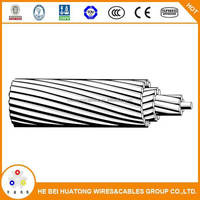
    Yes they use empty rods in high voltage power station to force the electrons to flow in the surface, if it's filled inside they will meet significant losses, even in high voltage power transmission they use twisted cable for the same purpose


    Leave a comment:

Working...
X