
Monoculture vs :

agro forestry
Culture - Wikipedia, the free encyclopedia
Culture (Latin: cultura, lit. "cultivation")[1] is a modern concept based on a term first used in classical antiquity by the Roman orator, Cicero: "cultura animi". The term "culture" appeared first in its current sense in Europe in the 18th and 19th centuries, to connote a process of cultivation or improvement, as in agriculture or horticulture. In the 19th century, the term developed to refer first to the betterment or refinement of the individual, especially through education, and then to the fulfillment of national aspirations or ideals. In the mid-19th century, some scientists used the term "culture" to refer to a universal human capacity. For the German nonpositivist sociologist Georg Simmel, culture referred to "the cultivation of individuals through the agency of external forms which have been objectified in the course of history".[2]
In the 20th century, "culture" emerged as a central concept in anthropology, encompassing the range of human phenomena that cannot be attributed to genetic inheritance. Specifically, the term "culture" in American anthropology had two meanings: (1) the evolved human capacity to classify and represent experiences with symbols, and to act imaginatively and creatively; and (2) the distinct ways that people living in different parts of the world classified and represented their experiences, and acted creatively.[3] Hoebel describes culture as an integrated system of learned behavior patterns which are characteristic of the members of a society and which are not a result of biological inheritance.[4]
Distinctions are currently made between the physical artifacts created by a society, its so-called material culture and everything else,[5] the intangibles such as language, customs, etc. that are the main referent of the term "culture"
In the 20th century, "culture" emerged as a central concept in anthropology, encompassing the range of human phenomena that cannot be attributed to genetic inheritance. Specifically, the term "culture" in American anthropology had two meanings: (1) the evolved human capacity to classify and represent experiences with symbols, and to act imaginatively and creatively; and (2) the distinct ways that people living in different parts of the world classified and represented their experiences, and acted creatively.[3] Hoebel describes culture as an integrated system of learned behavior patterns which are characteristic of the members of a society and which are not a result of biological inheritance.[4]
Distinctions are currently made between the physical artifacts created by a society, its so-called material culture and everything else,[5] the intangibles such as language, customs, etc. that are the main referent of the term "culture"
---------------- a side note :
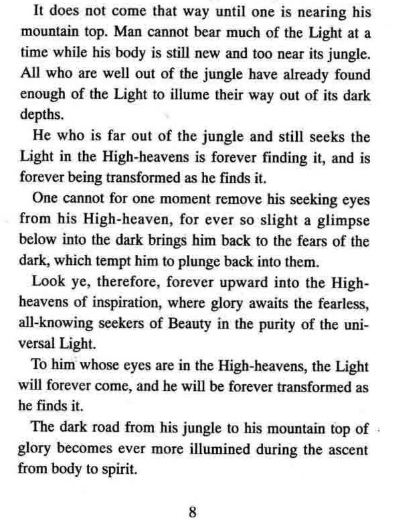
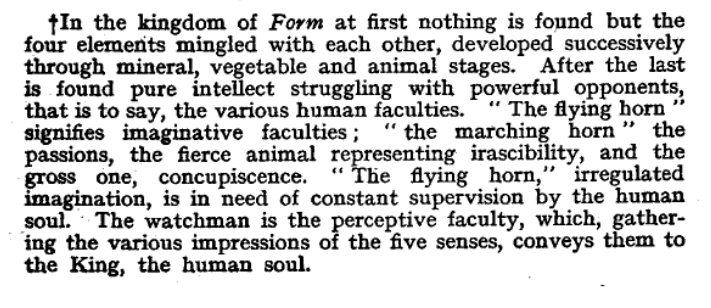
 The Tokens - The Lion Sleeps Tonight Lyrics - YouTube

Seeing the forest through the trees
Imagine you are walking through a forest. All around you are trees of different species, age, size and height. It looks pretty random, right? Wrong.
In research funded by the National Science Foundation, Brian Enquist of the department of ecology and evolutionary biology at the University of Arizona and his team have discovered a secret in the trees: Hidden among and within the architecture of the branches are fundamental rules that link the size, shape, age and in fact everything about a single tree to all the trees in a forest.
In research funded by the National Science Foundation, Brian Enquist of the department of ecology and evolutionary biology at the University of Arizona and his team have discovered a secret in the trees: Hidden among and within the architecture of the branches are fundamental rules that link the size, shape, age and in fact everything about a single tree to all the trees in a forest.
.
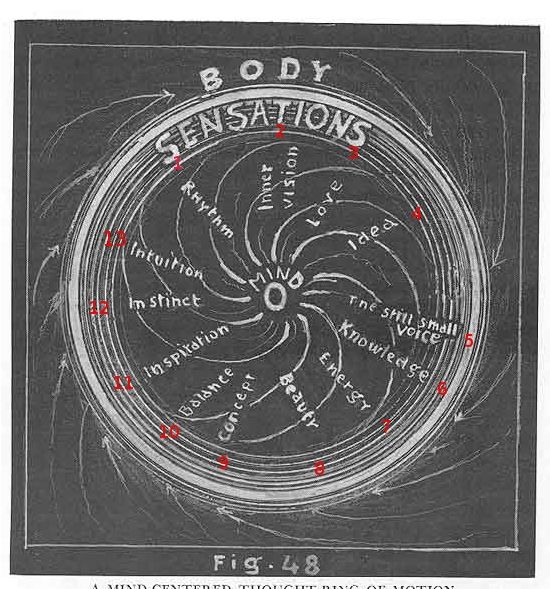
from: The Secret of Light
feel free to do a 3 6 9 on it

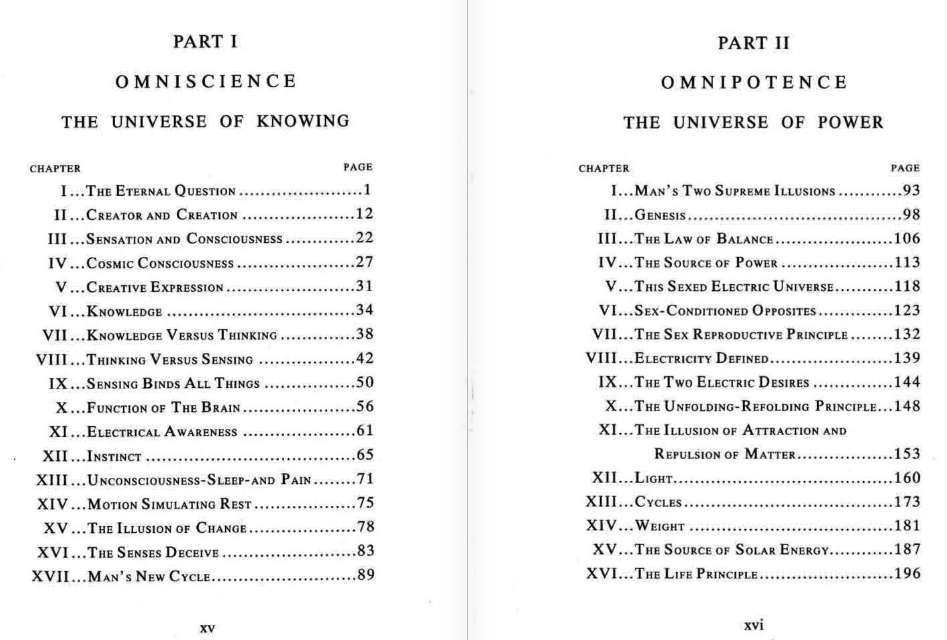
Yoshida Brothers - Shamisen Six - YouTube











 )
) 






















 ( ) over the old

 =
= 









Leave a comment: