
 Tweet
Tweet
Wire length
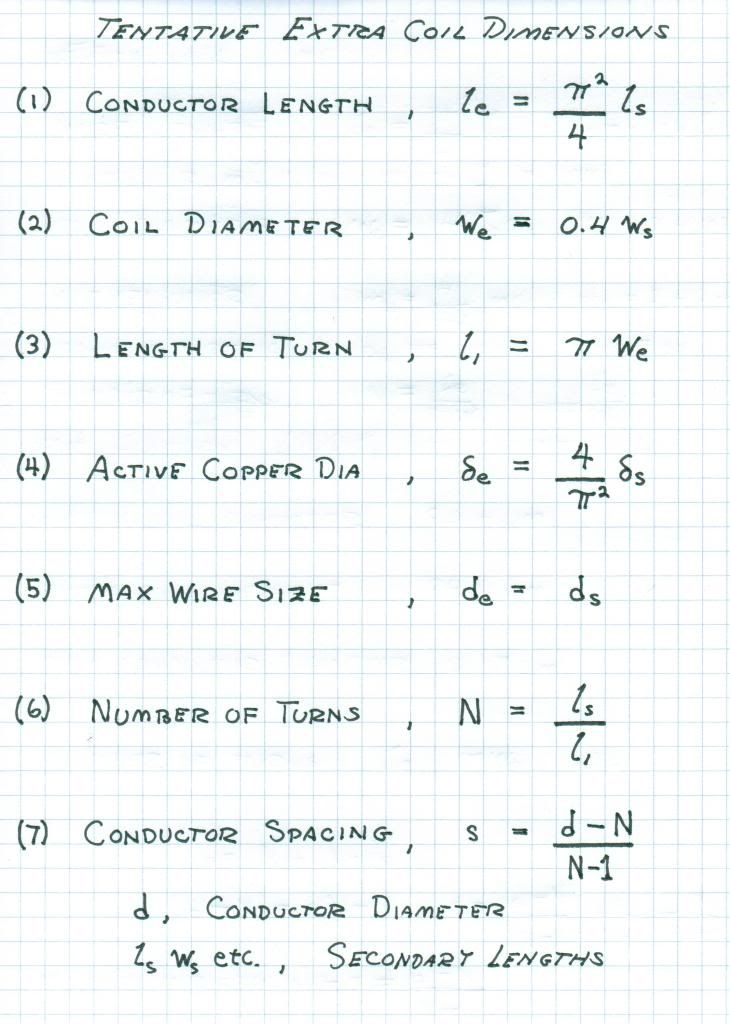
It is well worth the effort to build two extra coils and see how the 3/4 wave length coil interacts with the secondary. Anyone reading the "Notes" can see that throughout the book Tesla was experimenting sometime just taking off wire one turn at the time. With respect to the extra coil on page 80 of the notes he states "....the actual length of wire being always smaller than the theoretical length,...", so I do not think we are going to be so lucky as to hit the proper resonance condition using the calculated length(s).
It is well worth the effort to build two extra coils and see how the 3/4 wave length coil interacts with the secondary. Anyone reading the "Notes" can see that throughout the book Tesla was experimenting sometime just taking off wire one turn at the time. With respect to the extra coil on page 80 of the notes he states "....the actual length of wire being always smaller than the theoretical length,...", so I do not think we are going to be so lucky as to hit the proper resonance condition using the calculated length(s).

 I was mulling over the L and C and how it relates to resonance and what the ultimate goal is. I recalled back to Heaviside and reference to that if an infinite conductor was not possessing inductance and that it would be purely resistive and infinitely so. 'BING' goes the bulb, adding to what has been posted here and the whole big bowl of soup I saw that a coil designed just so with it's L and C in annihilation would become a purely resistive conductor, it would be time invariant thus the standing wave of resonance. but it's more than that, within in the right parameters it would be able to generate infinite amounts of current, scary really. any potential could be handled when the parameters are met. It's not, get more out then in, it's lets put a tap on the well and take whats needed when needed, no loss of efficiency because it's time invariant.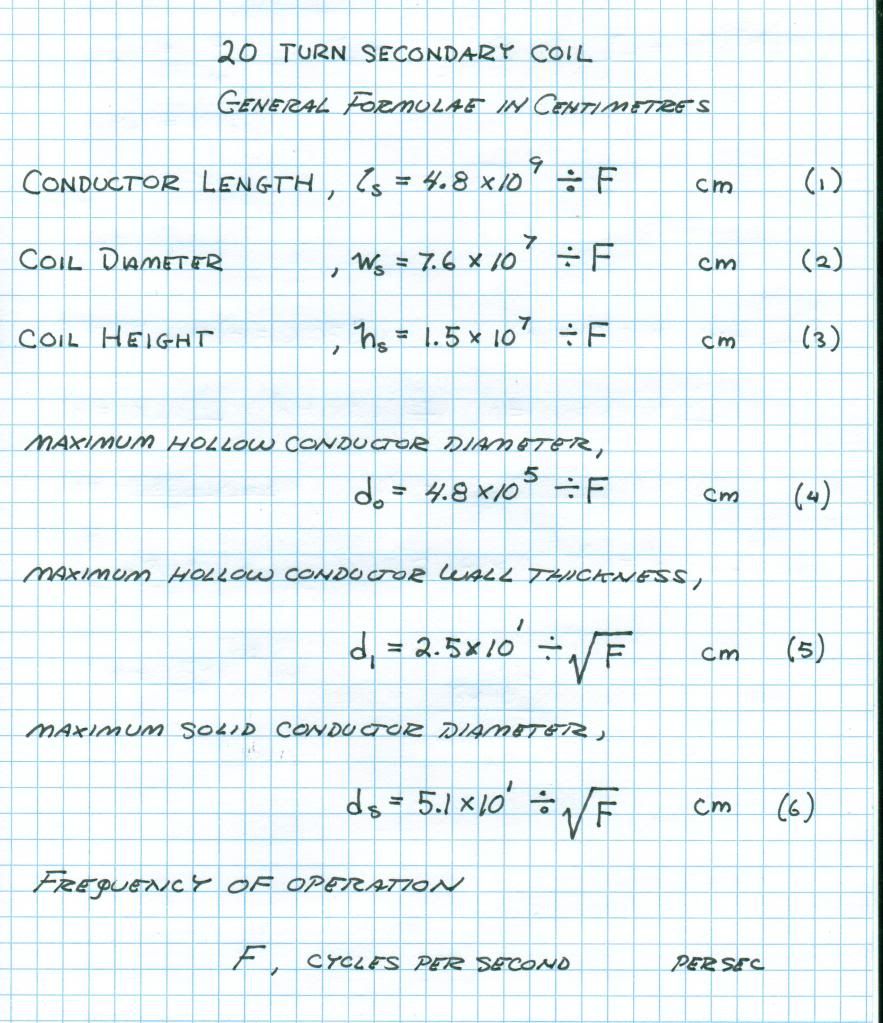
Comment