This forum is preserved as a permanent archive. The community continues at eMedia Press.
If this is your first visit, be sure to
check out the FAQ by clicking the
link above. You may have to register
before you can post: click the register link above to proceed. To start viewing messages,
select the forum that you want to visit from the selection below.
Whats curious is a low dc voltage spark gap has a more intense magnetic field than a high voltage spark gap. I wonder if Stubblefield used this in some manner.
A magnet does not draw energy when it is in a stable state, it is at rest it has equalize
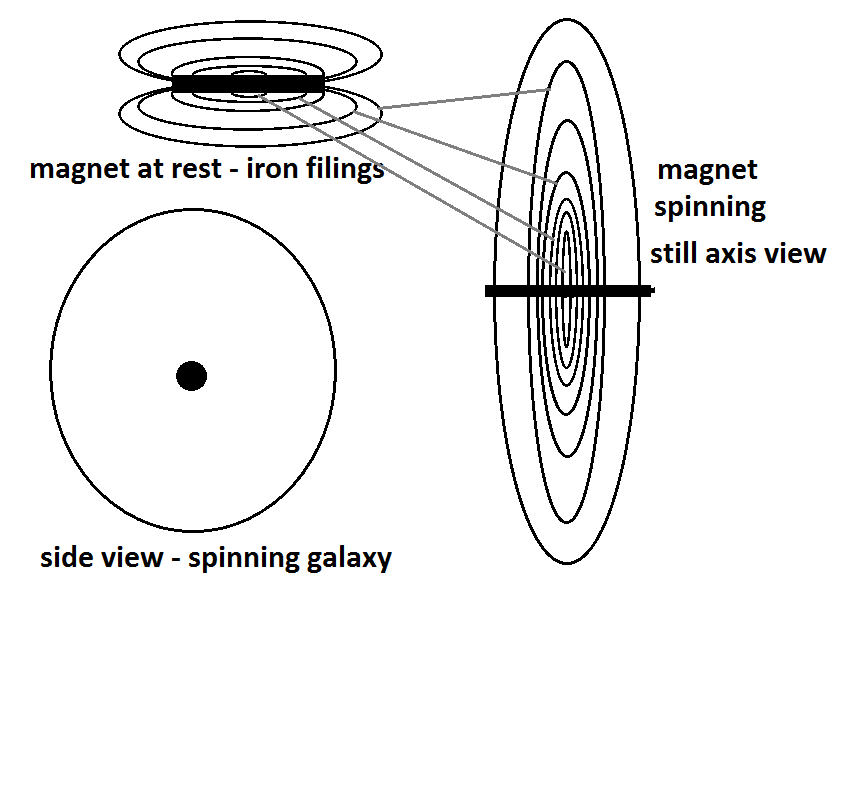
Its just a static field when at rest. When it spins its a different story. It can impart energy in the form of electric current as well as moving other magnetic fields. Really powerful stuff. Take a magnetic materiel past its saturation point with enough current and it explodes. Magnetic fields can also have an effect on other magnetic fields at a great distance. A lot further than 6 foot too. Magnets interact from over 6 feet... NOT LEVITATION!!! - YouTube
Whats curious is a low dc voltage spark gap has a more intense magnetic field than a high voltage spark gap. I wonder if Stubblefield used this in some manner.
A magnet does not draw energy when it is in a stable state, it is at rest it has equalize
Its just a static field when at rest. When it spins its a different story. It can impart energy in the form of electric current as well as moving other magnetic fields. Really powerful stuff. Take a magnetic materiel past its saturation point with enough current and it explodes. Magnetic fields can also have an effect on other magnetic fields at a great distance. A lot further than 6 foot too. Magnets interact from over 6 feet... NOT LEVITATION!!! - YouTube
Whats curious is a low dc voltage spark gap has a more intense magnetic field than a high voltage spark gap. I wonder if Stubblefield used this in some manner.
A magnet does not draw energy when it is in a stable state, it is at rest it has equalize. This is why we dont see the electric field with iron filings.
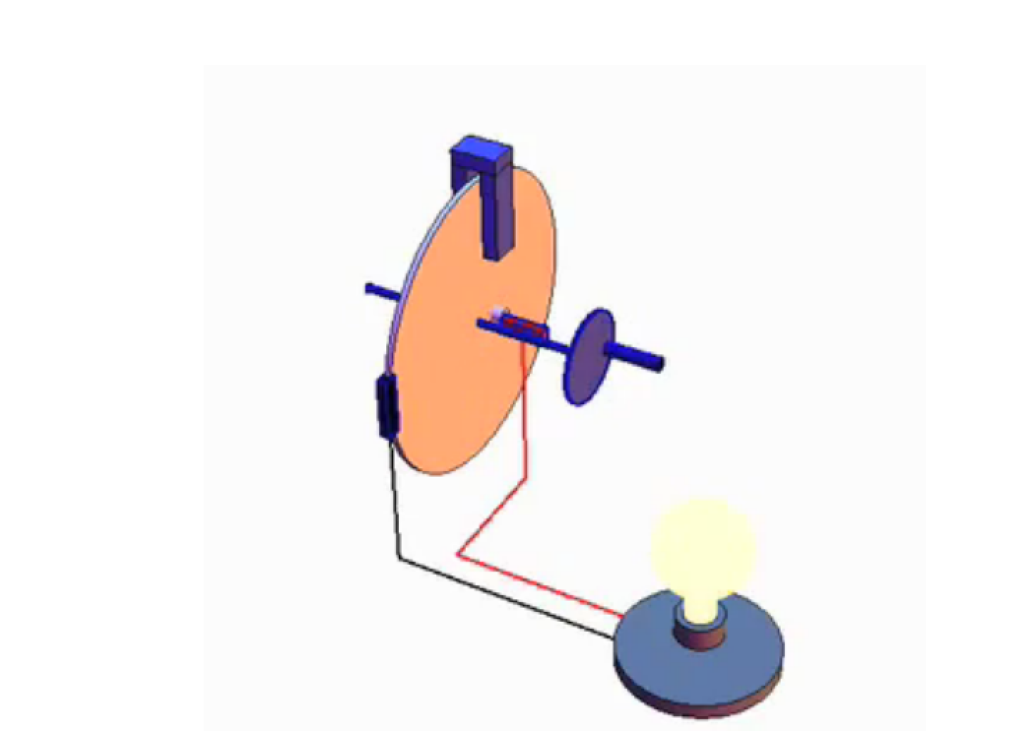
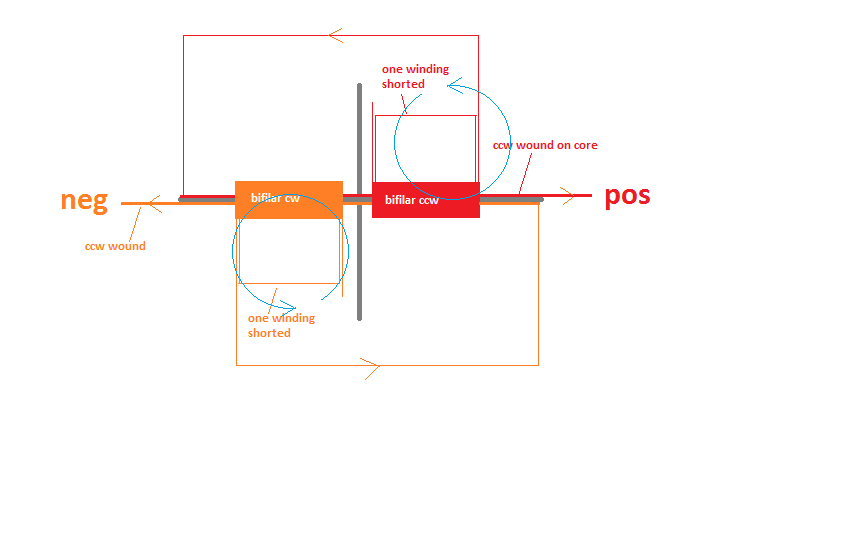
Okay so by spinning the core in this model we are collecting the centrifugal electrons, when in reality the circulation is centripetal, this system works but is working against the fields and only working on one side, not even collecting the other side.
Using a motionless device we should be able to construct and collect working with the fields.
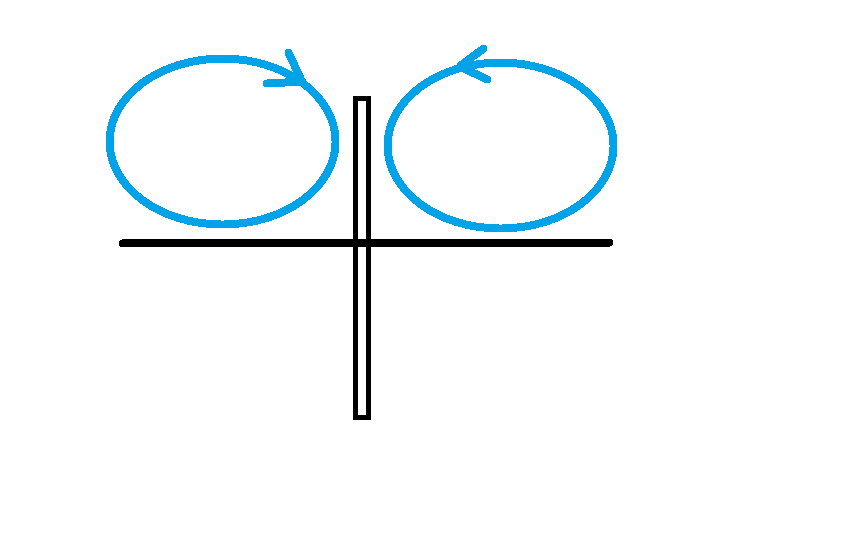
where is the opposing force for every action there is a reaction so where is the reaction here in this pic.
Or do we have opposite flow through the core like this
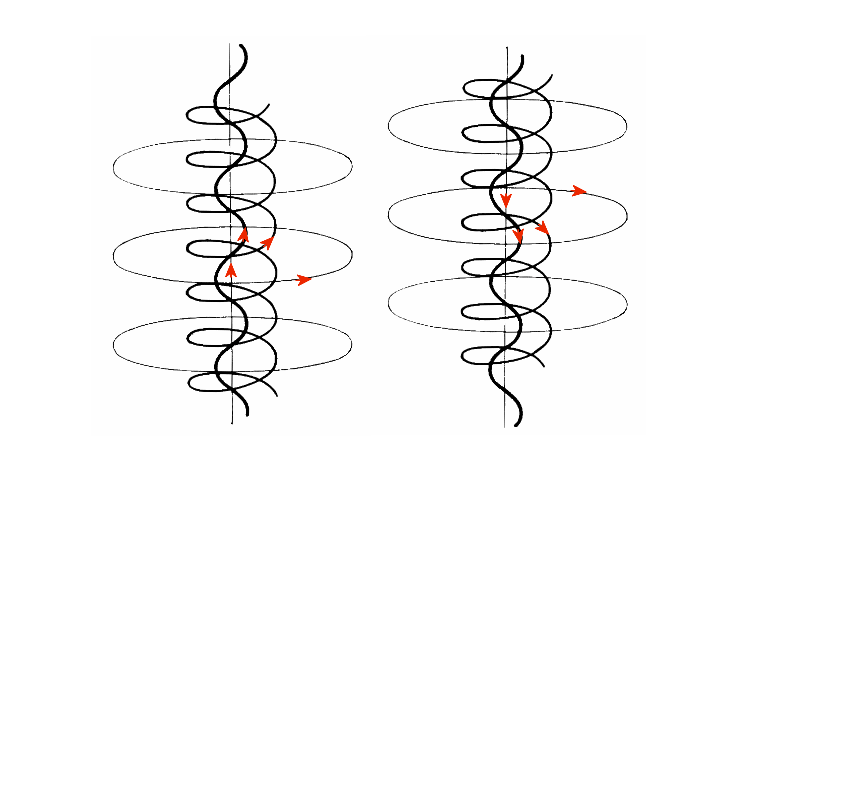
How about the following:
Printed out the image and traced the lines using a window, which is why it's a bit naf.
Anyway:
The colours in the images, are just to distinguish the 4 different lines, other than that they have no meaning.
If it's a straight reverse/overlay then you would get: 1.
But if you offset the helix's you get: 2 - which is a bit more equal and opposite.
Just skimming the book, the magnetic rope is in chapter 15: chapter 15
In that same chapter is the following images:
15.3.3:
FIGURE 15.3.3. Geometry of the Lindberg plasma ring experiment. (a) Before leaving the gun, me plasma has a toroidal magnetization B. It is shot through the radial field N-S. (b) On leaving the gun, the plasma ring pulls out the lines of force of the static magnetic field. (c) Plasma ring with captured poloidal field. If the toroidal magnetic energy is too large, a part of it is transferred to poloidal magnetic energy (through kink instability of the current). (d) The poloidal magnetic flux during the above experiment. The upper curve shows how the ring, when shot out from the gun, first acquires a poloidal flux . An instability of the ring later transforms toroidal energy into poloidal energy thus increasing the flux from to , The upper and lower curves represent the flux measured by two loops at 15 and 30 cm distance from the gun, respectively.
Reminds me of Teslas version of Faraday's generator.
One of the earliest experiments which was especially designed to clarify [384] the phenomena occurring when a neutral gas moves in relation to an ionized gas was performed by Angerth, Block, Fahleson, and Soop (1962). The experimental apparatus, a homopolar device, is shown in fig. 21.8.1. In a vessel containing a gas at a pressure of the order of 5 X 10⁻³ 0.2 torr, or 1014-1016 atoms/cm3, a radial electric field is established by connecting a capacitor bank between two concentric cylindrical electrodes. There is an almost homogeneous magnetic field of up to 10 000 G perpendicular to the plane of the lower figure. To have any reference to our problem, the gas density in the experiment should be scaled down in the same relation as the linear dimension is scaled up. As the densities during the formation of the planetary system should have been of the order of 101-105 atoms/cm3, and the scaling factor is 1010-1013, the experiment is relevant to the astrophysical problem. The temperatures are determined by the plasma process both in the experiment and in the astrophysical problem and should therefore be equal.
A portion of the gas is ionized by an electric discharge. This ionized component is acted upon by a tangential force, resulting from the magnetic held and the radial electric field, and begins to rotate about the central....
FIGURE 21.8.1.- Homopolar apparatus. A voltage V is applied across an inner electrode (8) and an outer electrode (4) to give a radial electric field E. The electric field, in the presence of am axial magnetic field B, acts on the ionized portion of the gas to set it into rotation (7). The interaction between the rotating magnetized plasma and the nonionized, nonrotating gas (in contact with the wall) produces a voltage limitation indicating that the relative velocity of the two components attains a critical velocity vcrit. (From Angerth et al, 1962.)







Leave a comment: