This forum is preserved as a permanent archive. The community continues at eMedia Press.

Announcement

Collapse
No announcement yet.

How to turn plastic waste into diesel fuel cheaply

Collapse
X
 
  • Filter
  • Time
  • Show
Clear All
new posts

  • Beyond Biodiesel
    replied
    Originally posted by fox32 View Post
    Nice Design BeyondBiodiesel, how deep is the probe going in the reactor, and where did you find them?
    I find my thermocouples on eBay. I purchase them to match compression fittings that I can purchase locally.

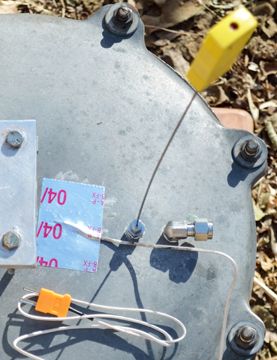
    Most of these type of shielded thermocouples come in metric sizes, but I cannot buy metric compression fittings locally, so I search for the harder to find and more expensive 1/16" (1.6mm) shielded thermocouples. I buy 1/8" National Pipe Thread (tapered fitting) to 1/16" compression adapters, then I drill them out with a 1/16Th drill bit so that the shielded thermocouple can slide through it. There are 1/8" National Pipe Thread (tapered fitting) ports on the lids of the pressure cookers I use for retort and condenser traps.

    I am interested in the temperature of the liquid at the bottom of the retort, and each of my condensers, so the I slide the cap and ferrule onto the TC, then slide the TC through the 1/8" National Pipe Thread (tapered fitting) to 1/16" compression adapter down to just an inch (2.5cm) above the bottom of the retort or condenser, then I tighten the nut on the compression fitting.
    Leave a comment:


  • fox32
    replied
    Thank you Excalibur,for yet another insightfull post! That's the kind of probe i wanted to use, but i had no idea that they are grounded or ungrounded, so you saved me some money. Also, now i can really see that the insulation is really important, i can see a flaw in my reactor design as i don't have enough room and support to insulate the top plate,but i'm working on it. Maybe pour some clay on it.

    As for the bottom layer, i'd say it is like some white powder, like chalk, very fine, that is disturbed very easely. it doesn't appear to be any water. It may be some impurities from my condenser(old barrel).

    Nice Design BeyondBiodiesel, how deep is the probe going in the reactor, and where did you find them?

    Leave a comment:


  • Beyond Biodiesel
    replied
    Originally posted by fox32 View Post
    I really want some tipe of probe that i can screw into the reactor etc.
    I use compression fitting adapters to insert my TC probes through, which screw into tapered plumbing fittings. See photo below

    Leave a comment:


  • jonathan
    replied
    pyrolysis oil

    thanks excalibur when l find that little fuel it was very sunny day so tempreture was higher.l will buy that k-type props and try modified my burner for more heat

    Leave a comment:


  • Excalibur
    replied
    Fox32
    Please check, is the bottom layer of distillate, water??
    Last edited by Excalibur; 05-04-2014, 09:27 AM.

    Leave a comment:


  • Excalibur
    replied
    Originally posted by fox32 View Post
    Hello guys, here are the results from my first run, took a while, and it started to drip fuel when i had the courage to turn up the burner(still testing the welds and connections, it gave me the creeps).

    Also, for anyone else who is using GPL(gas) don't turn on the gas without flame,nor for a little time, it will acumulate on the flue stack, and make a loud terrifing flashbang-like sound, and blow the flue away. Happened to me.

    I only had one thermomether, with a thermocouple exactly like the one from Excalibur's post above, and this is my problem, how do you managed to insert that into the reactor, i put it inside a pipe welded into the reactor, but this way i get the temperature of that steel pipe, not directly of the vapours inside, and i can't control the process well.
    I was also thinking to buy that type oh temperature sensor the one with screw, and 2 m long cable, but i can't find any that would resist more than 400c, nor on aliexpress,dhl or ebay. Also why you dismiss that kind of thermic probe, is not reliable?
    I really want some tipe of probe that i can screw into the reactor etc.


    When this was produced my thermomether read 340 c(reactor), but i think that the temperature inside the reactor was greater.

    I also noticed 3 different layers of distilate so my reaflux may not work good. I weighted 100 ml from top layer and got 80 grams.
    Congrats on the first attempt. You got a result. Now you need a few tweaks. All part of the learning process.
    Yes, the first time can be "hair raising" when you realize just how much heat has to be applied. Also you begin to appreciate the value of good insulation.
    Yes, those gas explosions can give you quite a fright!
    Thermocouple probes: I hollow a bolt, drilling from the head end, stopping short of drilling right through. The part of the bolt that protrudes into the chamber has the threads removed and thinned to the desired wall thickness. A copper washer is used to seal. The TC probe uses a fiberglass insulation which breaks down with heat so my long term plan is to get a simple ceramic insert for the bolt. There are two types of TC: grounded and non-grounded. The probe meter in the Ebay link doesn't care which type it uses. Other digital LCD displays like the bright red ones I use, require non-grounded only. This TC on Ebay
    Originally posted by jonathan View Post
    thanks excalibur l do another test today l test my tempretures with meter like gun my lower side of retort was 316 degrees c and upper side of reflux 90 degrees c so l have tempreture proplem l bye tempreture props
    Temperatures are low. The retort is below cracking temperature so even if some light weight fraction was coming off as vapor, the low reflux temperature would likely recycle it back to the retort. Either you need more heat and/or better insulation. And you really need k-type thermocouple probes on both vessels.
    A note about insulation. I was at a scrap metal yard on Friday. I bought some steel pipe. Then I noticed an old boiler. I asked about the kaowool insulation and was told to take it away for free. I got 4 square meters else it would have been dumped. Wear a dust mask if you recycle this kind of thing. It was really dusty!

    Leave a comment:


  • jonathan
    replied
    pyrolysis oil

    thanks excalibur l do another test today l test my tempretures with meter like gun my lower side of retort was 316 degrees c and upper side of reflux 90 degrees c so l have tempreture proplem l bye tempreture props

    Leave a comment:


  • fox32
    replied
    Hello guys, here are the results from my first run, took a while, and it started to drip fuel when i had the courage to turn up the burner(still testing the welds and connections, it gave me the creeps).

    Also, for anyone else who is using GPL(gas) don't turn on the gas without flame,nor for a little time, it will acumulate on the flue stack, and make a loud terrifing flashbang-like sound, and blow the flue away. Happened to me.

    I only had one thermomether, with a thermocouple exactly like the one from Excalibur's post above, and this is my problem, how do you managed to insert that into the reactor, i put it inside a pipe welded into the reactor, but this way i get the temperature of that steel pipe, not directly of the vapours inside, and i can't control the process well.
    I was also thinking to buy that type oh temperature sensor the one with screw, and 2 m long cable, but i can't find any that would resist more than 400c, nor on aliexpress,dhl or ebay. Also why you dismiss that kind of thermic probe, is not reliable?
    I really want some tipe of probe that i can screw into the reactor etc.


    When this was produced my thermomether read 340 c(reactor), but i think that the temperature inside the reactor was greater.

    I also noticed 3 different layers of distilate so my reaflux may not work good. I weighted 100 ml from top layer and got 80 grams.
    All the best!


    flash
    Click image for larger version

Name:	DSCF8258.JPG
Views:	1
Size:	62.1 KB
ID:	455426

    no flash
    Click image for larger version

Name:	DSCF8259.JPG
Views:	1
Size:	217.5 KB
ID:	455427

    Leave a comment:


  • Samott
    replied

    Leave a comment:


  • Excalibur
    replied
    Originally posted by jonathan View Post
    thanks excalibur maybe tempreture proplem i will check my tempretures next time.are this probs good?.l meant i dont want to use blind hole.thanks
    RTD PT100-K Temperature Sensor 2m Cable Stainless Probe 100mm 2 Wires T5 | eBay
    I agree with BB. Use a k-type thermocouple for the retort and reflux. My first one I bought: one like this unit on ebay. It worked well. Has two probes.

    Samott, what temperatures were the retort and reflux? The reflux temperature may be too high.

    Leave a comment:


  • Beyond Biodiesel
    replied
    Originally posted by jonathan View Post
    thanks excalibur maybe tempreture proplem i will check my tempretures next time.are this probs good?.l meant i dont want to use blind hole.thanks
    RTD PT100-K Temperature Sensor 2m Cable Stainless Probe 100mm 2 Wires T5 | eBay
    An RTD is not the sensor to use for the range that pyrolysis occurs. It is better to use a type K TC (thermocouple).
    Thanks for the photos, they help diagnose your problems. It sounds to me like all is good, but cracking is marginal. Do you know your retort temperature? Thermal cracking occurs at 400c.

    Are you using a catalyst? If not then if you add one, then you will get better results. If you can not buy zeolite, then just add a cup of ash to every 4L of liquid to be cracked.

    Leave a comment:


  • Hoddamdg11
    replied
    Archives

    [email protected]
    Regards
    John

    Leave a comment:


  • Samott
    replied
    [/IMG]


    [IMG][/IMG]


    The reflux column was empty.

    Leave a comment:


  • jonathan
    replied
    retort problem

    thanks excalibur maybe tempreture proplem i will check my tempretures next time.are this probs good?.l meant i dont want to use blind hole.thanks
    RTD PT100-K Temperature Sensor 2m Cable Stainless Probe 100mm 2 Wires T5 | eBay

    Leave a comment:


  • Excalibur
    replied

    Leave a comment:

Working...
X