
Originally posted by lowriderzzz
View Post
-
It is most probably either nylon or a polyethylene, and most probably not PVC, or PTFE, or ABS. -
I did the test: Doesn't bubble, doesn't make black color on the plastic, doesn't smell bad or sharp.Originally posted by Excalibur View Post

I also did what mjohnson1 suggested - to test if it floats or sinks: It floats
I hope this will be great for feedstock.Leave a comment:
-
Jetijs test is worth trying on itOriginally posted by lowriderzzz View PostLeave a comment:
-
Leave a comment:
-
Now I remeber somewhere I saw some post like it but I have forgotten about it. ThanksOriginally posted by mjohnson1 View PostLeave a comment:
-
This has been stated several times in the thread before.Originally posted by lowriderzzz View Post
Take a small bowl at least 8cm deep and fill it with water. Take one of your plastic pins and push it all the way down to the bottom with your fingers. If it floats it's likely hdpe or pp. If it stays at the bottom dont use it.Leave a comment:
-
how to figure out what is this plastic type ? PICTURES
I can have each month about 30 kg of this plastic pins for heating water boiler that goes spare and for waste from a factory nearby. However I don't know what type of plastic do they use to make it.
Is it PE or PP or PET ( i hope its not PET ).
Is there a way to make it analyzed or to this by some sort of process - burn or put in water etc.
Here is how it looks like:


It looks very solid color , but actually its a little transparent. Also its easy to tear down and cut and stretch (i guess).Leave a comment:
-
The answer to that question is not simple.
Pyrolysis of plastics produces a mixture of hydrocarbon fuels broadly classified as naphtha C5 - C10, kerosene C10 - C 15, and diesel C15 - C20.
In my experience the naphtha is unsuitable as motor fuel in a gasoline engine. Its very low octane rating of 55 causes engines to knock and overheat. Eventually it will cause valve and bearing damage and seizure.
The diesel is a different matter. If the diesel fraction can be confined to only C15 - C20 it should work well as a fuel. This is all very well in theory but in practice is difficult to do. Too much >C20 will produces waxes which will block filters and cause difficult starting. Too much <C15 will reduce lubrication and cause damage to the injection system and injectors.
Another matter is oxidation. Pyrolysis diesel tends to darken over time and a sludge will drop out. This will cause a build up of deposits in the fuel system and long term problems.
So the answer is yes, if diesel is made carefully enough and issues such as oxidation and dertergence can be solved then it should be usable as a motor fuel.Last edited by imakebiodiesel; 08-30-2013, 08:53 AM.Leave a comment:
-
It has been mentioned before but not for a while. So i would like to ask those who make fuel from plastic how safe it is to run in engines without long term damage. I appreciate the whole modern engine verses older engine scenario. I guess my question is, is it worth converting plastic waste to fuel if it can cause damage to engines. Is the fuel safe to use in generators or say large wood chipers or old farm tractors. Or is it better to convert to kerosene as imbd does. Any advice would be appreciated. ThanksLeave a comment:
-
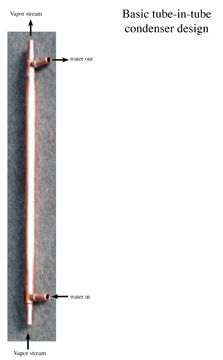
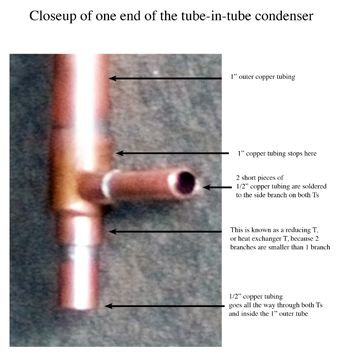
what goes in each orifice ? where comes in and out the water and where comes in and out the gasses ?

Leave a comment:
-
Here are some more photos of a simple tube-in-tube condenser.

a 2 foot (60cm) condenser
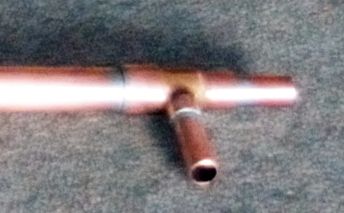
Closeup of the heat exchanger sweat fittings at each endLeave a comment:
-
This is one of the upgrades to my fractionation system that I am preasently working on. In large refineries they call them "bubble caps." If you Google alcohol stills, or "moon shine," you will find people who make their own moon shine commonly bubble the vapor stream through the condensate at the bottom of the condenser.Originally posted by Col View Post
My WMO distillation system is mostly aluminum, brass and copper. I have seen no evidence of corrosion on any of the aluminum, brass and copper components. However, I did find that brass will deform at 800f (425c), so I have stainless steel fittings and tubing there.Originally posted by Col View Post
The packing I use is also aluminum, copper, and steel. I have found no serious corrosion on those packing materials either.
Your plan to fill your retort for distilling WMO to 2/3 seems sound.Originally posted by Col View PostIf you research condenser designs, you will find one called the "plumber's friend" or something like that. It is the simplest design. The vapor stream goes through the middle tube. There is a T at both ends. You can actually buy Ts that have one leg of the cross larger than the other 2 legs, so that a larger tube can be soldered between the two larger legs, this is the water jacket. The straight through section is for a smaller tube, and may have to be drilled through to allow the smaller tube to pass straight through both Ts. The side branch is to allow cooling water to pass. See pick below.Originally posted by lowriderzzz View Post
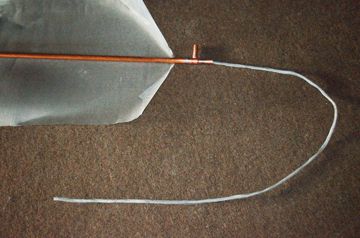
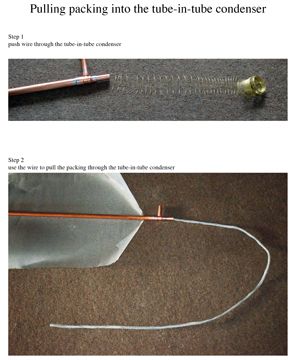
This is a tube in tube condenser receiving packingLeave a comment:
-
+1 for what IMBD said.
Welding needs to be of a good standard and professional quality.
Airtight lid search came up with... Jetijs v-groove seal
There are lots of posts about the subject of lid seals including gasket with industrial ready made flanges...Leave a comment:
-
BB is proposing a completely different design of condenser, where the water jacket is on the outside of the condenser and the vapours travel up the core. he is not proposing that you just swap the connections on your existing unit.
He is right , his design, sometimes called The Plumbers Delight, is more efficient but I find the condenser I have is so efficient that I can turn off the water completely and it still works so it is not worth changing if you already have the condenser built.Leave a comment:
Leave a comment: