Announcement

Collapse
No announcement yet.

Magnetic Diode

Collapse
X
 
  • Filter
  • Time
  • Show
Clear All
new posts

  • Magnetic Diode

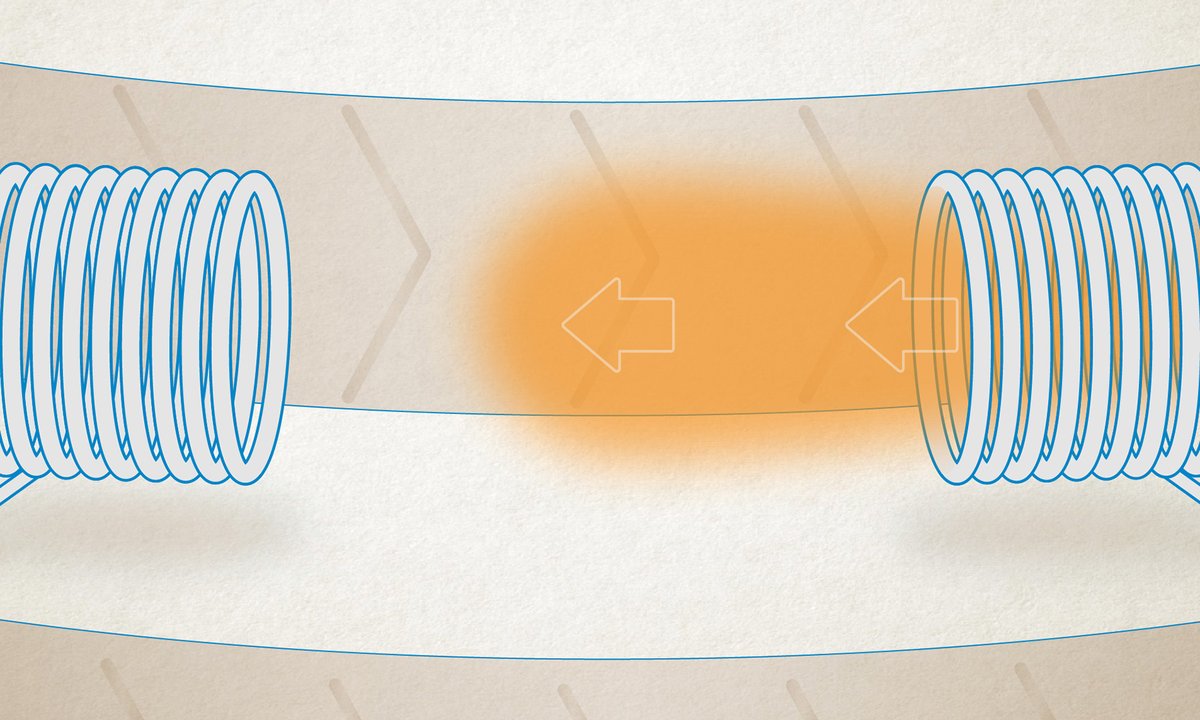
    Innsbruck quantum physicists have constructed a diode for magnetic fields and then tested it in the laboratory. The device, developed by the research groups led by the theorist Oriol Romero-Isart and the experimental physicist Gerhard Kirchmair, could open up a number of new applications.

  • #2
    Hello bistander

    Good catch!

    Remember this: pm some years ago?

    "" There is a microscopic hope of OU from the G-part but the real thing must be how to make the ""transformer" as a magnetic diode. No back kick from the secondary!
    Arne

    ....an't discuss on the thread. Magnetic diode.... Interesting. ... Since magnetic flux doesn't flow, I can't see it, but it is something to ponder. Cool idea. ""

    Now you also can be a real builder

    Regards Arne
    Last edited by seaad; 11-23-2018, 07:14 PM.

    Comment


    • #3
      Originally posted by bistander View Post
      I'm not sure ... I don't have to wait too long.
      "...since the energy can only flow from the charging station to the device and not in the other direction"

      Al

      Comment


      • #4
        Good points

        Hello Arne & Al,

        Your points got me thinking that it is likely BS making as much sense as a gravity diode. Oh well. Maybe somebody could explain or speculate what a magnetic diode would do, say, if such a thing were placed between a PM and piece of iron.

        Regards,

        bi

        Comment


        • #5
          Originally posted by bistander View Post
          Hello Arne & Al,

          Your points got me thinking that it is likely BS making as much sense as a gravity diode. Oh well. Maybe somebody could explain or speculate what a magnetic diode would do, say, if such a thing were placed between a PM and piece of iron.

          Regards,

          bi
          All you need is a magnetic on/off switch, and you have varying flux.

          If such a device were placed between two permanent magnets, and you either assisted or opposed the magnetic field between magnets, you would have a varying magnetic flux field. Add a harvesting assembly (coil) encapsulating the field, and you have a generator. Assuming the same relationship with circuit amplification, you should easily attain over-unity.

          Comment


          • #6
            Hello bistander

            I don't think your thought experiment example were so good because you mentioned a piece of iron as a magnetic flux 'receiver' from the PM. The iron can't send back or try to send send back magnetic flux as in the 'diode' research attempt. There, the both coils [double acting as Transm./Res.] are situated between the moving U-walls acting as a 'flux deflector' = magn.diode function as I'm interpret that experiment.
            In order to validate this magnetic diode experiment, I would perform this in a similar manner as in the research attempt first.
            I do think the driving of the U-walls take some energy also because Eddy currents will occur that slow down the walls speed. So I don't think this magn.diode thing is woking for free.
            In an apparatus the power consumption to drive that diode function maybe is negligible if the diode function then let the apparatus produce free energy.

            Regards Arne

            Comment


            • #7
              A couple better articles w diagrams.

              Looks like these are copyright sensitive so I'm not pasting them in here. This first one shows an apparatus which looks reproducible by the likes of a home experimenter.


              Then there is this article which they want $ for or maybe will send it to a library upon request.


              Regards,

              bi

              {edit}

              Another one.

              From: First diode for magnetic fields

              I think I see what they're doing.
              Attached Files
              Last edited by bistander; 11-25-2018, 07:09 AM. Reason: Added reference

              Comment


              • #8
                Exciting?

                Initially sounded exciting......but seems to involve rotating cylinder.
                That necessarily would involve a cost?
                John.

                Comment


                • #9
                  It seems that we have two situations here about the directions of the coils.

                  Arne
                  Attached Files

                  Comment


                  • #10
                    Where from?

                    Originally posted by seaad View Post
                    It seems that we have two situations here about the directions of the coils.

                    Arne
                    Thanks Arne,


                    What is your source for this graphic?

                    bi

                    {edit}
                    This reminds me somewhat of the Faraday paradox.
                    Last edited by bistander; 11-25-2018, 02:55 PM. Reason: Added note

                    Comment


                    • #11
                      Cost

                      Originally posted by Iamnuts View Post
                      Initially sounded exciting......but seems to involve rotating cylinder.
                      That necessarily would involve a cost?
                      John.
                      Ever notice? Everything has cost.

                      bi

                      Comment


                      • #12
                        Hi bistander,

                        A member at the other forum posted this link to the paper:

                        Lorentz reciprocity establishes a stringent relation between electromagnetic fields and their sources. For static magnetic fields, a relation between magnetic sources and fields can be drawn in analogy to the Green's reciprocity principle for electrostatics. Here we theoretically and experimentally show that a linear and isotropic electrically conductive material moving with constant velocity is able to circumvent the magnetic reciprocity principle and realize a diode for magnetic fields. This result is demonstrated by measuring an extremely asymmetric magnetic coupling between two coils that are located near a moving conductor. The possibility to generate controlled unidirectional magnetic couplings breaks down one of the most deeply-established relations in classical electromagnetism, namely that mutual inductances are symmetric. This result might provide novel possibilities for applications and technologies based on magnetically coupled elements.


                        Gyula

                        Comment


                        • #13
                          Thanks

                          Originally posted by gyula View Post
                          Hi bistander,

                          A member at the other forum posted this link to the paper:

                          Lorentz reciprocity establishes a stringent relation between electromagnetic fields and their sources. For static magnetic fields, a relation between magnetic sources and fields can be drawn in analogy to the Green's reciprocity principle for electrostatics. Here we theoretically and experimentally show that a linear and isotropic electrically conductive material moving with constant velocity is able to circumvent the magnetic reciprocity principle and realize a diode for magnetic fields. This result is demonstrated by measuring an extremely asymmetric magnetic coupling between two coils that are located near a moving conductor. The possibility to generate controlled unidirectional magnetic couplings breaks down one of the most deeply-established relations in classical electromagnetism, namely that mutual inductances are symmetric. This result might provide novel possibilities for applications and technologies based on magnetically coupled elements.


                          Gyula
                          I was able to download pdf free. Thanks.

                          Got a link to the other forum?

                          bi

                          Comment


                          • #14
                            Originally posted by bistander View Post
                            1) What is your source for this graphic?

                            2) This reminds me somewhat of the Faraday paradox.
                            1 My own snippet from your sources/ pics above. Pls correct me if I'm wrong.
                            And W. Paint.

                            2 Yes agree, but not exact. A moving rotating conductor and at the same time a short "coil"?, rim to the origo axel.
                            But again no flux linking. Only one coil! AND DC!

                            Idea: And DC! Why not AC? Lets chop, chop the DC and make AC. Now we can link the flux to another coil.

                            Regards Arne
                            Last edited by seaad; 11-25-2018, 07:04 PM.

                            Comment


                            • #15
                              Originally posted by bistander View Post
                              ...
                              Got a link to the other forum?

                              bi

                              Yes, but a real discussion is not yet formed over there:

                              Comment

                              Working...
                              X