Announcement

Collapse
No announcement yet.

Re-Inventing The Wheel-Part1-Clemente_Figuera

Collapse
X
 
  • Filter
  • Time
  • Show
Clear All
new posts

  • bistander
    replied
    Originally posted by jettis View Post
    bi,
    You don’t see the image?
    Now I see it. It says

    "The amount of magnetic flux produced by an electrical current flowing through a conductor has no direct relationship to the electrical energy expended as watts "
    It could be said better. He implies electrical energy carries units of watts.

    In a magnetic circuit, the flux is dependent on the magnetomotive force (mmf) quantified as ampere turns (AT). So flux depends directly on current, which needs an electric circuit. As such, one might think a voltage drop across the conductor or coil would indicate power associated with the mmf, however this is dependent on the resistance. And the resistance of the conductor, or coil, can vary for a given current. The resistance of copper wire changing with temperature is a prime example. So as resistance changes, so does power. So the current is not directly (solely) dependent on power. And in modern times, superconductor coils have zero resistance, so obviously no direct dependence on power, so the mmf and flux require zero power in that case.
    bi

    Leave a comment:


  • jettis
    replied
    bi,
    You don’t see the image?
    Last edited by jettis; 12-15-2023, 11:12 PM.

    Leave a comment:


  • bistander
    replied
    Originally posted by jettis View Post
    Paul Babcock presented this image in one of his presentations called Magnetic Energy Secrets.


    Dave Wing
    Hi jettis,
    the attachment failed to load for me to view. Maybe try a different method.
    bi

    Leave a comment:


  • jettis
    replied

    Paul Babcock presented this image in one of his presentations called Magnetic Energy Secrets.
    Click image for larger version  Name:	IMG_4001.png Views:	0 Size:	1.05 MB ID:	512637

    Dave Wing
    Last edited by jettis; 12-16-2023, 02:28 AM.

    Leave a comment:


  • jettis
    replied
    bi, Okay so if I increased the core length to 48” x 3/4” wide to use with our 3” diameter rotor, that is 48” long and kept the coil at 5 ohm’s, I would need to increase the length and diameter of the conductor considerably.

    With this new increased conductor length and conductor diameter size increase this larger 5 ohm coil with a 48” x 3/4” core enhances the coil’s ability to generate a stronger magnetic field that contributes to a better interaction with the 48” long, 2” wide and 1” thick rotor magnets, that would result in more efficient and effective turning of the rotor compared to the 24“ coil and certainly have more efficient and effective turning of the rotor over the one turn 40 awg coil.

    Dave Wing
    Last edited by jettis; 12-14-2023, 07:42 PM.

    Leave a comment:


  • bistander
    replied
    Originally posted by jettis View Post


    ‘As an example if we increased the coil core and rotor length to 48” (effectively increasing the length and increasing the cross sectional size of our conductor) to match a new 48” rotor with magnets to match. Note we still will keep the coil at 5 ohm’s, it will be of much bigger dimensions than our last comparison, but we are more than ok with that.”

    I said the same thing you mentioned.

    Please re-read my post.


    No, not the same.

    You "increased the coil core"

    Me "given magnetic circuit"

    bi

    Leave a comment:


  • jettis
    replied
    Originally posted by bistander View Post

    No agreement by me.
    Sorry, but I never did see value in what I think you're talking about. You'll have to carry on without me. Good luck.
    bi

    BTW, for a given magnetic circuit and given excitation power, one can increase the excitation (mmf) by increasing the mass of copper in the coil.

    ​​​​​
    ​​​​​​

    ‘As an example if we increased the coil core and rotor length to 48” (effectively increasing the length and increasing the cross sectional size of our conductor) to match a new 48” rotor with magnets to match. Note we still will keep the coil at 5 ohm’s, it will be of much bigger dimensions than our last comparison, but we are more than ok with that.”

    I said the same thing you mentioned.

    Please re-read my post.


    Leave a comment:


  • bistander
    replied
    Originally posted by jettis View Post
    Hey bi, Good talking with you,

    To be clearer, sorry, I am talking about increasing magnetic flux, for no increase in amperage and or voltage cost.

    As an example if we increased the coil core and rotor length to 48” (effectively increasing the length and increasing the cross sectional size of our conductor) to match a new 48” rotor with magnets to match. Note we still will keep the coil at 5 ohm’s, it will be of much bigger dimensions than our last comparison, but we are more than ok with that.

    1) We made our rotor coils longer and the amperage draw will be the same at 5 ohms.
    2) The magnetic flux of our 48” coil will be increased over the 24” coil.
    3) Rotor rotational speed should be the same (not taking into account any friction, windage losses etc.) as the 24” version.
    4) Using the 48” version rotor will have an available increase torque production over the 24” version.
    5) Flyback energy will increase as well over the 24” coil.

    That is were I am going, you can increase your mechanical shaft output for no more current used, coupled with more flyback energy that can be recovered.

    As a side note a pulse motor can and often does generate the magnetics (which is additional to the flyback energy) can send a certain amount of energy back to the supply (power source) and also the secondary battery if you have one.

    Are we in agreement?


    Dave Wing
    No agreement by me.
    Sorry, but I never did see value in what I think you're talking about. You'll have to carry on without me. Good luck.
    bi

    BTW, for a given magnetic circuit and given excitation power, one can increase the excitation (mmf) by increasing the mass of copper in the coil.

    ​​​​​
    ​​​​​​

    Leave a comment:


  • jettis
    replied
    Hey bi, Good talking with you,

    To be clearer, sorry, I am talking about increasing magnetic flux, for no increase in amperage and or voltage cost.

    As an example if we increased the coil core and rotor length to 48” (effectively increasing the length and increasing the cross sectional size of our conductor) to match a new 48” rotor with magnets to match. Note we still will keep the coil at 5 ohm’s, it will be of much bigger dimensions than our last comparison, but we are more than ok with that.

    1) We made our rotor coils longer and the amperage draw will be the same at 5 ohms.
    2) The magnetic flux of our 48” coil will be increased over the 24” coil.
    3) Rotor rotational speed should be the same (not taking into account any friction, windage losses etc.) as the 24” version.
    4) Using the 48” version rotor will have an available increase torque production over the 24” version.
    5) Flyback energy will increase as well over the 24” coil.

    That is were I am going, you can increase your mechanical shaft output for no more current used, coupled with more flyback energy that can be recovered.

    As a side note a pulse motor will generate from the passing magnets on the rotor (which is additional and additive to the flyback energy) and the machine can send a certain amount of energy back to the supply (power source) and also the secondary battery if you have one and desire to do so.

    Are we in agreement?


    Dave Wing
    Last edited by jettis; 12-14-2023, 03:18 PM.

    Leave a comment:


  • bistander
    replied
    Originally posted by jettis View Post
    Hey bi, I do not know much at all about Holcomb, however what do you think of this statement? Is there any issues as far as your concerned?

    If you take two iron core coils one made from 40 awg and the other made from 10 awg, each has a 3/4” x 24” laminated steel core acting on a 6” diameter x 24” length rotor with two north magnets measuring 2” wide, one inch thick and 24” long, equally spaced around the rotor.

    When we compare the two coils in pulse motor operation, the coil with 40 awg wire at 5 ohms and then another 10awg wire coil at 5 ohms. Which one has more magnetism to convert into rotational energy and which one will yield more flyback energy? Take note the 10 awg coil could be 30 times the size of the 40 awg coil.

    One could easily see a coil 30 times bigger will produce a lot more rotor torque and flyback energy than the smaller coil. It should also be again noted that each coil (10 awg vs 40 awg) will have the same current draw, from the primary battery, as ohm’s law states.

    Dave Wing
    1/2Li2, isn't it? And inductance is proportional to turns squared. So energy comparison of the coils is over 6 orders of magnitude.

    Does it make sense to go further? What is your objective here?
    bi

    Last edited by bistander; 12-14-2023, 02:15 AM.

    Leave a comment:


  • jettis
    replied
    Hey bi, I do not know much at all about Holcomb, however what do you think of this statement? Is there any issues as far as your concerned?

    If you take two iron core coils one made from 40 awg and the other made from 10 awg, each has a 3/4” x 24” laminated steel core acting on a 6” diameter x 24” length rotor with two north magnets measuring 2” wide, one inch thick and 24” long, equally spaced around the rotor.

    When we compare the two coils in pulse motor operation, the coil with 40 awg wire at 5 ohms and then another 10awg wire coil at 5 ohms. Which one has more magnetism to convert into rotational energy and which one will yield more flyback energy? Take note the 10 awg coil could be 30 times the size of the 40 awg coil.

    One could easily see a coil 30 times bigger will produce a lot more rotor torque and flyback energy than the smaller coil. It should also be again noted that each coil (10 awg vs 40 awg) will have the same current draw, from the primary battery, as ohm’s law states.

    Dave Wing
    Last edited by jettis; 12-13-2023, 07:44 PM.

    Leave a comment:


  • bistander
    replied
    Originally posted by Rakarskiy View Post
    I don't see any judgments for failing to fulfill the terms of sale of Holcomb homes!
    I sent you a couple of examples via PM.

    Originally posted by Rakarskiy View Post
    ... , there have always been crooks. ...
    Once a crook, always a ....


    Originally posted by Rakarskiy View Post

    How does any synchronous generator work? How is the magnetic field in the core amplified? And, most importantly, how can mechanical energy be converted to electrical energy if the wire is in a groove?
    Mr. Rakarskiy,
    You keep repeatedly saying this. Just because you do not understand it, does not mean others also do not understand it. Here, in fact, it is well understood and taught in colleges and many textbooks. Engineers who know the technology and who are skilled in the art apply these principles to design and build generators and motors which convert electric to mechanical energy, and vise versa, responsible for handling about half of the total energy mankind uses on this planet, in an extremely efficient manner. I can not teach you this on a web forum. I've attempted to enlighten (help) you with certain misconceptions and math errors and have received resistance and rudeness. You are a bad student. So I give up trying with you.

    Back to Holcomb. He buys and pays for his proofs. There is no independent verification. Everything he issues has flags.

    Where is the source of energy? He can not make it with iron as he claims.
    bi

    Leave a comment:


  • Rakarskiy
    replied
    I don't see any judgments for failing to fulfill the terms of sale of Holcomb homes! Is this your secret circle of owners? Don't talk to me about Bob, there have always been crooks. These homes are not sold like toilet paper. There are many items that are sold under a contract of sale. If you don't fulfill the terms of the contract, it's a lawsuit!
    How does any synchronous generator work? How is the magnetic field in the core amplified? And, most importantly, how can mechanical energy be converted to electrical energy if the wire is in a groove?

    Leave a comment:


  • bistander
    replied
    Originally posted by Rakarskiy View Post
    bistander, I gave an example of a visit, a pick up and go. About the performance evaluation, only in quantitative terms. Electricity bills are a very good argument, especially for the happy owner of this unit. You can believe it or not, but this fact takes place.
    People ask me, how do I check? I always recommend through a meter for an hour at the input and at the input of the load the generator is providing. Kilowaty for an hour, the best argument: to show that - works or to show that - does not work. And drooling over torque measurements is fancy. Here is an example of how Stepanov made an instant evaluation of all indicators.

    Click image for larger version

Name:	2023-08-29_113449.jpg
Views:	58
Size:	296.8 KB
ID:	512614

    His device is also a power amplifier.
    Hi Rakarskiy,
    what is shown does not resemble the Holcomb devices. And who is Stepanov?

    Yes, the cost of the "power bill" is the indicator. On installations in the US by Holcomb in facilities outside Holcomb's circle, cost has increased. No joy there.

    All these are just reports. The real clue is the science behind the claim. And that does not support Holcomb. All your analysis and calculations never show where the magic source of free energy is. Explain the physics behind Holcomb's claim of extracting endless energy from iron. Dream on.
    bi

    Leave a comment:


  • Rakarskiy
    replied
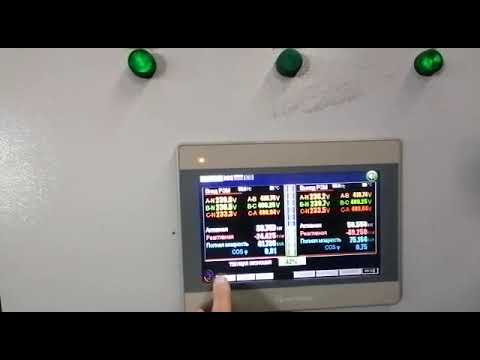
    bistander, I gave an example of a visit, a pick up and go. About the performance evaluation, only in quantitative terms. Electricity bills are a very good argument, especially for the happy owner of this unit. You can believe it or not, but this fact takes place.
    People ask me, how do I check? I always recommend through a meter for an hour at the input and at the input of the load the generator is providing. Kilowaty for an hour, the best argument: to show that - works or to show that - does not work. And drooling over torque measurements is fancy. Here is an example of how Stepanov made an instant evaluation of all indicators.

    Click image for larger version

Name:	2023-08-29_113449.jpg
Views:	58
Size:	296.8 KB
ID:	512614

    His device is also a power amplifier.

    Leave a comment:

Working...
X