-
-
I had to dig thru my early pix to find what you were talking about.Originally posted by Iamnuts View Post
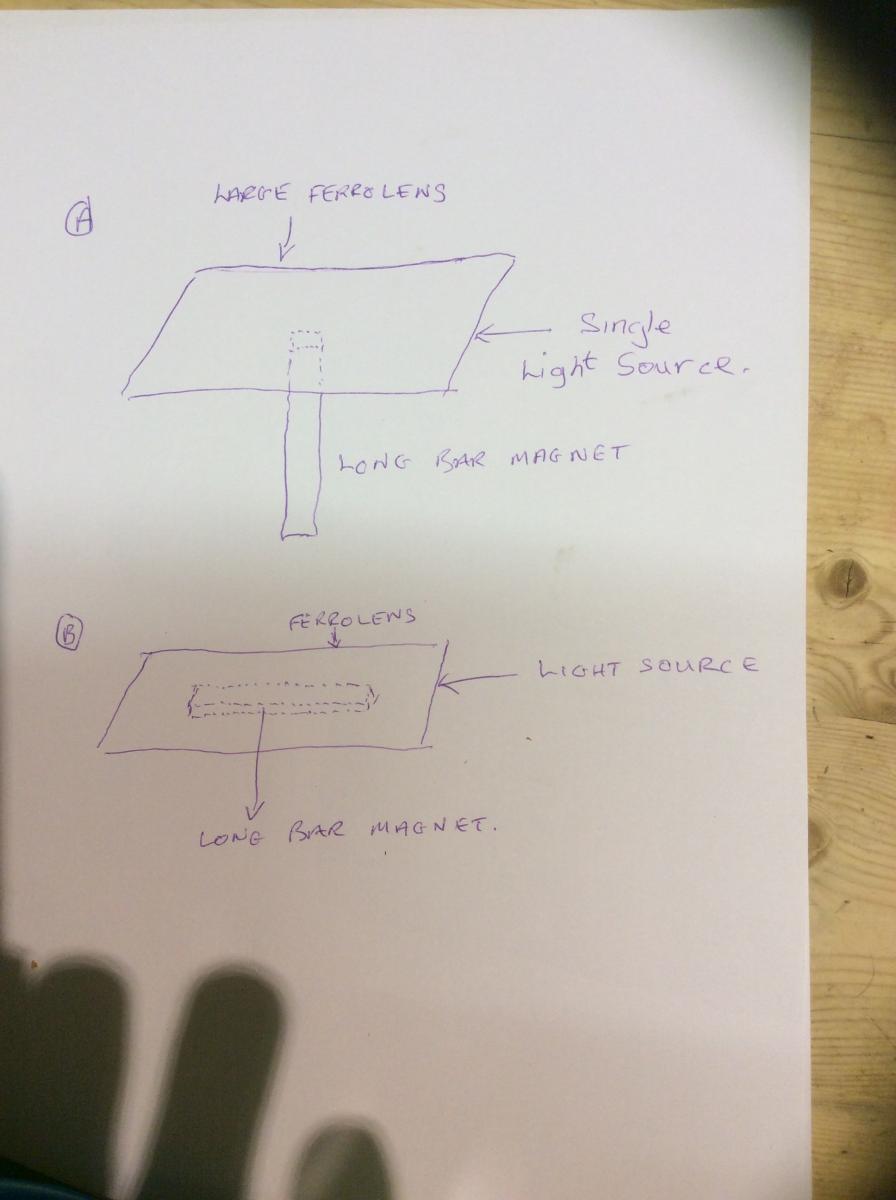
One of the views you mention B I never tried !
I don't think anyone has captured an image with a single light source coming from the side, with the magnetic pole perpendicular to the cell.
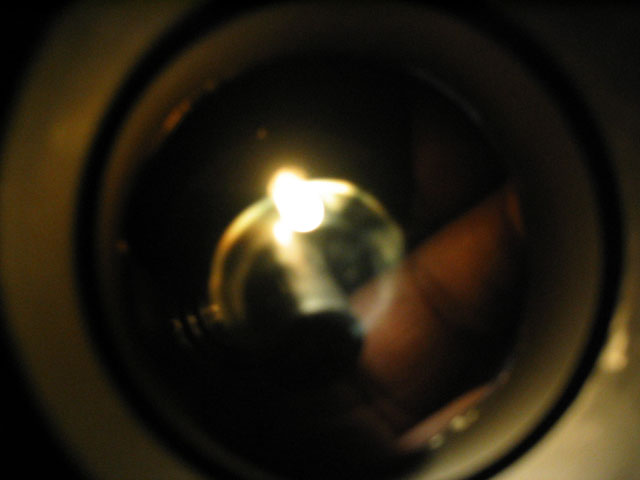
But I do have view A. It's hard to see clearly. I looked for a larger image, but I wasn't as careful about procedure back then and I probably deleted it.
Anyway, I'm holding a 25cm (1 in) cylinder magnet on my finger.
The magnet is covered in black plastic tape.
It's located behind the cell with the light source coming from the center of the magnet area.
The light is a single 3V incandescent lamp (grain o' wheat).
The Ferrocell is a 50x4mm medium grade from a very early batch.
Can you see the spiral band?
I will try and do the experiment you mention in drawing B and post a pix here soon.Attached FilesComment
-
-
I miss your post earlier.
Wow. I'm still trying to wrap my brain around what you just said.
Do you want to make a helical spinning light beam?
Been there, done that:
I can make it spin so fast you can't see the motion (>50 Hz) but I never saw anything unusual (other than a laser beam spinning in a circle ).
).
Maybe I should re-do the experiment in a vacuum chamber?
Try doing that experiment with iron filings .
.
Comment
-
dyetalon
Isn't that the Lorentz effect?
exactly... However since the electron beam scans unidirectional and not bidirectional the screen by design always from left to right (it is cut off during the return right to left) an different effect is produced on the screen as it would if the beam scanning was bidirectional meaning we would not get the vortex effect if a pole were face down on the screen.Last edited by Markoul; 05-20-2018, 09:49 AM.MSc. Electronic and Computer Engineering, TUC, Greece
MSc. VLSI Systems Engineering, UMIST, U.K.
BSc. Electronic Systems Engineering, Victoria Univ. Manchester & UMISTComment
-
Ufopolitics,
Brian Kerr contacted me prior few minutes... I invited him here in this thread but he told me that Energetic forum does not letting him in!!
I think his contribution to this thread will be significant.
Can you please or somebody other here contact the administrator?
I will inform Brian when I have a reply from you.
EMMSc. Electronic and Computer Engineering, TUC, Greece
MSc. VLSI Systems Engineering, UMIST, U.K.
BSc. Electronic Systems Engineering, Victoria Univ. Manchester & UMISTComment
-
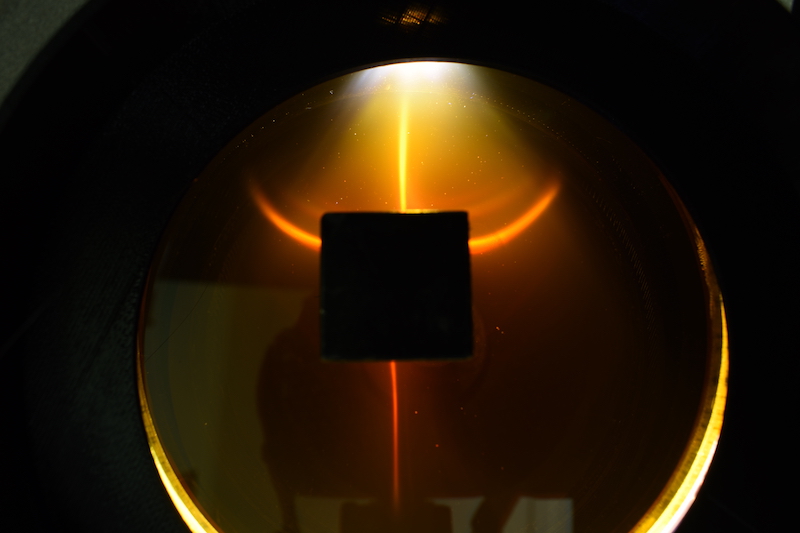
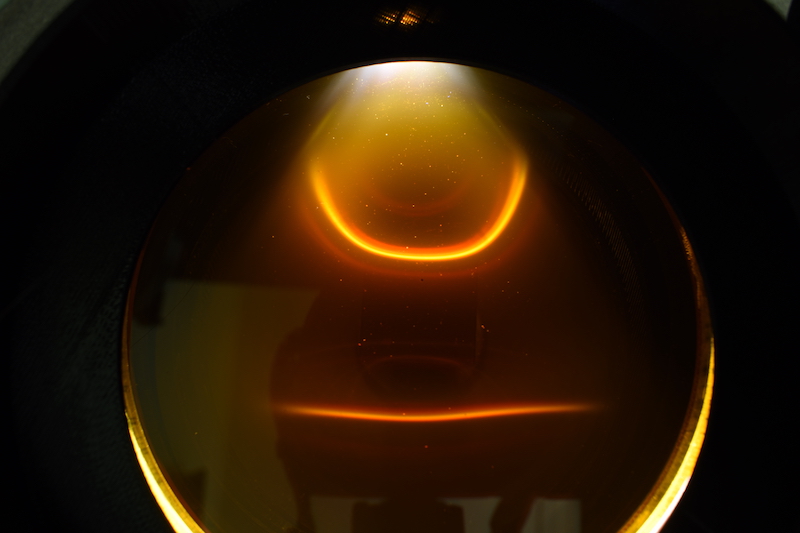
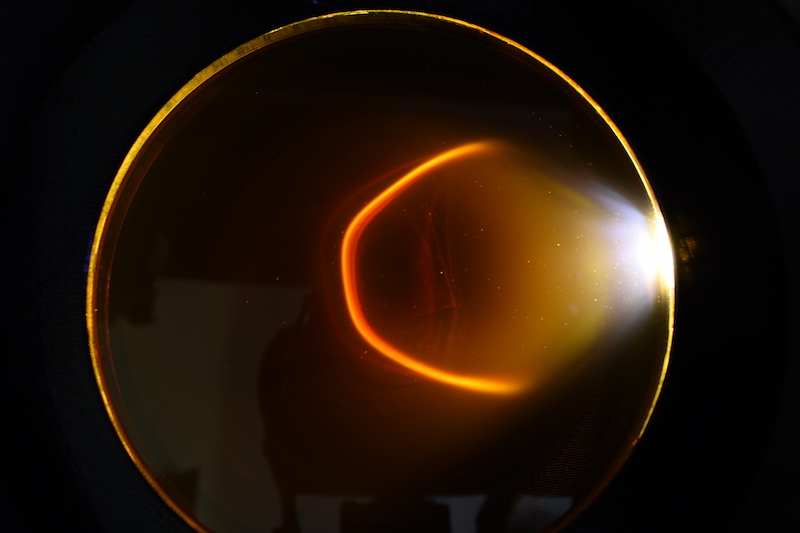
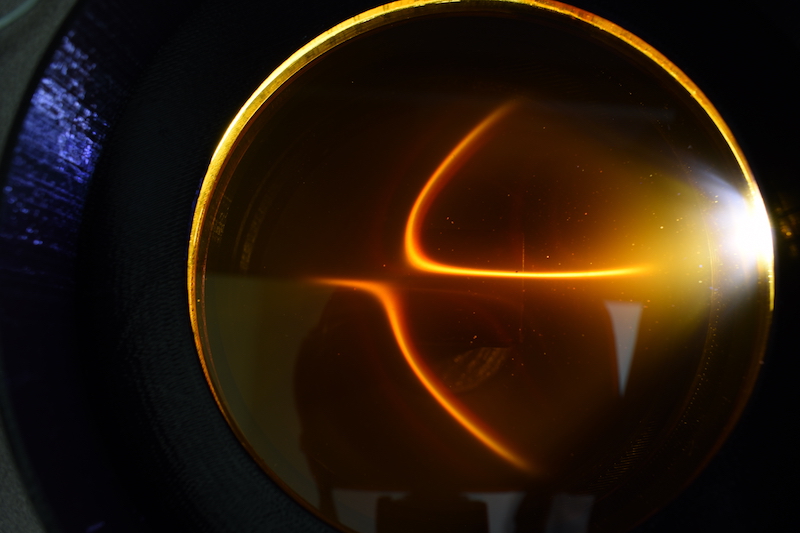
Not the best pix, but they will do for now.Originally posted by Iamnuts View Post
Single white LED shining into the side of a 100x8mm hybrid cell (2mm & 6mm glass thickness).
1 & 3 are pole views, 1 above the cell and 2 below the cell.
2 & 4 are side views (Bloch region), 3 above and 4 below the cell.
#4 isn't too symmetrical, but I think it was my camera angle. (daytime and I tried to make it dark).
Comment
-
Interesting article
Ran across this recently:
Source: https://magnetismtoroidaldynamics.co...t-electricity/
Regards,
biAttached FilesComment
-
-
Didn't know that was on the web. Looks a little like Ken's work but there is stuff from all over the place.Originally posted by bistander View Post
Markgoul and I were discussing dark energy recently and I said "Light is dark energy until it comes in contact with matter" (self quote?).
Stars make light, but its their gasses burning that create the light we see.
All electromagnetic waves are dark energy until they interact with matter.
Plasma's are energy mixed with matter (gas).
And my favorite saying is "just because you can't see a certain thing or detect it, doesn't mean it's not there".
I believe all things will be revealed if you don't stop looking for them.
It may take a few eons, but it's the journey- not the distance
Comment
-
Question
Hi dyetalon,
It does not appear to be Ken who wrote what I quoted. I like this question from it. "If we are looking at a permanent magnets field, could the ferrocell be showing a PERMANENT electric/electrostatic field?"
What do you think?
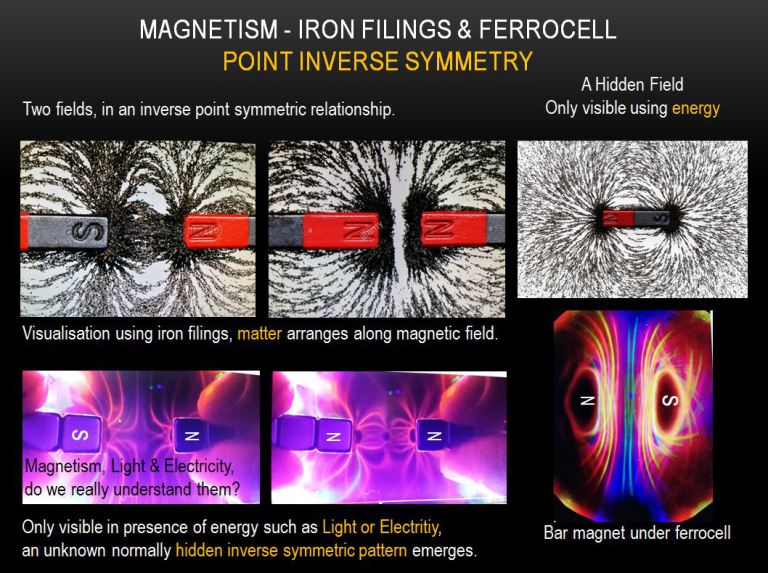
I also really like the image; comparison ferrocell to iron.
Regards,
biComment
-
Nice images Bistander?...Originally posted by bistander View Post
Yeap,...all over the place images...including mines...Originally posted by dyetalon View Post
People do not even have the decency to write: ..."this images shown are not mine, but collected all over the net"
At least am glad He credits Ken Wheeler's work plus Timm Vanderelli's FerrocellUSA...
Maybe the Drawing below will explain it better (the differences between Iron Filings and Ferrocell Images of the Magnetic Field:

Regards
UfopoliticsPrinciples for the Development of a Complete Mind: Study the science of art. Study the art of science. Develop your senses- especially learn how to see. Realize that everything connects to everything else.― Leonardo da VinciComment
-
I don't think so
Hi Ufo,Originally posted by Ufopolitics View Post
Yeah, I recognized some of your work. I don't go along with your theory. I don't understand what you mean by directional particles. And of course object to the Bloch wall used on a macroscopic magnet.
I do think that author's comment about electric/electrostatic field being displayed on the ferrolens is worthy of further investigation.
Regards,
biComment
-
Yes! Bravo!!
Ufopolitics,
You nailed it!! with your latest graphics illustration.
This is the main reason why iron fillings can never depict the Bloch Region. They are destined to show only the N-S axis of a magnet.
You need single domain (superparamagnetism) Fe3O4 ferrimagnetic nanoparticles in order to display a dipolar field meaning they can move biderectional in order to display the counter geometry of a dipole magnetic field and at the same time also remain at the equilibrium Bloch region where forces are balanced and in parallel to it.
Best Regards,
EMLast edited by Markoul; 05-20-2018, 09:25 PM.MSc. Electronic and Computer Engineering, TUC, Greece
MSc. VLSI Systems Engineering, UMIST, U.K.
BSc. Electronic Systems Engineering, Victoria Univ. Manchester & UMISTComment
-
ok this one i have to respond
This alone shows your level of ignorance in any Electronic training and knowledge of basic electromagnetism.I do think that author's comment about electric/electrostatic field being displayed on the ferrolens is worthy of further investigation.
1. How the hell can you produce electricity by a standing immovable magnet!!? without any other movement involved really escapes me?!
2. Fe3O4 oxide nanoparticles are electrical insulators meaning there are not conductors of electricity and electric currents, they are more like rust!! In order to ionize them you would have to have an external electric field applied in the order of hundreds of KV/m!! The same also implies for the carrier fluid inside a ferrocell which is also an electric insulator.
You have proven once more your level of ignorance and unfitness to judge on that matter. Go home and study more...Last edited by Markoul; 05-20-2018, 09:42 PM.MSc. Electronic and Computer Engineering, TUC, Greece
MSc. VLSI Systems Engineering, UMIST, U.K.
BSc. Electronic Systems Engineering, Victoria Univ. Manchester & UMISTComment
-
Far fetched?
Originally posted by Markoul View PostFrom:To be fair, Dr. Engheta works with metal nanoparticles and I work with magnetic metal-oxide nanoparticles but I believe his displacement current idea is correct. If we treat each nanoparticle as an isolated group of electrons and then an agglomerate of nanoparticles is treated as many groups of isolated groups of electrons, which are electromagnetically coupled each together; then my ferrofluid cells are showing optical resonances which corresponds to the magnetic agglomerate clusters resonating.
Another name for electrostatic neutral surfactant would be an insulating surfactant which means each nanoparticle has a small amount of capacitance. Referring to Figure #3, each ferrofluid particle has a magnetic moment which we could call inductance, and magnetite is known to have magnetoresistance. I have a background in electronics and can easily believe that each magnetic metal-oxide nanoparticle can be modeled as a RLC oscillator, and when you couple them together in an agglomerate, it is a large system of coupled oscillators. No wonder that I have photographs of optical resonances.
Magnetically Controlled Reflection of a Ferrofluid Cell
Michael Snyder
Department of Physics and Astronomy
102 Natural Science Building
University of Louisville
Louisville KY 40292
[email protected]
So if the surfactant can have capacitance and the metal oxide have magnetoresistance, is it unrealistic to imagine the possibility of electric/electrostatic fields? I've also seen displacement current mentioned elsewhere.
I'm starting to get the feeling that you don't like me.
bi
Edit: Another electric reference.
From: https://www.hindawi.com/journals/acmp/2017/2583717/#B8The pattern formation curiously resembles the nodal lines of the transverse electric and magnetic modes observed in optical resonant cavities, ...Comment
-
Hey, he's a teacher and can be rude sometimes. It's a frustration thingOriginally posted by bistander View Post
Don't take it so seriously.
I think this is the video you were talking about:

Comment

This forum is preserved as a permanent archive. The community continues at eMedia Press.
- If this is your first visit, be sure to check out the FAQ by clicking the link above. You may have to register before you can post: click the register link above to proceed. To start viewing messages, select the forum that you want to visit from the selection below.

 Tweet
Tweet


Comment